
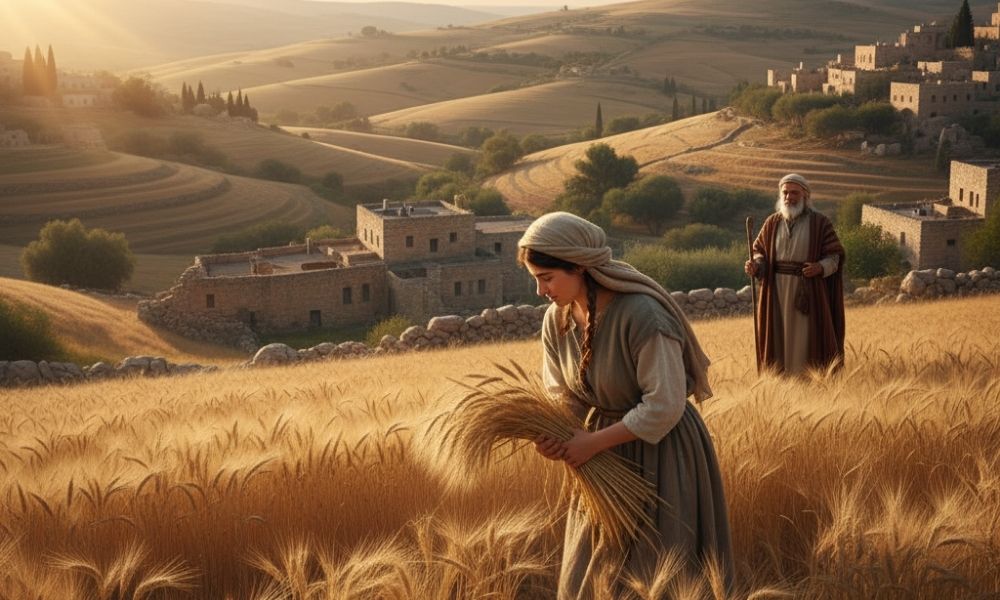
Bethlehem, though small among the towns of Judah, holds immense spiritual and historical weight. Known in Hebrew as Beit Lechem — meaning “House of Bread” — this ancient town became the setting for two of the most pivotal events in biblical history: the anointing of Israel’s greatest king, David, and the birth of Jesus Christ, the Bread of Life. Resting on the Judean hills about six miles south of Jerusalem, Bethlehem embodies God’s faithfulness, provision, and fulfillment of prophecy through the generations.
Quick Facts
Name Meaning: “House of Bread” (Hebrew: Beit Lechem)
Location: Judean hill country, 6 miles (10 km) south of Jerusalem
Tribe/Territory: Judah
Famous For: Birthplace of King David and Jesus Christ
Alternate Name: Bethlehem Ephrathah (to distinguish it from Bethlehem in Zebulun)
Era: From the time of the Patriarchs through the New Testament
Key Figures: Naomi, Ruth, Boaz, Samuel, David, Mary, Joseph, Jesus
Symbol: Bread or barley sheaf — signifying provision and divine nourishment
Biblical Background and Early Mentions
Bethlehem first appears in Genesis 35:19, as the place near which Rachel, Jacob’s beloved wife, died and was buried — a tomb that remained a landmark for centuries. Later, in the Book of Ruth, Bethlehem becomes the setting of redemption and restoration. Naomi and her Moabite daughter-in-law Ruth returned there from Moab during the barley harvest, marking the beginning of Ruth’s journey of faith and the lineage of David (Ruth 1–4).
In Ruth 2, the fields of Bethlehem became a place of divine providence, where Ruth met Boaz — her kinsman-redeemer. From their union came Obed, the grandfather of King David. Thus, Bethlehem became known as “the City of David” (1 Samuel 16:1, 17:12).
Prophecy and Fulfillment
The prophet Micah foretold Bethlehem’s destiny centuries before Christ’s birth:
“But you, Bethlehem Ephrathah, though you are small among the clans of Judah, out of you will come for me one who will be ruler over Israel…” (Micah 5:2)
This prophecy was fulfilled when Mary and Joseph traveled from Nazareth to Bethlehem for the census under Caesar Augustus (Luke 2:1–7). There, in humble surroundings — a stable, not a palace — Jesus Christ was born. The Bread of Life entered the world in the “House of Bread,” symbolizing God’s perfect provision for humanity’s salvation.
Spiritual Meaning and Symbolism
Bethlehem stands as a divine paradox — a small, seemingly insignificant town chosen for the greatest acts of redemption. It represents:
- Provision: God supplying spiritual and physical sustenance.
- Redemption: The birthplace of both David (Israel’s redeemer-king) and Jesus (the world’s Redeemer).
- Fulfillment: The realization of God’s ancient promises through prophecy.
- Humility: God choosing the lowly to reveal His glory.
The “House of Bread” foreshadows Jesus’ own words:
“I am the Bread of Life. Whoever comes to me will never go hungry.” (John 6:35)
Historical and Modern Legacy
Bethlehem remains a living symbol of faith and divine promise. Today, it is home to the Church of the Nativity, one of the oldest surviving Christian churches, built over the traditional site of Jesus’ birth. Pilgrims from all over the world journey there to celebrate the incarnation — the moment when the eternal Word became flesh.
Through both the Old and New Testaments, Bethlehem reveals God’s pattern of working through the humble and faithful to bring forth His plan of redemption.
Legacy Summary
Bethlehem is the city of promise, provision, and prophecy fulfilled — from Ruth’s humble gleaning to David’s anointing, to the birth of Christ, the eternal King.







Leave a Reply