
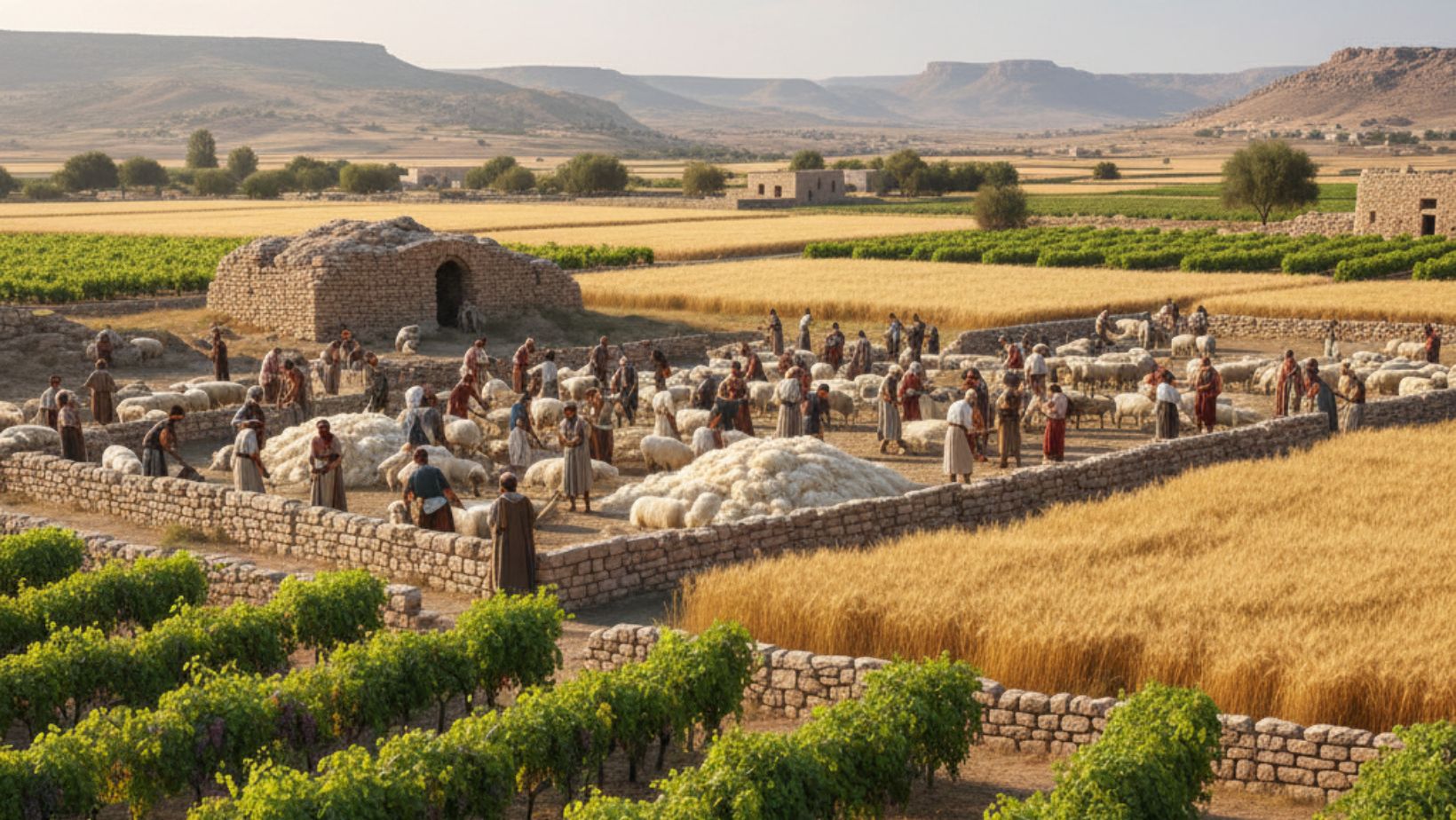
Carmel, in the context of the Davidic narrative, refers to a prominent town and mountain ridge in the hill country of Judah, distinct from the famous Mount Carmel in the north. It was a place of significant wealth, commercial activity, and high-stakes drama. Located on the edge of the wilderness, it served as the center of Nabal’s vast agricultural empire and the stage where Abigail’s wisdom averted a bloody conflict. In biblical history, Carmel represents the intersection of material prosperity and the spiritual necessity of gratitude and justice.
QUICK FACTS
- Name: Carmel (Hebrew: Karmel, meaning “Garden Land,” “Fruitful Field,” or “Plantation”)
- Region: The Hill Country of Judah (South of Hebron)
- Associated Tribe: Judah
- Key Figures: Nabal, Abigail, King Saul, King David
- Biblical Era: Joshua through the United Monarchy
- Key Events: Saul building a monument to himself; Nabal’s sheep-shearing festival; David’s encounter with Abigail
- Symbol: A bunch of grapes or a wool fleece — symbolizing the fertility and economic abundance of the land
Name Meaning
The name Carmel is derived from a Hebrew root meaning “fruitful” or “garden-like.” It suggests a place that is well-watered and productive, standing in contrast to the barren “Wilderness of Maon” that lay just beyond its borders.
Geographic / Strategic Context
Location: Located about 7 to 10 miles south of Hebron. It was part of the southern frontier of the kingdom of Judah.
Topography: While the surrounding areas were rugged, Carmel possessed a plateau and valley system that allowed for large-scale farming and viticulture. It was famous for its high-quality wool production.
Strategic Importance: Because it sat on the edge of the settled land and the desert, it was a vital center for trade and a gathering point for the clans of Judah.
Major Biblical Events
Saul’s Monument: After defeating the Amalekites, King Saul went to Carmel to set up a monument in his own honor (1 Samuel 15:12). This marked a significant turning point in his reign, signaling the pride that led to his rejection by God.
The Sheep-Shearing Festival: This was the primary economic event for Carmel. Nabal held his great banquet here, and it was in the fields of Carmel that David’s messengers were insulted.
David and Abigail: The mountain pass near Carmel was the location of the tense standoff where Abigail met David and his 400 soldiers. Following Nabal’s death, Abigail is often referred to as “Abigail of Carmel.”
David’s Mighty Men: One of David’s elite warriors, Hezro, was a native of Carmel (2 Samuel 23:35).
Cultural & Spiritual Significance
Abundance and Accountability: Carmel’s fertility was seen as a blessing from God. The story of Nabal in Carmel serves as a reminder that with great abundance comes a great responsibility to be generous toward God’s servants.
A Place of Contrasting Kingship: In Carmel, Saul built a monument to his own glory, whereas David learned to restrain his anger and trust in God’s justice through the counsel of Abigail.
The “Garden” in the Wilderness: Carmel was a literal and figurative oasis. It provided the resources (food and wine) that David’s fugitive army desperately needed to survive their time in the desert.
Notable Passages
Joshua 15:55: Included in the list of towns for the tribe of Judah — “Maon, Carmel, Ziph, Juttah…”
1 Samuel 15:12: Saul’s pride — “Saul has gone to Carmel. There he has set up a monument in his own honor…”
1 Samuel 25:2: The description of Nabal — “A certain man in Maon, who had property there at Carmel, was very wealthy…”
Archaeological Context
Modern Site: Identified as Kurmul. Archaeological surveys have revealed extensive ruins, including large cisterns cut into the rock to support the massive flocks mentioned in the Bible.
Byzantine Influence: Later in history, Carmel became a significant Christian center. Excavations have uncovered the remains of three distinct Byzantine churches and a large reservoir, indicating the town remained a “fruitful place” for over a millennium.
Symbolism / Typology
The Fruitful Field: Carmel represents the rewards of hard work and divine blessing. However, it also warns that a “fruitful field” can become a “desert” spiritually if the heart is hardened.
The Vineyard: In prophetic literature (like Isaiah), the “withering of Carmel” is used as a metaphor for God’s judgment on a rebellious nation, stripping away their prosperity.







Leave a Reply