
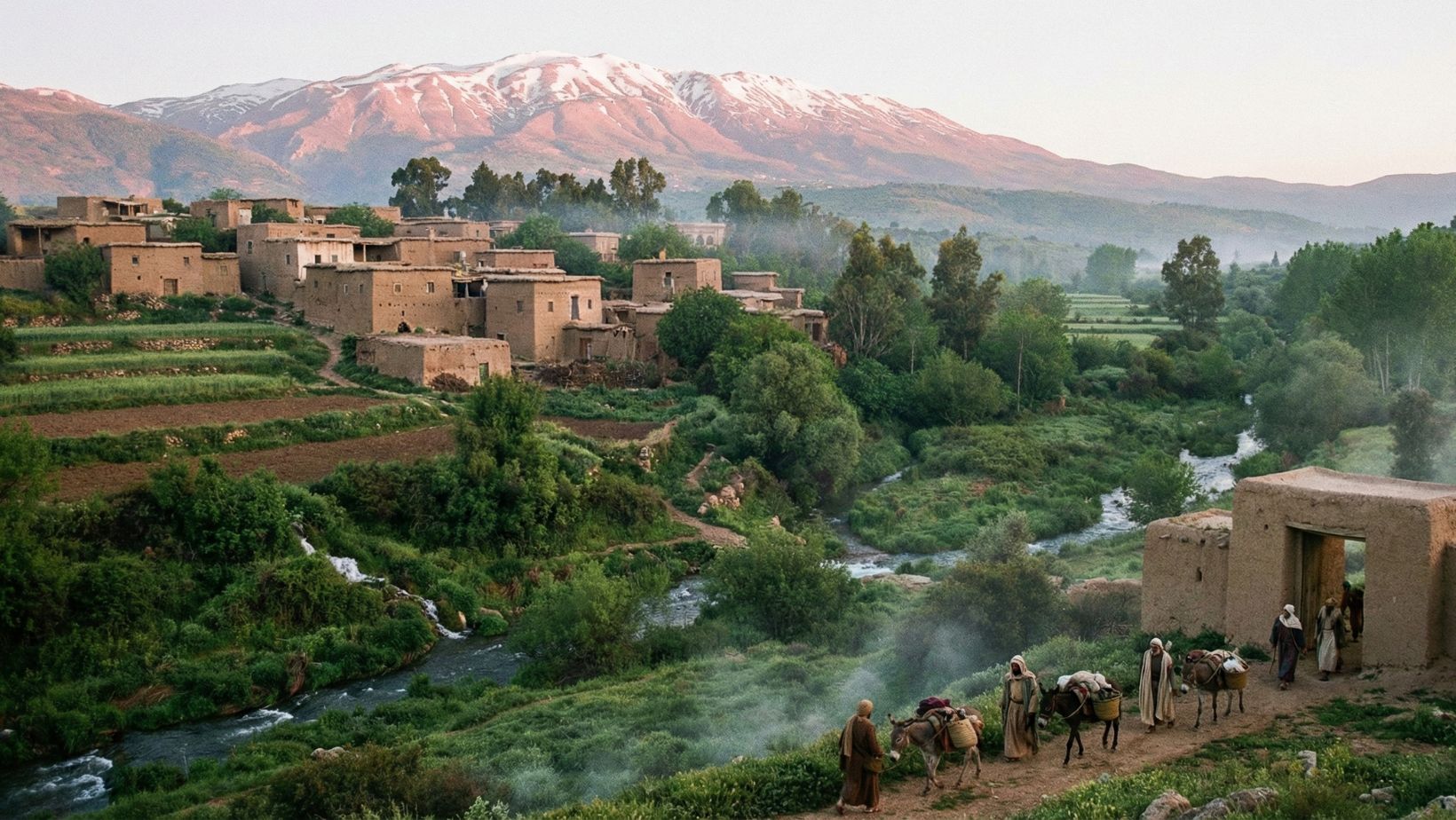
In the biblical narrative, the concept of the City undergoes a profound transformation. The story of Scripture begins in a Garden (Eden) but ends in a City (New Jerusalem). While the first cities were founded by humanity in rebellion (Cain) or pride (Babel) to secure themselves without God, God eventually redeems the concept, choosing Jerusalem as His dwelling place. Cities in the Bible are not just backdrops; they are characters in themselves, representing either the “City of Man” (autonomy, power, oppression) or the “City of God” (justice, worship, peace).
Quick Facts
- First Mentioned City: Enoch (built by Cain, Genesis 4:17)
- Most Mentioned City: Jerusalem (~800+ times)
- Second Most Mentioned: Babylon
- Hebrew Word: Ir (walled city) or Kiryah
- Greek Word: Polis
- Key Archetype: Jerusalem (The Holy City) vs. Babylon (The Harlot City)
- Final Destination: The New Jerusalem (Revelation 21)
Etymology / Terminology
Ir (Hebrew): The most common word for city. It implies a settlement protected by a wall or a “watching” presence (from a root meaning “to wake” or “guard”). Kiryah (Hebrew): A poetic term for a city, often emphasizing its foundations or buildings. Chatzer (Hebrew): Often translated as “village” or “town.” These were unwalled settlements dependent on a nearby walled city for protection during war.
The Biblical Narrative of the City
1. The City of Rebellion (Genesis)
The first city, Enoch, was built by Cain after he was exiled from God’s presence. It represents humanity’s attempt to create security and community apart from God. Later, the Tower of Babel (Genesis 11) solidified the city as a symbol of human pride (“Let us make a name for ourselves”).
2. The City of Refuge (The Law)
When God formed the nation of Israel, He redeemed the urban concept by establishing Levitical Cities and Cities of Refuge. These were places where justice was administered and the innocent were protected, showing that cities could be holy if governed by God’s law.
3. The City of God (The Prophets)
Jerusalem (Zion) becomes the centerpiece of biblical geography. It is the place where God chose to put His name. The Psalms celebrate it not for its military might, but because “God is in her citadels.”
4. The Tale of Two Cities (Revelation)
The Bible concludes with a stark contrast between two cities:
- Babylon the Great: Represents the world system, commerce, idolatry, and persecution of the saints.
- New Jerusalem: Represents the Bride of Christ, a city with no temple (for God is its temple) and open gates, signifying perfect safety and communion.
List of Major Biblical Cities & Towns
Here is a categorized list of significant locations you might want to study next:
Major Capitals & Power Centers
- Jerusalem: The religious and political capital of Israel; the site of the Temple and the Passion of Christ.
- Babylon: The great enemy of God’s people; the place of exile and symbol of pride.
- Nineveh: The capital of Assyria; a city of war and violence, yet the recipient of Jonah’s preaching.
- Samaria: The capital of the Northern Kingdom (Israel), known for its ivory palaces and idolatry.
Cities of Conquest & History
- Jericho: The “City of Palms,” the first city conquered by Joshua.
- Hebron: The city of the Patriarchs (burial place of Abraham) and David’s first capital.
- Shechem: A place of covenant renewal and decision; nestled between Mt. Ebal and Mt. Gerizim.
- Sodom: The archetype of divine judgment against wickedness.
Towns of Jesus’ Ministry
- Nazareth: The humble, obscure hillside town where Jesus grew up.
- Capernaum: A fishing village on the Sea of Galilee; the headquarters of Jesus’ ministry.
- Bethlehem: “House of Bread”; the birthplace of David and Jesus.
- Bethany: A quiet town near Jerusalem; home to Mary, Martha, and Lazarus.
Strategic / Gentile Cities
- Antioch: Where disciples were first called “Christians.”
- Damascus: The oldest continuously inhabited city in the world; site of Paul’s conversion.
- Tyre & Sidon: Wealthy Phoenician port cities, often judged for their arrogance but visited by Jesus.
Notable Passages
Psalm 46:4: “There is a river whose streams make glad the city of God, the holy place where the Most High dwells.”
Hebrews 11:10: “[Abraham] was looking forward to the city with foundations, whose architect and builder is God.”
Revelation 21:2: “I saw the Holy City, the new Jerusalem, coming down out of heaven from God, prepared as a bride beautifully dressed for her husband.”







Leave a Reply