
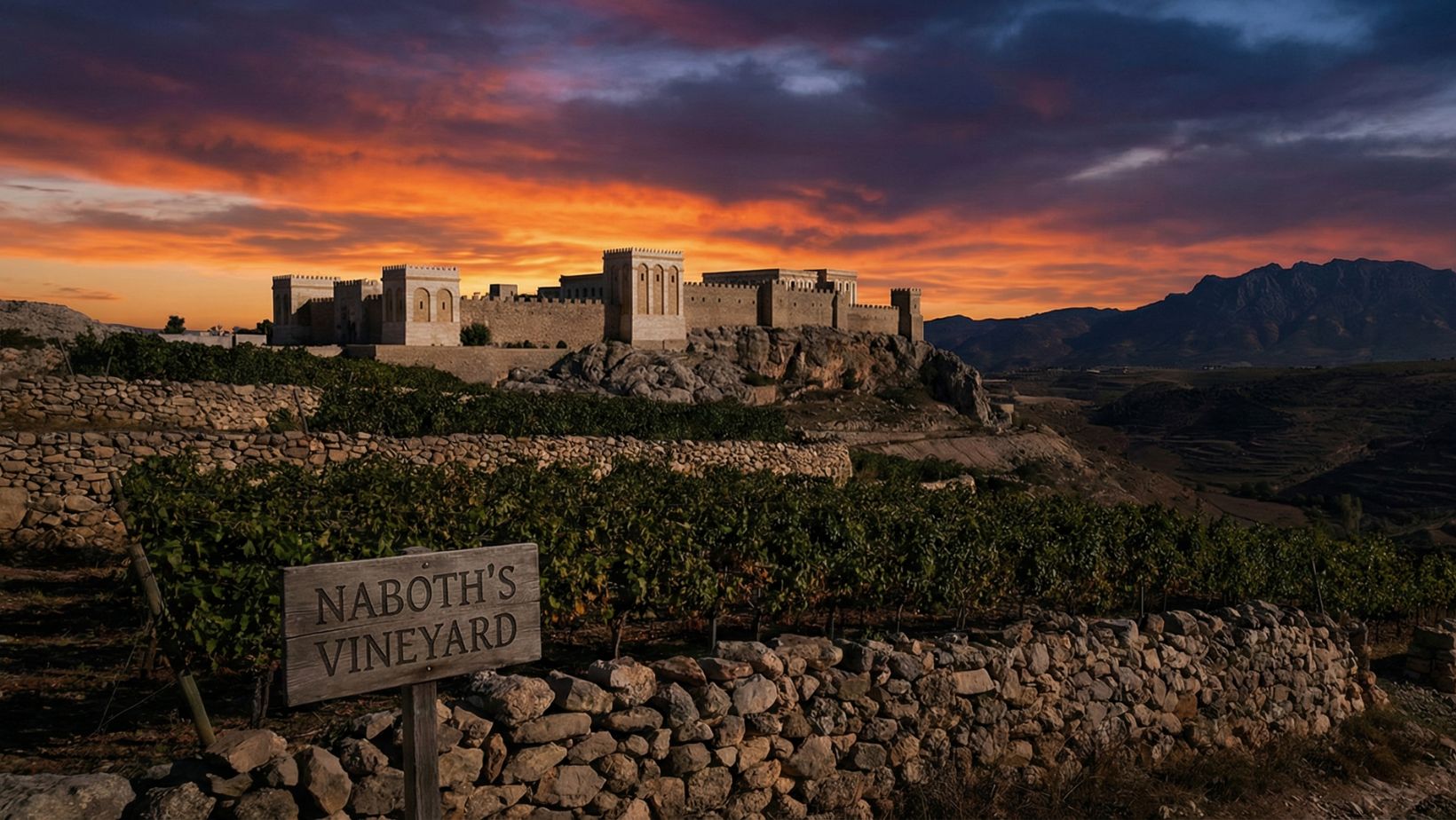
Jezreel is a site of staggering contrast in the biblical narrative, serving as both a lush “royal retreat” and a grisly theater of divine judgment. Located at the intersection of major ancient highways, this fertile valley city functioned as the second capital for the kings of Northern Israel, most notably the Omride dynasty. It is the setting for the infamous theft of Naboth’s vineyard and the violent end of Queen Jezebel, earning a reputation in scripture as a place where the “blood of Jezreel” cried out for justice.
- Name: Jezreel (Hebrew: Yizre’el, meaning God Sows)
- Tribe/Nation: Issachar (located on the border of Issachar and Manasseh)
- Era: Prominent during the United Monarchy and the Divided Kingdom (~10th–8th centuries BCE)
- Primary Residents: King Ahab, Queen Jezebel, Naboth the Jezreelite
- Strategic Value: Crossroads of the Via Maris and the Way of the Patriarchs
- Key Books: 1 Samuel, 1 Kings, 2 Kings, Hosea
- Key Virtues/Vices: Naboth (Loyalty to heritage); Ahab/Jezebel (Greed and tyranny)
- Legacy: Symbol of both agricultural abundance and catastrophic judgment
- Symbol: The Dog (symbolizing the judgment of Jezebel) or the Vineyard
Name Meaning
The name Jezreel is a compound of the Hebrew words zara (to sow/plant) and El (God). It literally translates to “God Sows” or “May God Make Fruitful.” While this initially referred to the incredible fertility of the valley, the prophet Hosea later used the name as a play on words to describe God “scattering” (sowing) His people in judgment.
Geographical / Strategic Context
The Valley: The Valley of Jezreel (also known as the Plain of Esdraelon) is a massive, flat, fertile triangle that separates the mountains of Galilee from the hills of Samaria.
Military Significance: Because it was the largest flat plain in Israel, it was the primary battlefield for ancient warfare involving chariots. No fewer than 34 major battles have been recorded in this area.
Water and Trade: The city sat near a perennial spring and overlooked the Via Maris, the most important trade route in the Ancient Near East. Whoever held Jezreel controlled the economy of the north.
Major Biblical Events
The Death of Saul (1 Samuel 29–31): Before the final battle against the Philistines, the Israelite army camped at the Spring of Jezreel. The subsequent defeat on nearby Mount Gilboa led to the deaths of Saul and Jonathan.
Naboth’s Vineyard (1 Kings 21): King Ahab coveted a vineyard owned by a local man named Naboth. When Naboth refused to sell his ancestral inheritance, Queen Jezebel orchestrated a mock trial and had him murdered. This act of “royal theft” triggered the prophecy of the total destruction of Ahab’s house.
The Fall of Jezebel (2 Kings 9): Fulfilling Elijah’s prophecy, the commander Jehu rode furiously to Jezreel. He executed King Joram, and at his command, Jezebel was thrown from a palace window. Scavenger dogs devoured her remains in the very plot of land that had belonged to Naboth.
The Heads of Ahab’s Sons (2 Kings 10): Jehu ordered the execution of Ahab’s 70 sons in Samaria. Their heads were brought to Jezreel and piled in two heaps at the city gate as a grisly sign of the end of the Omride dynasty.
Major Relationships
Ahab & Jezebel: Used Jezreel as their “summer palace” and base of power, turning a place meant for rest into a site of corruption.
Elijah & Ahab: After the victory on Mt. Carmel, Elijah famously outran Ahab’s chariot all the way to the gates of Jezreel (1 Kings 18).
Hosea & His Son: God commanded the prophet Hosea to name his firstborn son Jezreel as a living sign that God would soon “punish the house of Jehu for the bloodshed of Jezreel” (Hosea 1:4).
Archaeological & Historical Findings
Tel Jezreel: Excavations have uncovered a massive 9th-century BCE military enclosure with a dry moat and four-chambered gates. This aligns perfectly with the biblical description of Jezreel as a fortified royal compound rather than a typical civilian city.
Ancient Winery: Archaeologists recently discovered an ancient winery at the foot of the Tel. Its proximity to the royal compound suggests it may very well be the site of the biblical Naboth’s Vineyard.
Legacy & Symbolism
The Threshold of Judgment: In biblical theology, Jezreel represents the principle of lex talionis (eye for an eye). The blood shed by Ahab was repaid with the blood of his own family in the exact same location.
The Valley of Armageddon: Because Jezreel is adjacent to Megiddo, the valley is often associated with the site of the final eschatological battle (Har-Magedon) mentioned in Revelation.







Leave a Reply