
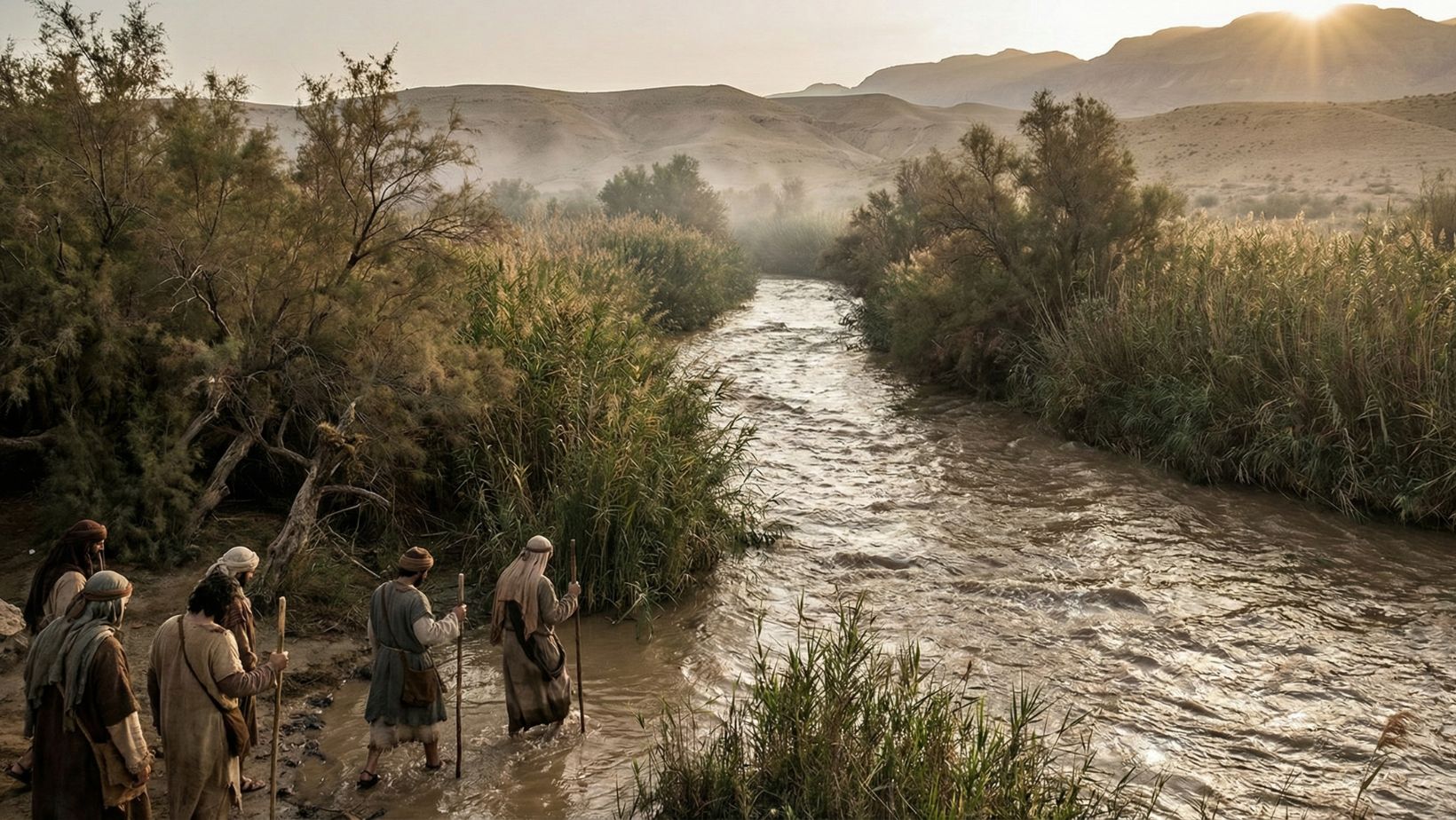
The Jordan River is far more than a geographical feature in Scripture; it is the definitive theological boundary of the Bible. It serves as the line of demarcation between the wilderness and the Promised Land, between the old life and the new. Physically, it is a winding, muddy, and often un-navigable river that carves through the Great Rift Valley. Spiritually, it is the site of decisive transitions: the Israelites crossed it to claim their inheritance, Elijah crossed it to ascend to heaven, Naaman washed in it to be cleansed, and Jesus entered it to inaugurate His ministry.
- Name: Jordan (Hebrew: Yarden)
- Meaning: “The Descender” or “To flow down”
- Location: Runs north to south in the Rift Valley (modern border of Israel/Jordan)
- Sources: Mount Hermon
- Mouth: The Dead Sea
- Length: ~156 miles (251 km) due to winding, though the distance is much shorter as the crow flies
- Elevation: Flows from above sea level to ~1,400 ft below sea level (lowest river on earth)
- Key Events: Joshua’s crossing, Naaman’s healing, Jesus’ baptism
- Symbolism: Death, rebirth, repentance, crossing over
Physical & Geographical Description
The “Descender”: The name Yarden is apt. The river originates from the snow melt of Mount Hermon in the north and “descends” rapidly into the Sea of Galilee. From there, it winds tortuously through the Jordan Valley (the Ghor) until it terminates in the Dead Sea, the lowest point on the face of the earth.
The Terrain: Unlike the mighty Nile or Euphrates, the Jordan is not a highway for commerce. In biblical times, it was often overgrown with thickets (the “pride of the Jordan”) where lions and wild boars lived (Jeremiah 49:19). It creates a narrow ribbon of green life in an otherwise arid wasteland.
The Barrier: During the flood season (spring/barley harvest), the river would swell and become dangerous to cross, making the miracle of Joshua 3 even more significant.
Key Biblical Events
1. The Entrance to the Promise (Joshua 3–4)
After 40 years of wandering, Israel faced the Jordan at flood stage. As the priests carrying the Ark of the Covenant stepped into the water, the flow from the north (at Adam) stopped, standing up in a heap. The nation crossed on dry ground.
- Significance: This miracle paralleled the Red Sea crossing, validating Joshua as Moses’ successor and signifying that the wilderness era was over.
2. The Prophetic Threshold (2 Kings 2)
Elijah struck the waters with his cloak, parting them to cross over before being taken up to heaven in a whirlwind. Elisha, picking up the fallen cloak, struck the water again to return.
- Significance: The river marked the transfer of prophetic power. Elisha began his ministry exactly where Elijah ended his.
3. The Healing of Naaman (2 Kings 5)
Naaman, the Syrian general, was told by Elisha to dip seven times in the Jordan to cure his leprosy. Naaman was initially insulted (“Are not Abana and Pharpar… better than all the waters of Israel?”).
- Significance: The healing required humility. The Jordan was not majestic; it was the act of obedience in a humble river that brought cleansing.
4. The Baptism of Jesus (Matthew 3, Mark 1)
John the Baptist chose the Jordan wilderness for his ministry of repentance. Jesus came from Galilee to be baptized by John.
- Significance: By entering the water, Jesus identified with sinners. The heavens opened, the Spirit descended like a dove, and the Father spoke. This was Jesus’ “anointing” before His public ministry began.
Theological Analysis & Symbolism
The Boundary of Faith: In the Old Testament, being “Transjordan” (east of the river) meant being outside the primary inheritance. Crossing the Jordan symbolizes the believer’s transition from the “wilderness” of the flesh into the “Promised Land” of the Spirit-filled life. It is the decision to burn bridges and commit fully to God.
Death and Resurrection: Baptism in the Jordan represents going down into death and rising into new life.
- The Lowest Place: Because the Jordan flows to the lowest point on earth (the Dead Sea), Jesus descending into it symbolizes His extreme humility—He went to the lowest place to lift us up.
The River of Judgment: The waters of the Jordan cut off the flow to the Dead Sea (the Sea of Salt/Death). When the Ark (God’s presence) entered the river, the judgment was held back, allowing the people to pass through safely. This typifies Christ absorbing the judgment so believers can pass from death to life.







Leave a Reply