
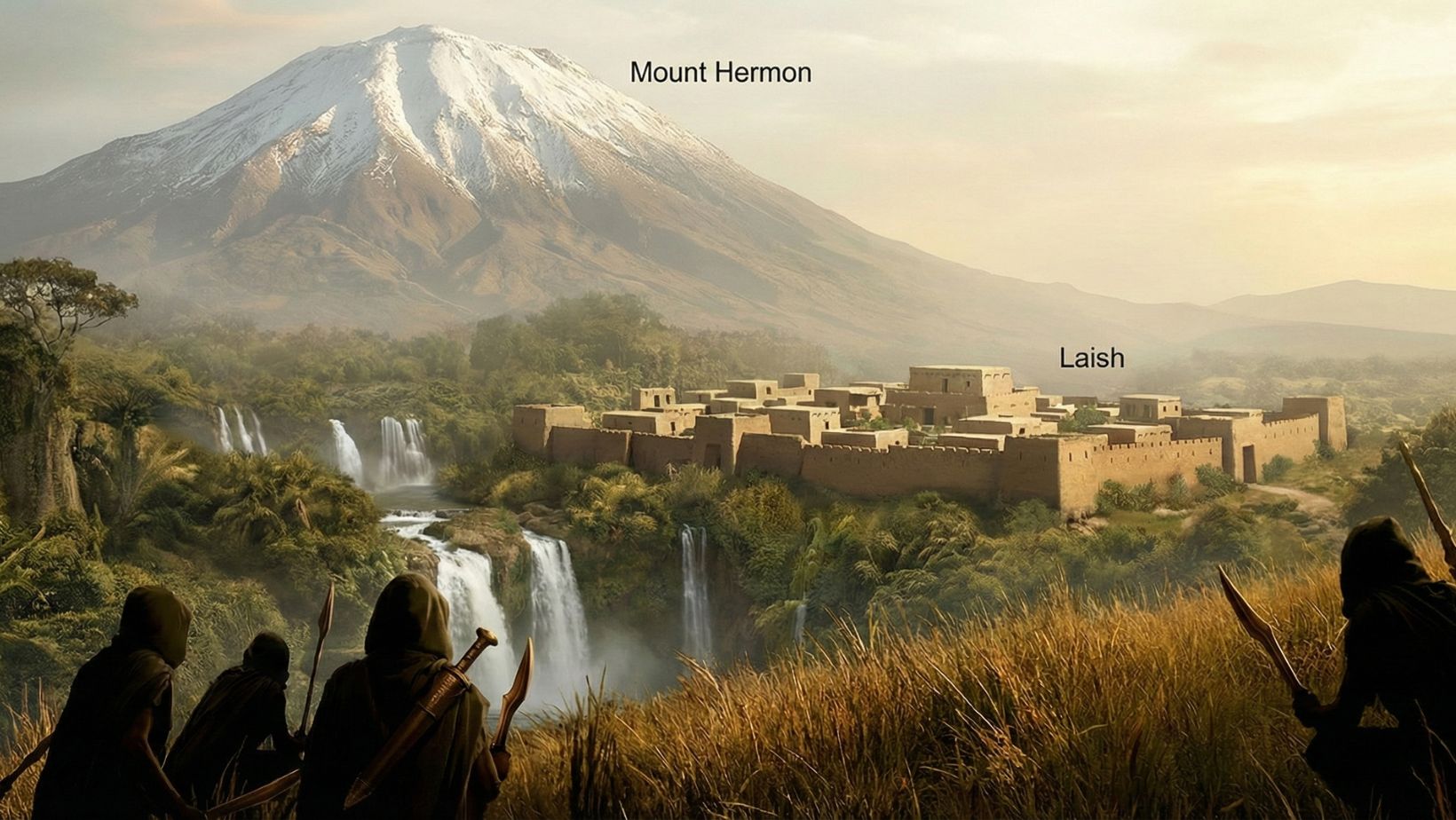
Laish (also known as Leshem) was a prosperous, isolated Canaanite city located at the foot of Mount Hermon in the far north of the Holy Land. Best known for being the target of the migration of the Tribe of Dan, the city is described in the Book of Judges as a place of great natural abundance where the people lived in quiet, unsuspecting security. Its story is one of violent conquest and cultural transformation; the Danites, unable to secure their allotted territory in the south, marched north, destroyed Laish, massacred its inhabitants, and rebuilt it as the city of Dan—which became the famous northern marker of Israel (“from Dan to Beersheba”).
Quick Facts
- Names: Laish (“Lion”), Leshem (“Precious Stone”), later Dan (“Judge”)
- Location: Upper Galilee, at the headwaters of the Jordan River (modern Tel Dan)
- Original Inhabitants: Canaanites (culturally linked to Sidon)
- Conquerors: The Tribe of Dan
- Era: Period of the Judges (~12th Century BCE)
- Key Characteristic: Peaceful, prosperous, and isolated
- Biblical References: Judges 18; Joshua 19:47; Isaiah 10:30 (possibly a different town, but context varies)
- Legacy: Became the site of one of Jeroboam’s golden calves
Name Meaning
Laish: Hebrew for “Lion.” This suggests strength or perhaps the presence of lions in the lush thickets of the region in ancient times.
Leshem: Used in Joshua 19:47, meaning “Precious Stone” or “Gem” (specifically the amber or jacinth stone found in the High Priest’s breastplate).
Dan: The city was renamed after the ancestor of the tribe, Dan, meaning “Judge” or “He has judged.”
Geography / Location
Strategic Position: Located at the primary source of the Jordan River, making it an incredibly lush, fertile, and well-watered area.
Isolation: The Bible notes it was far from Sidon (its cultural protector) and separated from other allies by the Lebanon mountains. This geographic isolation made it vulnerable despite its prosperity.
Biblical Era / Context
Time: The era of the Judges, a time of political fragmentation and moral confusion in Israel (“In those days Israel had no king…” Judges 18:1).
The Danite Migration: The tribe of Dan was originally allotted land in the south (near the Philistines) but failed to drive out the inhabitants (Amorites/Philistines). Pressed for space, they sought a new territory in the north.
Major Roles / Identity
The Unsuspecting Victim: Laish represents a city lulled into a false sense of security. They had no standing army mentioned and no treaties with neighbors (“they had no dealings with anyone”).
The Promised Prize: To the Danite spies, Laish was a paradise: “a place where there is no lack of anything that is on the earth” (Judges 18:10).
The Northern Sanctuary: After its conquest and rebuilding as Dan, it became a major religious sanctuary—first for the stolen idol of Micah (served by a Levite grandson of Moses) and later for the state-sponsored idolatry of the Northern Kingdom.
Key Characteristics (of the Inhabitants)
Peaceful and Secure: The Bible repeatedly emphasizes that they lived “quiet and secure” (Judges 18:7).
Culturally Sidonian: They lived after the manner of the Sidonians (Phoenicians)—likely wealthy, engaged in trade, but without the military vigilance of the southern city-states.
Isolated: “They were far from Sidon and had no dealings with anyone” (Judges 18:28). This lack of alliances was their fatal flaw.
Main Events
The Scouting Mission: Five spies from the tribe of Dan travel north and discover Laish. They see a people living in safety and a land of abundance.
The Report: The spies return to Zorah and Eshtaol, urging their tribe to attack: “Arise, let us go up against them… the land is spacious, for God has given it into your hands” (Judges 18:9–10).
The Invasion: 600 armed men from the tribe of Dan march north. On their way, they raid the house of Micah in the hill country of Ephraim, stealing his silver idol and his priest (Jonathan).
The Massacre: The Danites arrive at Laish, attack the peaceful city with the edge of the sword, and burn it to the ground. There was no deliverer because the city was too far from Sidon.
The Rebuilding: The Danites rebuilt the city and dwelt in it, renaming it Dan. They set up the carved image they had stolen, establishing a rival priesthood that lasted until the captivity of the land.
Notable Passages
Judges 18:7: “So the five men departed and came to Laish and saw the people who were there, how they lived in security, after the manner of the Sidonians, quiet and unsuspecting…”
Judges 18:27–28: “They came to Laish, to a people quiet and unsuspecting, and struck them with the edge of the sword and burned the city with fire. And there was no deliverer because it was far from Sidon…”
Joshua 19:47: “But the territory of the people of Dan was lost to them; so the people of Dan went up and fought against Leshem… and they settled in it and called Leshem, Dan, after the name of Dan their ancestor.”
Legacy & Impact
“From Dan to Beersheba”: The conquest of Laish established the standard biblical phrase describing the full extent of Israel, from the furthest north (Dan/Laish) to the furthest south (Beersheba).
Center of Idolatry: The conquest of Laish introduced an era of organized idolatry. The city housed Micah’s idol, and centuries later, King Jeroboam I set up one of his two golden calves there to prevent Israelites from going to Jerusalem (1 Kings 12:29).
Archaeology: The site (Tel Dan) is famous today for the “Tel Dan Stele,” an artifact that provided the first extra-biblical historical reference to the “House of David.”
Symbolism / Typology
Carnal Security: Laish is often cited in sermons as a warning against spiritual complacency—relying on wealth and isolation rather than vigilance. It represents “peace without God,” which is fragile and easily destroyed.
The Failure of Dan: While the Danites “conquered” Laish, the narrative is often read critically. Instead of trusting God for their difficult inheritance in the south, they opted for an “easy target” in the north and immediately established idolatry, foreshadowing the tribe’s omission from the list of the sealed tribes in Revelation 7.







Leave a Reply