
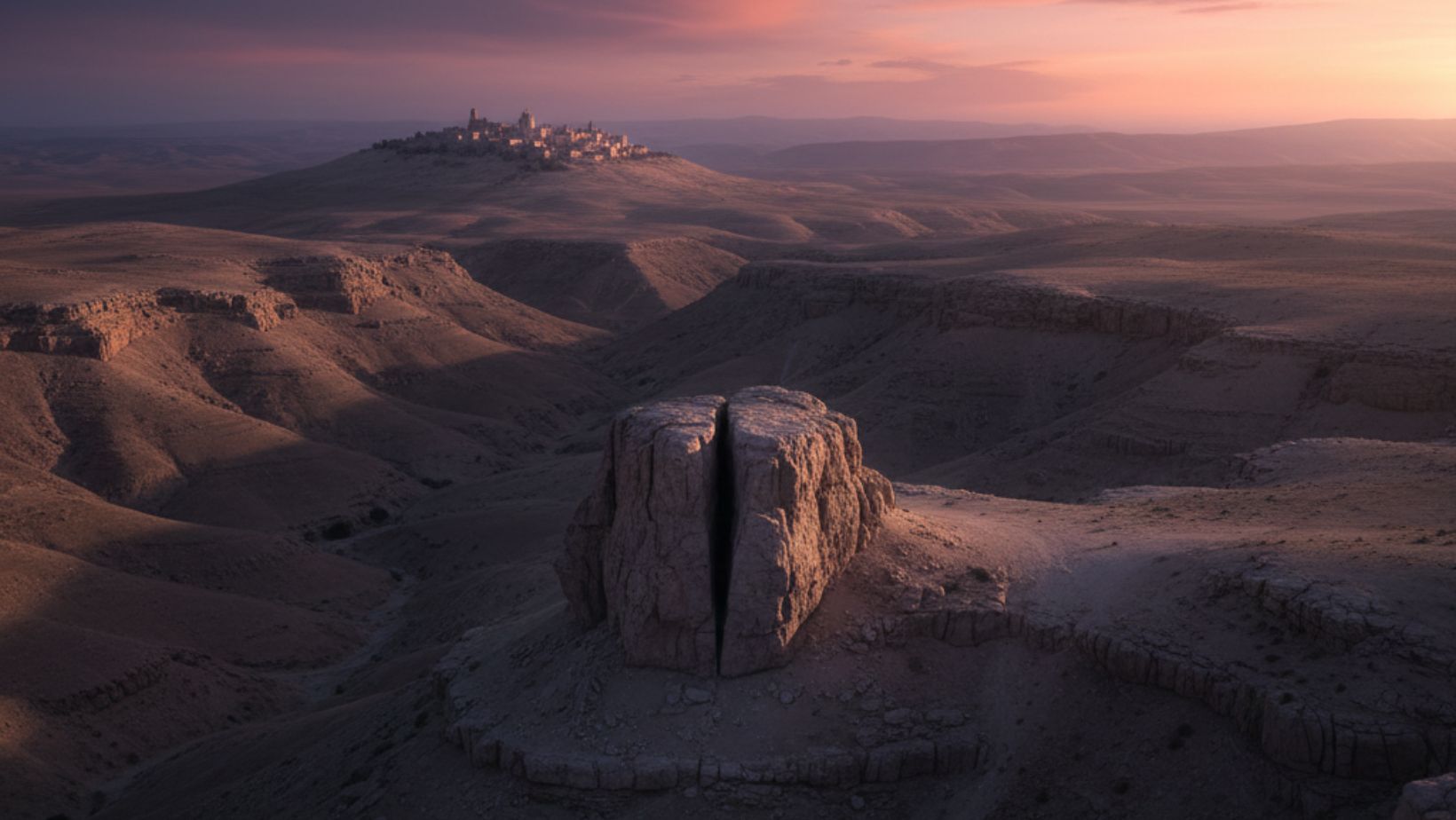
Maon is an ancient biblical city and a rugged wilderness territory located in the high hill country of Judah. More than just a location on a map, Maon serves as a dramatic backdrop for themes of survival, divine protection, and the tension between the wealthy elite and the marginalized. It is most famous for being a refuge for David while he was hunted by King Saul and for being the home of the wealthy but “foolish” Nabal. The geography of the region—marked by caves, steep hills, and plateaus—played a crucial role in the military maneuvers and providential escapes recorded in the books of Samuel.
QUICK FACTS
- Name: Maon (Hebrew: Ma’on, meaning “Dwelling,” “Habitation,” or “Refuge”)
- Region: The Hill Country of Judah (The Judean Wilderness)
- Elevation: Approximately 3,000 feet above sea level
- Associated Tribe: Judah (allotted to the clan of Caleb)
- Key Residents: Nabal and Abigail; the Maonites (a group often hostile to Israel)
- Biblical Era: Joshua through the United Monarchy
- Key Events: David’s narrow escape from Saul; the shearing of Nabal’s flocks
- Symbol: A rocky crag or a cave — symbolizing both a hiding place and a harsh, unforgiving environment
Name Meaning
The name Maon translates to “dwelling” or “place of habitation.” In a spiritual sense, it often appears in the Psalms (in its plural form Me’onot) to describe God as a “dwelling place” or refuge for His people, a poignant irony given that David literally used the physical Maon as a refuge.
Geographic / Strategic Context
Location: Situated south of Hebron and Ziph, Maon sits on the edge of the Judean desert. It is part of a cluster of biblical towns that includes Carmel and Eshtemoa.
Topography: The “Wilderness of Maon” is characterized by rocky ridges and deep ravines. This terrain made it an ideal location for outlaws and fugitives (like David’s band) to hide from conventional armies.
Economy: Despite its proximity to the desert, the plateaus around Maon provided excellent grazing land. It was a center for large-scale sheep and goat herding, as evidenced by Nabal’s massive livestock holdings.
Major Biblical Events
The Escape from Saul: In 1 Samuel 23, King Saul had David nearly surrounded in the Wilderness of Maon. David was on one side of a mountain and Saul on the other. A messenger arrived to tell Saul that the Philistines were raiding the land, forcing Saul to abandon the chase. This spot was renamed Sela Hammahlekoth (The Rock of Escape).
Nabal’s Residence: Maon was the primary home of Nabal. It was from here that he managed his business interests in nearby Carmel and where he ultimately met his end after defying David.
The Maonites: In the book of Judges and Chronicles, a group called the Maonites (or Meunites) are mentioned as oppressors of Israel whom God delivered the people from, showing the region was often a flashpoint for conflict.
Cultural & Spiritual Significance
A Place of Testing: Like much of the Judean wilderness, Maon represents a “wilderness period” where faith is tested by scarcity and the threat of enemies.
The “Rock of Escape”: The events at Maon are a primary example of “divine coincidence.” The timing of the Philistine raid exactly when David was trapped is cited by many scholars as a hallmark of God’s providence over His chosen king.
Wealth vs. Wilderness: The contrast in Maon between the “wild” men of David and the “settled” wealth of Nabal highlights the social tension between those following God’s call in hardship and those comfortably ignoring it in their “dwelling places.”
Notable Passages
Joshua 15:55: Listed among the inheritance of the tribe of Judah — “Maon, Carmel, Ziph, Juttah…”
1 Samuel 23:24–25: The pursuit — “David and his men were in the Desert of Maon, in the Arabah south of Jeshimon. Saul and his men began the search…”
1 Samuel 23:28: The naming of the site — “Then Saul broke off his pursuit of David… That is why they call this place Sela Hammahlekoth.”
Archaeological Context
Modern Site: The site is identified with Tell Ma’in, a prominent hill south of Hebron. Archaeological remains at the site indicate habitation during the Iron Age (the time of the Kings) and the Byzantine period.
The Synagogue: Excavations in the surrounding area have uncovered ruins of ancient synagogues, proving that Maon remained a significant Jewish settlement for centuries after the time of David.
Symbolism / Typology
The Cave/Refuge: Maon serves as a physical type of the spiritual safety found in God. When David writes “The Lord is my rock,” he is often drawing on his literal experiences in the crags of Maon.
The Boundary: As a border town between the settled hills of Judah and the wild desert, Maon symbolizes the boundary between civilization and the unknown, or between security and faith.







Leave a Reply