
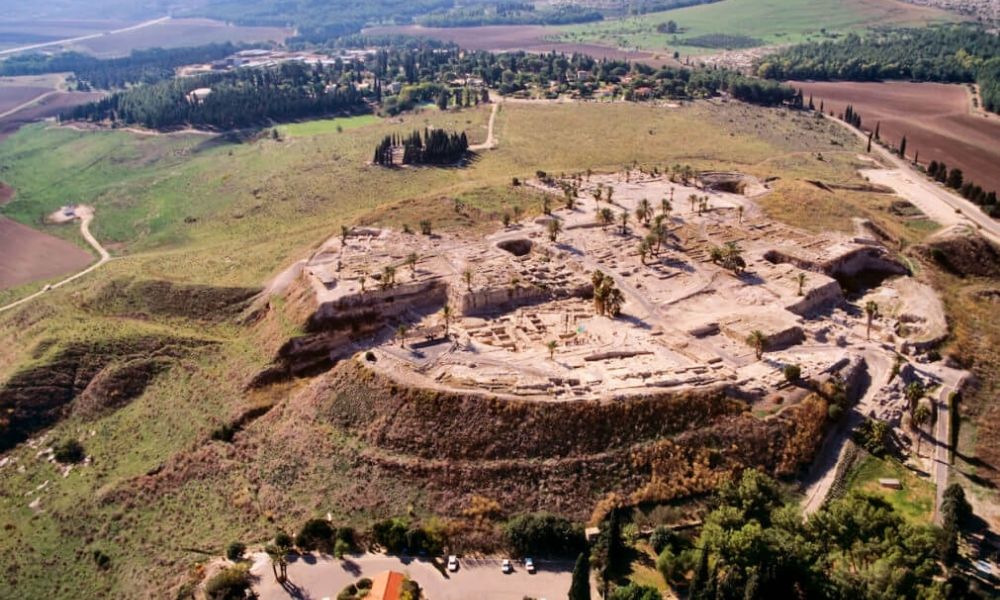
Megiddo

Megiddo is an ancient fortress city whose strategic battles inspired the biblical imagery of Armageddon.


Megiddo is one of the most strategic and symbolically charged sites in the Bible — a place where ancient armies clashed, kingdoms fought for control, and prophetic imagination pointed to a final showdown. Sitting at a natural crossroads in northern Israel, Megiddo shaped regional history for millennia and later inspired the term “Armageddon.”


Quick Facts

Name: Megiddo (Hebrew: Megiddō — “Place of Troops,” “Stronghold”)
Region: Northern Israel, overlooking the Jezreel Valley
Era: Bronze Age to Roman Period
Known for: Strategic fortress city, major battles, prophetic symbolism
Biblical Theme: Conflict, judgment, turning points in history
Symbol: High mound (tell) — layers of kingdoms rising and falling


Location & Meaning

Megiddo sits on a tell — a mound built from many layers of past civilizations. Its name reflects its purpose: a fortified seat of power where rulers defended trade routes linking Africa and Asia.


Historical & Biblical Context

Megiddo controlled the Via Maris, the main international highway. Because of this position, the city saw repeated invasions, sieges, and political struggles.

  • Conquered by Thutmose III of Egypt (famous battle recorded on temple walls)
  • Fortified under Solomon with gates, stables, and administrative centers
  • Battleground where King Josiah died confronting Pharaoh Necho (2 Kings 23:29)

The site comes to represent decisive conflict — moments when nations rise or fall.


Major Roles / Identity

  • Military fortress: Home to defensive walls, gates, and command structures
  • Trade hub: Controlled movement between civilizations
  • Symbolic battleground: Linked with dramatic turning points in history

Key Biblical References

  • 1 Kings 9:15: Solomon builds and fortifies Megiddo
  • 2 Kings 23:29: King Josiah falls in battle at Megiddo
  • Revelation 16:16: “Armageddon” — understood as Har-Megiddo, the “mountain of Megiddo”

Prophetic Significance

Revelation uses Megiddo symbolically as a setting for the ultimate confrontation between good and evil. The image of armies gathering at this historic chokepoint communicates the idea of cosmic conflict with decisive outcomes.


Archaeological Features

Excavations reveal:

  • City gates from Solomon’s era
  • Massive water system tunnels
  • Palatial structures
  • Stables and storehouses
  • Layers of burned destruction marking repeated conquests

These layers tell a story of recurring struggle and renewal.


Legacy & Impact

Megiddo stands as:

  • A reminder of the shifting powers of human history
  • A symbol of final justice and decisive change
  • A key to understanding biblical geography and prophecy

Its influence stretches far beyond Israel, shaping theology, archaeology, and global imagination through the idea of “Armageddon.”


Leave a Reply

Your email address will not be published. Required fields are marked *

Bible Characters

  • Mark (John Mark)
  • Mark (John Mark)

    John Mark was a young disciple who overcame early failure to become a trusted companion of Paul and Peter, ultimately authoring the dynamic Gospel that bears his name.


  • Matthew

    Matthew was a despised tax collector transformed by grace into a devoted apostle, whose Gospel bridges the Old and New Testaments by proclaiming Jesus as the promised Messiah and King.


  • Nabal

    Nabal was a wealthy but foolish landowner whose arrogance and refusal to show hospitality to David led to divine judgment and his sudden death.


Biblical Events

  • David lies to Ahimelech
  • Mark (John Mark)

    John Mark was a young disciple who overcame early failure to become a trusted companion of Paul and Peter, ultimately authoring the dynamic Gospel that bears his name.


  • Matthew

    Matthew was a despised tax collector transformed by grace into a devoted apostle, whose Gospel bridges the Old and New Testaments by proclaiming Jesus as the promised Messiah and King.


  • Nabal

    Nabal was a wealthy but foolish landowner whose arrogance and refusal to show hospitality to David led to divine judgment and his sudden death.


Bible Locations

  • Jezreel
  • Jezreel

    Jezreel was the fertile royal seat of King Ahab and Queen Jezebel, famous for the murder of Naboth and the site where divine judgment eventually wiped out their entire dynasty.


  • Aphek

    Aphek was a strategic military stronghold and staging ground on the Sharon Plain where the Philistines gathered to capture the Ark and where David was providentially released from the Philistine army.


  • Lachish

    Lachish was the second most powerful city in ancient Judah, a mighty fortress whose dramatic fall to Assyria and Babylon serves as a pivotal moment in biblical history and archaeology.


You May Also Like:

  • The Twelve Tribes of Israel were the tribal divisions descended from the sons of Jacob that formed the foundation of the Israelite nation and the prophetic lineage of the Messiah.

  • After burying Jacob in Canaan with great honor, Joseph reassures his fearful brothers that their past evil was overruled by God for good, and he dies in Egypt with a prophetic command that his bones be carried to the Promised Land.

  • On his deathbed, Jacob gathers his twelve sons to prophesy their destinies, disqualifying the firstborns for their sins and appointing Judah as the royal line and Joseph as the fruitful recipient of the double portion.

  • On his deathbed, Jacob adopts Joseph’s two sons as his own, deliberately crossing his hands to give the greater blessing to the younger Ephraim, declaring God as his Shepherd and Redeemer.

Bibliva

FREE
VIEW




