
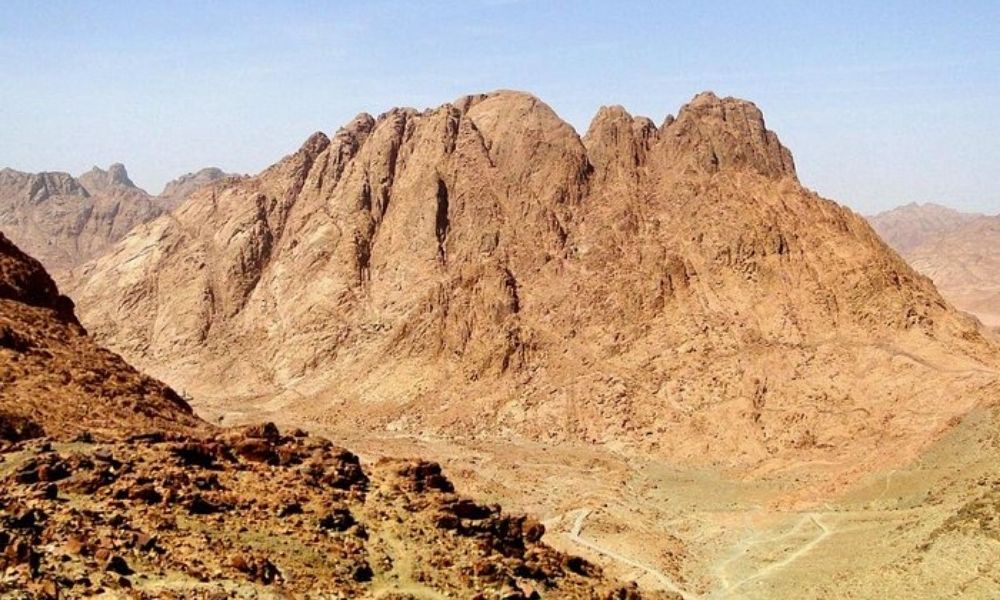
Mount Sinai, also known as Horeb or the Mountain of God, is one of the most sacred sites in the Bible. It is the mountain where God revealed Himself to Moses, gave the Ten Commandments, and established His covenant with Israel. The mountain stands as a powerful symbol of divine revelation, covenant relationship, and God’s holiness.
Name: Mount Sinai (Hebrew: Har Sinai)
Also Called: Mount Horeb (“Desolate Mountain”), the Mountain of God
Meaning: “Sinai” possibly derived from Sin, the ancient moon god—though biblically, it becomes associated with God’s glory and law
Location: Traditionally identified in the Sinai Peninsula (modern Egypt); alternative views place it in northwestern Arabia (Jebel al-Lawz)
Height: Approximately 2,285 meters (7,497 feet)
Key Biblical Events: The Burning Bush (Exodus 3), Giving of the Law (Exodus 19–20), God’s Covenant with Israel, Moses’ 40-day fast
Associated Figures: Moses, Aaron, Joshua, Elijah
Symbolism: God’s holiness, revelation, covenant, and law
Biblical Significance
Mount Sinai is the place where God descended in fire, thunder, and smoke to meet His chosen people through Moses. It marks the formal establishment of the Mosaic Covenant, through which Israel became a nation under God’s law.
Major Biblical Events
1. The Burning Bush (Exodus 3):
While tending sheep in Midian, Moses encountered God in a bush that burned but was not consumed. Here, God revealed His name — “I AM WHO I AM” — and called Moses to lead Israel out of Egypt.
2. The Giving of the Ten Commandments (Exodus 19–20):
After the Exodus, Israel encamped at Sinai for nearly a year. God descended upon the mountain in thunder and lightning, giving Moses the Ten Commandments written on stone tablets — the foundation of God’s moral law.
3. The Covenant Ceremony (Exodus 24):
Moses built an altar and sprinkled the blood of the covenant, symbolizing Israel’s commitment to obey God’s commands. He then ascended the mountain and remained there for forty days and nights in God’s presence.
4. The Golden Calf Incident (Exodus 32):
While Moses was on the mountain, the people turned to idolatry. Upon descending, Moses broke the stone tablets in grief and later interceded for Israel’s forgiveness.
5. Renewal of the Covenant (Exodus 34):
God instructed Moses to carve new tablets and reaffirmed His covenant, revealing His merciful and gracious nature.
6. Elijah’s Encounter (1 Kings 19):
Centuries later, the prophet Elijah fled to Mount Horeb, where he encountered God — not in wind, earthquake, or fire, but in a gentle whisper — a reminder that God reveals Himself in many ways.
Key Themes and Symbolism
- Holiness: The mountain was declared sacred ground — even animals were forbidden to touch it (Exodus 19:12–13).
- Revelation: God revealed His nature, His law, and His covenant plan for His people.
- Covenant: Sinai represents the binding relationship between God and Israel, sealed by divine law and sacrifice.
- Law and Grace: Though Sinai symbolizes God’s righteous law, it also points forward to the need for grace fulfilled through Christ (Galatians 3:24).
Location and Theories
- Traditional Site: Jebel Musa in Egypt’s southern Sinai Peninsula — site of St. Catherine’s Monastery, a 4th-century Christian landmark.
- Alternative Theory: Jebel al-Lawz in northwestern Saudi Arabia, proposed by some scholars due to geographical and archaeological clues.
Legacy and New Testament Connection
Mount Sinai’s thunderous revelation contrasts with Mount Zion, symbolizing the new covenant of grace through Jesus Christ (Hebrews 12:18–24).
While Sinai represents law and fear, Zion represents grace and access — yet both declare God’s holiness and His desire for covenant with His people.
Notable Scripture References
- Exodus 3:1–6 – The Burning Bush
- Exodus 19–20 – God’s descent and the giving of the Law
- Exodus 24 – Covenant confirmed with Israel
- Exodus 32–34 – Golden Calf and Covenant renewal
- 1 Kings 19:8–18 – Elijah’s encounter at Horeb
- Hebrews 12:18–24 – Contrast between Sinai and Zion







Leave a Reply