
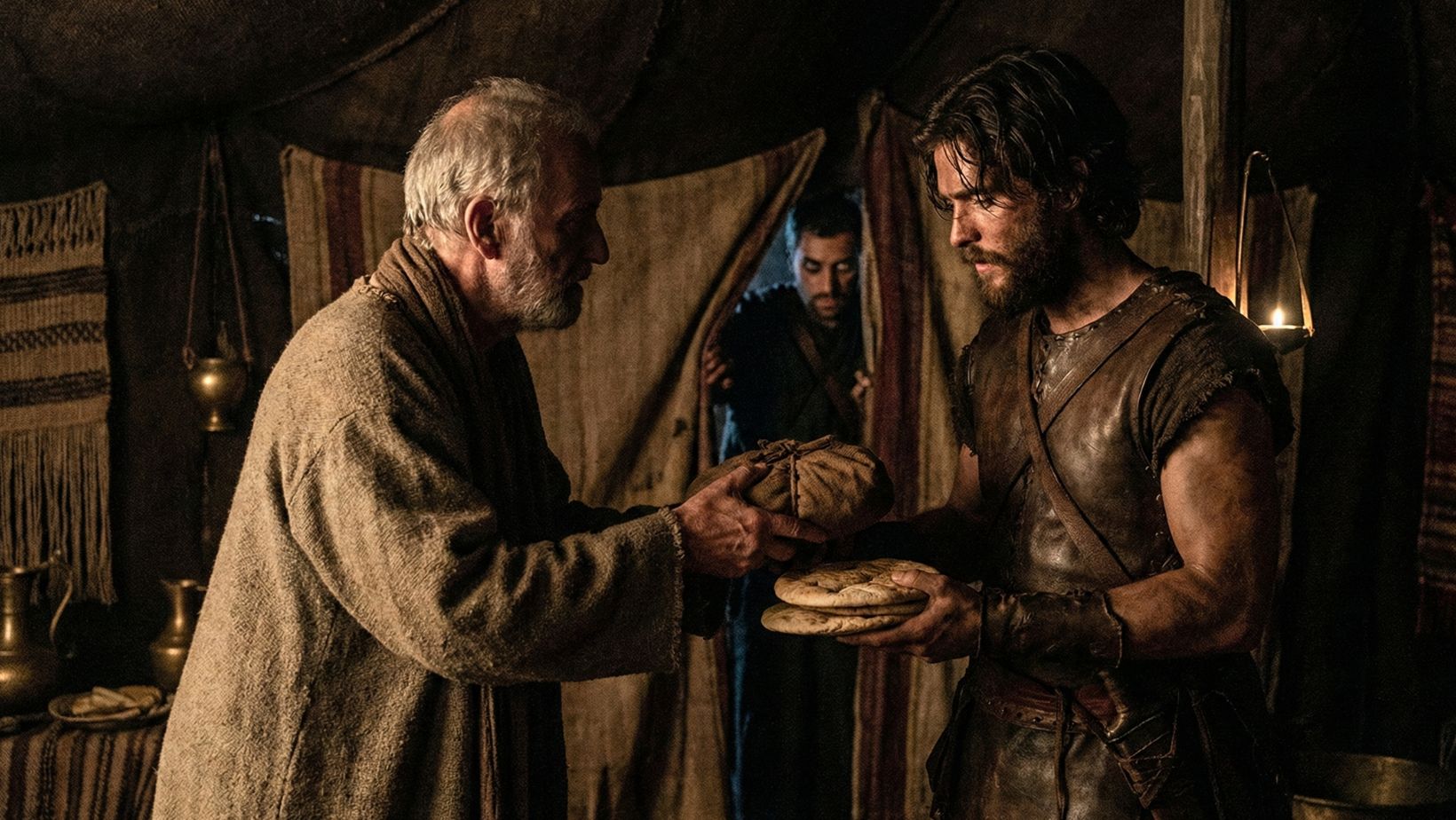
Nob is known in Scripture as the “City of Priests.” Following the destruction of Shiloh, the Tabernacle (the tent of meeting) was moved to Nob, making it the central religious sanctuary in Israel during the reign of King Saul. However, Nob is most famously remembered for a horrific tragedy: the massacre of the priesthood. When David fled there for refuge, receiving holy bread and Goliath’s sword, King Saul’s paranoia led him to order the execution of the entire priestly clan. This event marks the total moral collapse of Saul and the fulfillment of the ancient curse upon the house of Eli.
Quick Facts
- Name: Nob (Hebrew: Nov)
- Region: Territory of Benjamin (Just north of Jerusalem)
- Status: A Levitical/Priestly city; temporary home of the Tabernacle
- Key Figures: Ahimelech (High Priest), David, Doeg the Edomite, Abiathar
- Key Event: The massacre of 85 priests by Saul
- New Testament Reference: Cited by Jesus in Matthew 12 and Mark 2 regarding the Sabbath
- Symbol: The Showbread / The Bloody Ephod
Name Meaning
Nob: The name likely derives from a Semitic root meaning “to be high,” “to sprout,” or “fruit.” Its name suggests a prominent location, fitting for a sanctuary city situated on a height overlooking Jerusalem.
Geography / Historical Context
Proximity to Jerusalem: Nob was located very close to Jerusalem, likely on the Mount Scopus ridge or the Mount of Olives. The prophet Isaiah describes the Assyrian army arriving at Nob and “shaking his fist at the mount of Daughter Zion” (Isaiah 10:32), indicating a direct line of sight to the Temple Mount.
The Sanctuary Site: After the Philistines destroyed Shiloh, the Tabernacle structure (without the Ark, which was in Kiriath-jearim) was set up in Nob. It was here that the priests performed the daily rituals and kept the Bread of the Presence.
Major Roles / Identity
The Spiritual Center: In a time of political transition, Nob held the spiritual authority of Israel. The High Priest Ahimelech inquired of the Lord for the people there.
The Place of Refuge: David, alone and hungry, went to Nob seeking help. It represents the sanctuary that the church/temple should offer to the weary, though in this case, it resulted in disaster for the hosts.
The Site of Martyrdom: Nob became a slaughterhouse. It stands as a grim testament to what happens when political power (Saul) feels threatened by spiritual authority and anointed leadership (David).
Key Biblical Events
David eats the Showbread: Fleeing for his life, David arrived at Nob and lied to Ahimelech the priest, claiming he was on a secret mission for Saul. Hungry, he asked for five loaves of bread. Since there was no common bread, Ahimelech gave him the consecrated “Bread of the Presence” (Showbread), which was lawful only for priests to eat (1 Samuel 21).
Goliath’s Sword: David arrived unarmed. Ahimelech revealed that the sword of Goliath, whom David had killed in the Valley of Elah, was kept there wrapped in a cloth behind the ephod. David took it, saying, “There is none like it” (1 Samuel 21:9).
Doeg’s Betrayal: Doeg the Edomite, Saul’s chief shepherd, was detained at Nob “before the Lord” (possibly for a vow or purification). He witnessed the interaction between David and Ahimelech and later reported it to Saul to curry favor (1 Samuel 22:9).
The Massacre: Saul summoned the priests and accused them of treason. When his Israelite guards refused to kill the priests of Yahweh, Saul ordered Doeg the Edomite to do it. Doeg struck down 85 priests wearing the linen ephod. He then attacked the city of Nob itself, killing men, women, children, and livestock (1 Samuel 22:18–19).
Abiathar’s Escape: Only one son of Ahimelech, named Abiathar, escaped. He fled to David with the priestly ephod, officially transferring the priesthood’s support from Saul to David.
Notable Passages
1 Samuel 21:6: “So the priest gave him the consecrated bread, since there was no bread there except the bread of the Presence that had been removed from before the LORD…”
1 Samuel 22:18: “The king then ordered Doeg, ‘You turn and strike down the priests.’ So Doeg the Edomite turned and struck them down. That day he killed eighty-five men who wore the linen ephod.”
Mark 2:25–26: “[Jesus] answered, ‘Have you never read what David did when he and his companions were hungry and in need? …He entered the house of God and ate the consecrated bread, which is lawful only for priests to eat…’”
Isaiah 10:32: “This very day he will halt at Nob; he will shake his fist at the mount of Daughter Zion, at the hill of Jerusalem.”
Legacy & Impact
The Curse of Eli: The massacre at Nob fulfilled the prophecy given to Eli in 1 Samuel 2:31–33, that his entire priestly line would be cut off violently. Ahimelech was the great-grandson of Eli.
Jesus and Legalism: Jesus used the incident at Nob to teach the Pharisees that human need (hunger/life) takes precedence over ritual law. If David (the anointed king) could break a ritual rule to save life, how much more is the Son of Man Lord of the Sabbath?
The Shift of Power: The massacre at Nob was the final nail in Saul’s coffin regarding legitimacy. By killing the priests, he became an enemy of Yahweh. Conversely, when Abiathar brought the ephod to David, it signified that God’s guidance had officially left Saul and rested with David.







Leave a Reply