
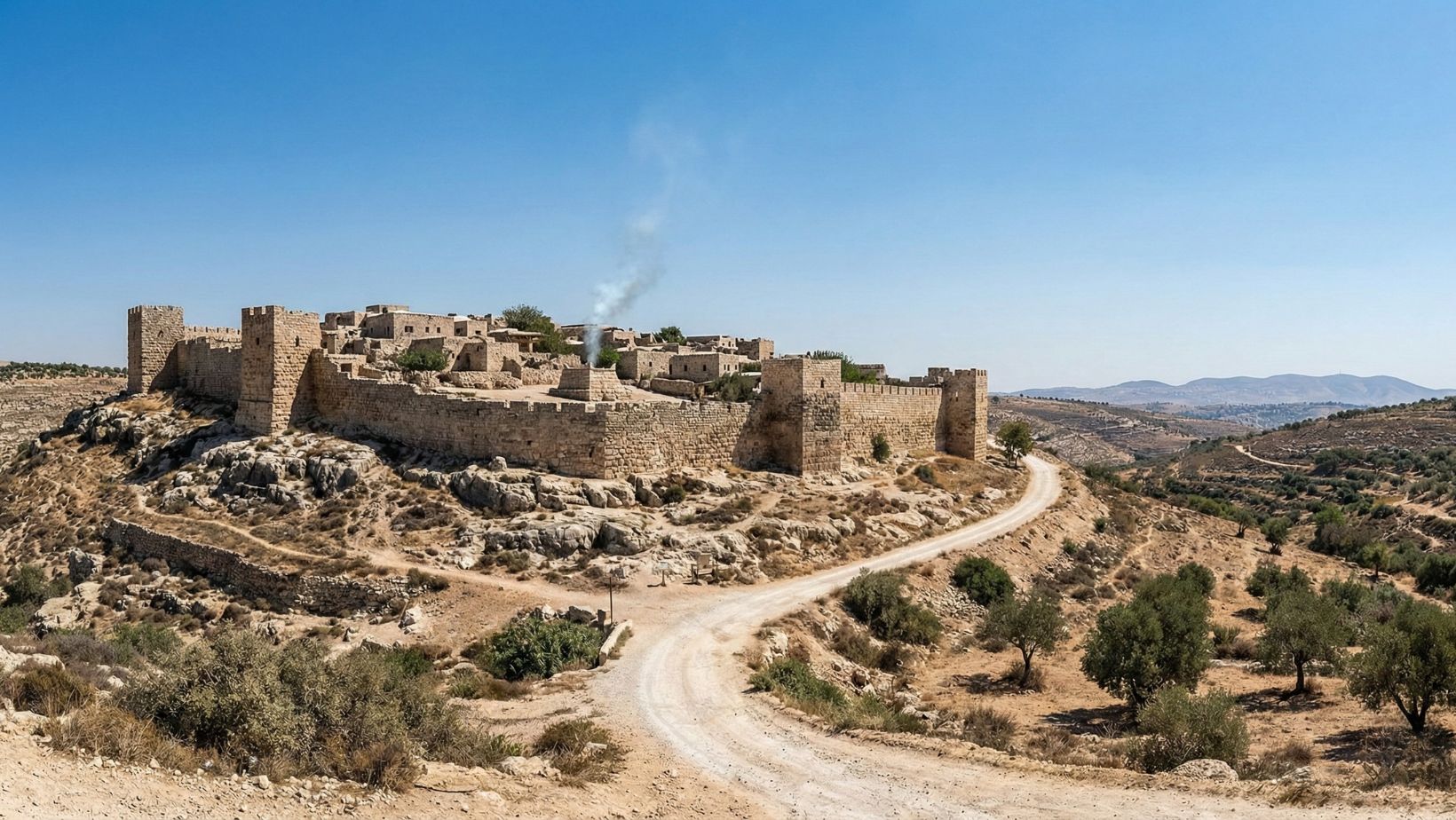
Ramah is one of the most significant cities in the Old Testament, serving as the center of spiritual and political leadership during the transition from the Judges to the Monarchy. While there are several places named “Ramah” in the Bible, the most prominent is Ramah of Benjamin (also known as Ramathaim-zophim). It was the birthplace, hometown, headquarters, and burial place of the prophet Samuel. Due to its high elevation and strategic location on the main road north of Jerusalem, it was also a heavily contested military site between the kingdoms of Judah and Israel.
Quick Facts
- Name: Ramah (Hebrew: Rāmāh, meaning “Height” or “High Place”)
- Full Name: Ramathaim-zophim (1 Samuel 1:1)
- Location: Territory of Benjamin, approx. 5 miles (8 km) north of Jerusalem
- Tribe: Benjamin
- Key Figure: The Prophet Samuel (his lifelong base of operations)
- Modern Identification: Likely the village of Er-Ram
- Key Events: Samuel judges Israel; Israel demands a king; Baasha fortifies it against Judah
- New Testament Link: Quoted in Matthew 2:18 (“Rachel weeping for her children”)
Name Meaning
“Ramah” comes from the Hebrew root meaning “to be high” or “height.” This name was common in ancient Israel (like “Springfield” or “Highland” today) because towns were often built on hilltops for defense. Specifically, this Ramah controlled the main north-south trade route (the Way of the Patriarchs), giving the name a double meaning: literally high in elevation and strategically high in importance.
Location / Geographical Context
Strategic Position: Situated on a high hill in the territory of Benjamin, sitting directly on the main road connecting the northern tribes to Jerusalem.
Border Town: After the kingdom divided, Ramah became a dangerous border town between the Northern Kingdom (Israel) and the Southern Kingdom (Judah).
Proximity: It was very close to Gibeah (King Saul’s hometown) and Mizpah (another center of gathering), making this small region the political “hotspot” of Israel’s early monarchy.
Major Roles / Identity
Samuel’s Headquarters: While the Tabernacle was often in Shiloh or Nob, the governing authority of Israel was centered in Ramah. Samuel built an altar there and returned there after his annual circuit of judging (Bethel, Gilgal, Mizpah).
Military Stronghold: Because it sat on the main road, whoever controlled Ramah could blockade Jerusalem. King Baasha of Israel later seized and fortified it to stop anyone from going in or out of Judah (1 Kings 15:17).
Staging Ground for Exiles: When Jerusalem fell to Babylon (586 BCE), the Jewish captives were rounded up in chains at Ramah before being marched to Babylon. This is where the prophet Jeremiah was released (Jeremiah 40:1).
Key Events
The Demand for a King: The elders of Israel gathered at Ramah to confront Samuel, rejecting his corrupt sons and demanding, “Appoint a king to lead us, such as all the other nations have” (1 Samuel 8:4–5).
The Anointing of Saul: Saul first met Samuel in/near this city (Ramathaim-zophim) seeking lost donkeys, leading to his private anointing as the first king (1 Samuel 9–10).
David’s Refuge: As noted in the previous study, David fled to Ramah (specifically the Naioth compound) to escape Saul (1 Samuel 19).
The War of the Fortification: Decades later, King Baasha of Israel fortified Ramah to strangle Judah’s economy. King Asa of Judah paid the Syrians to attack Israel, forcing Baasha to abandon Ramah. Asa then dismantled Ramah’s stones and used them to build up nearby towns (1 Kings 15:16–22).
Significance & Theology
The Seat of Prophetic Authority: For decades, Ramah was the de facto capital of Israel because the word of the Lord (through Samuel) resided there.
Rachel’s Weeping (Theology of Sorrow): The matriarch Rachel died near this region (Genesis 35:19 uses “Ephrath/Bethlehem,” but Jeremiah links her to Ramah, likely due to tribal borders).







Leave a Reply