
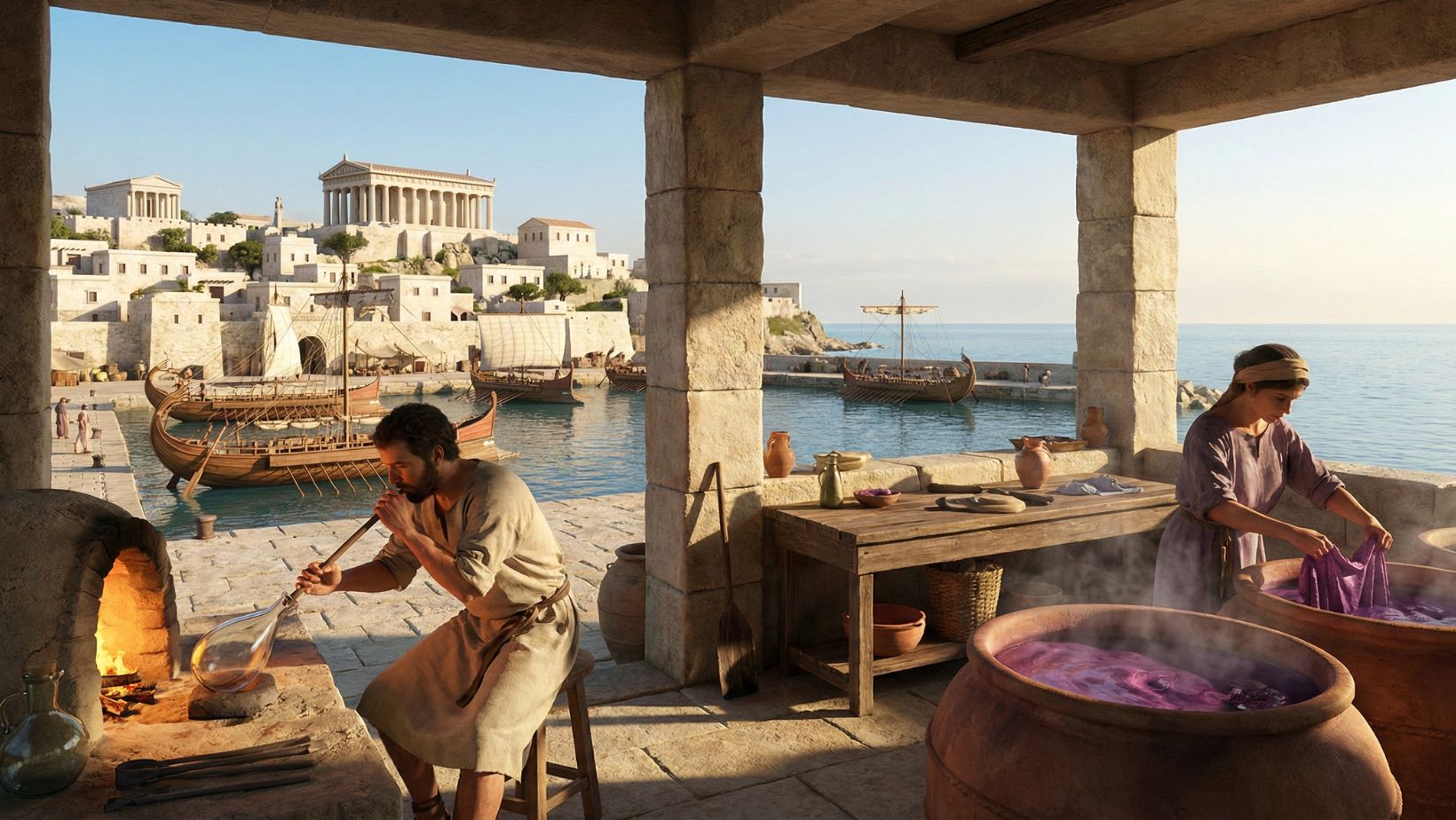
Sidon (modern Saida, Lebanon) is the firstborn of the Phoenician cities—the ancient “mother” from which Tyre and Carthage eventually sprang. Often called “Great Sidon” in Scripture, it was a thriving Mediterranean port renowned for its advanced craftsmanship, glass manufacturing, and seamanship. While it enjoyed immense wealth and a reputation for living “quiet and secure,” Sidon is primarily identified in the Bible as a spiritual snare to Israel. It was the source of the Baal and Ashtoreth worship that infiltrated the Holy Land, most notably through Jezebel, the daughter of the Sidonian king. Yet, in the New Testament, the region becomes a setting for Jesus’ compassion toward Gentiles.
Quick Facts
- Name: Sidon (Hebrew: Tzidon; Greek: Sidon)
- Location: Mediterranean coast of modern Lebanon, 25 miles north of Tyre
- Biblical Origin: Founded by Sidon, the firstborn son of Canaan (Genesis 10:15)
- Key Rulers: Ethbaal (Father of Jezebel)
- Major Deity: Ashtoreth (Goddess of fertility/war) and Baal
- Key Industry: Glassblowing, Purple Dye, Timber (Cedars), Bronze
- Character: Secure, wealthy, skilled, idolatrous
- Key Events: The idolatry of Solomon, The widow of Zarephath, The ministry of Jesus
- Status: One of the oldest continuously inhabited cities in the world
Name Meaning
Sidon: Derived from the Hebrew root Tzud, meaning “to hunt” or “to catch fish.” The name literally translates to “Fishery” or “Fishing Town,” reflecting its primary economy as a port city.
Lineage / Origins
Ancestry: Sidon is listed in the Table of Nations as the firstborn son of Canaan, who was the son of Ham (Genesis 10:15). This makes the Sidonians direct cousins to the Hittites, Jebusites, and Amorites, though they developed a distinct maritime culture.
Mother City: Sidon is considered the “mother” of Tyre. In Isaiah 23:12, Tyre is referred to as the “daughter of Sidon.” While Tyre eventually surpassed Sidon in political power, Sidon remained the cultural and religious anchor of Phoenicia.
Biblical Era / Context
Time: Spans from the earliest chapters of Genesis through the Book of Acts.
Setting: A coastal city with two harbors, protected by reefs. Unlike the hill country of Israel, Sidon looked outward to the sea.
Cultural Context: The Sidonians were famous for their artistic skill. Homer (in the Iliad) praises the silver mixing bowls of Sidon as the finest in the world. In the Bible, their timber-cutting skills were unrivaled (1 Kings 5:6).
Major Roles / Identity
The Spiritual Corruptor: The gods of Sidon—specifically Ashtoreth—were a constant stumbling block for Israel. Solomon’s downfall began when he loved “many foreign women,” including Sidonians, and built high places for their gods (1 Kings 11:1–5).
The Complacent City: Judges 18:7 describes the people of Sidon (and its colony Laish) as living “quiet and secure,” wealthy and far from trouble. This phrase became a biblical idiom for a false sense of security.
The Place of Gentile Mercy: In both the Old and New Testaments (Elijah and Jesus), the region of Sidon serves as a backdrop for God extending grace to non-Jews when Israel is failing in faith.
Key Characteristics
Artisan Skill: “There is no one among us who knows how to cut timber like the Sidonians” (1 Kings 5:6). They were master builders and craftsmen.
Idolatry: The city was the headquarters for the worship of Ashtoreth (Astarte), a goddess whose worship involved ritual prostitution and captivated the hearts of the Israelites.
Resilience: Unlike other ancient cities that were completely wiped out, Sidon was conquered repeatedly (by Assyrians, Babylonians, Persians, Greeks) but always survived and rebuilt.
Main Historical Events in Scripture
Allocation to Asher: Joshua assigned Sidon to the tribe of Asher (Joshua 19:28), but Asher failed to drive them out. Instead, the Israelites lived among the Sidonians (Judges 1:31).
Oppression of Israel: During the time of the Judges, the Sidonians were listed among those who oppressed Israel (Judges 10:12).
Elijah and the Widow: During the great drought, God sent Elijah not to an Israelite city, but to Zarephath, which belongs to Sidon. There, a Gentile widow fed the prophet, and her son was raised from the dead (1 Kings 17:9).
Jezebel’s Influence: King Ahab married Jezebel, daughter of Ethbaal, King of the Sidonians. This political alliance brought the militant worship of Baal-Melqart into Israel, sparking a religious civil war.
Jesus’ Ministry: Jesus went to the region of Tyre and Sidon. He healed multitudes from there (Mark 3:8) and specifically healed the Syrophoenician woman’s daughter, commending her faith (Mark 7:24-31).
Paul’s Visit: On his voyage to Rome as a prisoner, Paul was allowed to disembark at Sidon to visit friends and be cared for (Acts 27:3).
Major Relationships
Tyre: The sister city. They are almost always mentioned in a pair (“Tyre and Sidon”) in the Gospels as a collective symbol of the Gentile world.
Israel: Sidon was the temptation Israel could not resist—offering wealth, culture, and sensual religion.
Solomon: He engaged them for timber to build the Temple but was later ensnared by their gods.
Notable Passages
Judges 18:7: “They saw the people who were there, how they lived in security, after the manner of the Sidonians, quiet and unsuspecting…”
1 Kings 16:31: “[Ahab] took as his wife Jezebel the daughter of Ethbaal king of the Sidonians, and went and served Baal and worshiped him.”
Luke 4:26: Jesus reminds the angry crowd at Nazareth: “Elijah was sent to none of them [Israelite widows], but only to Zarephath, in the land of Sidon, to a woman who was a widow.”
Legacy & Impact
The Glass Industry: Ancient tradition and archaeology suggest Sidon was a pioneer in glass manufacturing.
The “Sidonian” Label: In the Old Testament, “Sidonian” was often used as a synonym for all Phoenicians, indicating the city’s primacy in the early biblical period.
A Warning to Cities: Jesus used Sidon (along with Tyre) as a standard of judgment—stating that even this pagan city would have repented if they had seen His miracles, shaming the Jewish cities of Chorazin and Bethsaida.
Symbolism / Typology
Ashtoreth: Sidon represents the lure of false religion, specifically the syncretism (mixing of beliefs) that destroyed Solomon’s spiritual integrity.
Zarephath: Represents God’s sovereignty to bypass the “chosen” people when they are apostate and pour out His spirit on the “unclean” Gentiles.







Leave a Reply