
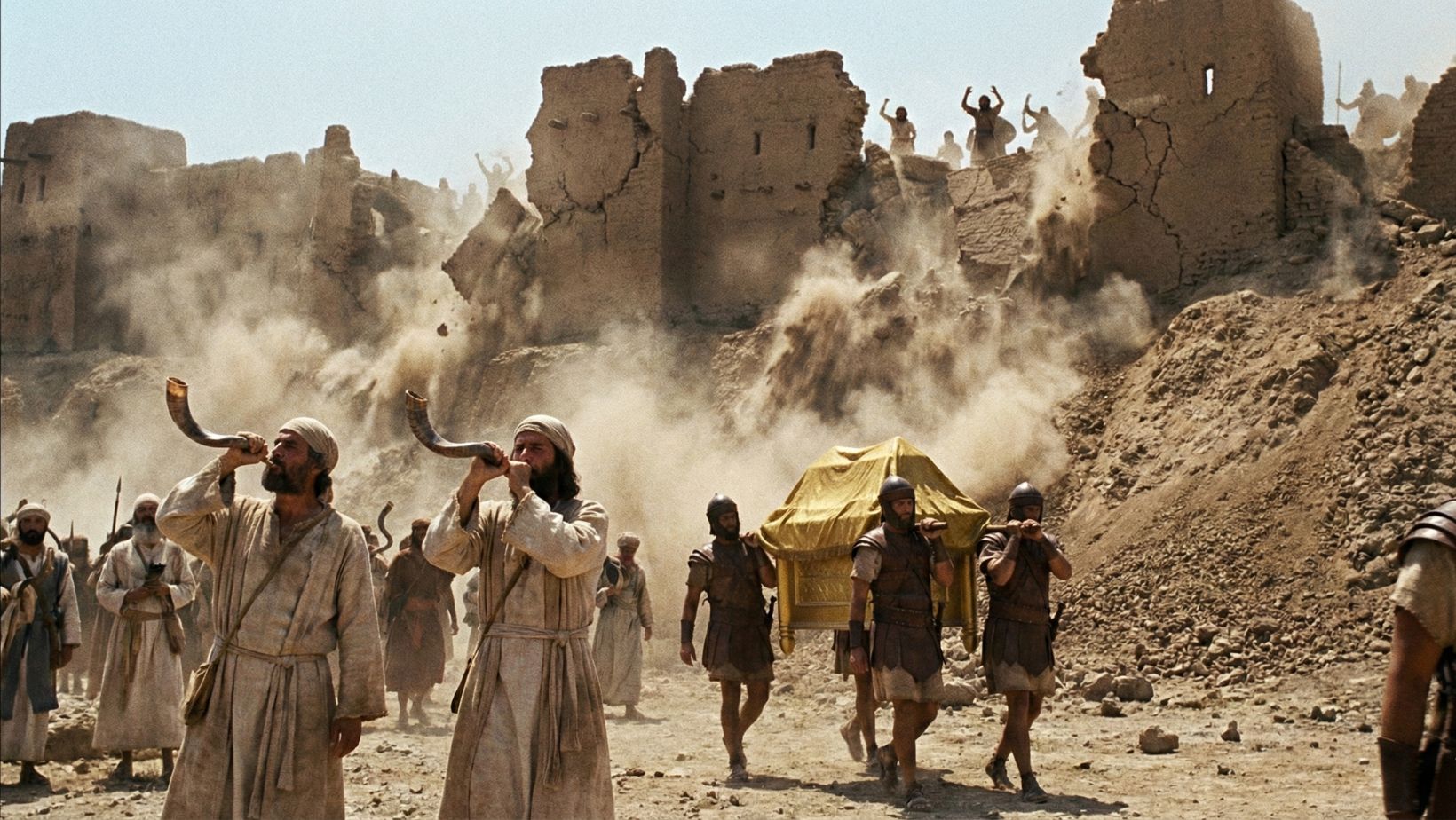
The walls of Jericho represent one of the most famous fortifications in biblical history and the site of Israel’s first major victory in the Promised Land. Jericho, known as the “City of Palms,” was a formidable, double-walled stronghold that stood as the gateway to Canaan. The account in Joshua 6, where the walls collapsed not by siege engines or battering rams but by the shout of the people and the sound of trumpets, underscores a central theological theme of the conquest: the battle belongs to the Lord.
- Event: The Fall of Jericho
- Scripture: Joshua 6
- Location: Jericho (Tell es-Sultan), in the Jordan Valley
- Era: Conquest (~1400 BCE or ~1200 BCE depending on dating)
- Key Characters: Joshua, Rahab, the Israelite Army
- Method: Faith/Obedience (Marching, Trumpets, Shouting)
- Outcome: Total destruction of the city; Rahab spared
- Curse: Joshua pronounced a curse on anyone who rebuilt it
Physical & Archaeological Description
The “City of Palms”: Jericho is one of the oldest inhabited cities in the world and the lowest (roughly 800+ feet below sea level). Its oasis-like environment made it a strategic prize.
The Fortifications: According to archaeological excavations (most notably by Kathleen Kenyon, though interpretations vary), the Bronze Age city was surrounded by a complex defensive system:
- Revetment Wall: A stone retaining wall at the base of the mound (tell), about 15 feet high.
- The Glacis: A steep, plastered slope rising above the stone wall.
- Upper Wall: A mud-brick wall atop the slope (roughly 46 feet above ground level).
- Lower Wall: Another mud-brick wall likely stood on top of the stone revetment wall.
This “double-wall” design meant that attackers had to climb a slippery slope while under fire from two tiers of defenders.
Detailed Event Description
1. The Strategy (Joshua 6:1–5)
Jericho was “tightly shut up” because of the Israelites. God gave Joshua a battle plan that made no military sense:
- The March: The armed men and seven priests with trumpets (shofars) were to march around the city once a day for six days.
- The Silence: The people were forbidden to speak or make a war cry. Only the trumpets blew.
- The Ark: The Ark of the Covenant, representing God’s presence, was central to the procession.
2. The Seven Days (Joshua 6:8–14)
For six days, the strange parade circled the city. This likely unnerved the inhabitants of Jericho, serving as psychological warfare while testing the patience and obedience of the Israelite soldiers.
3. The Seventh Day (Joshua 6:15–20)
On the final day, they marched around the city seven times.
- The Signal: On the seventh circuit, the priests gave a long blast on the trumpets.
- The Shout: Joshua commanded, “Shout! For the LORD has given you the city!”
- The Collapse: “The wall collapsed” (literally “fell beneath itself”). This suggests the mud-brick walls may have tumbled down the slope, creating a ramp for the Israelites to charge “straight in.”
4. The Aftermath (Joshua 6:21–25)
- Herem (The Ban): The city was devoted to destruction. Every living thing (except Rahab’s family) was killed, and the plunder (gold/silver/bronze/iron) went into the Lord’s treasury.
- Rahab’s Rescue: Because her house was built into the city wall (Joshua 2:15), the fact that she survived suggests a section of the wall remained standing—a detail seemingly supported by some archaeological interpretations of the north wall.
Theological Analysis
The Primacy of Worship over Warfare: The presence of the Ark and the blowing of shofars (rams’ horns used for Jubilee/worship, not just silver trumpets for war) turned the siege into a liturgical procession. It demonstrated that God’s presence, not human strength, brings victory.
Faith and Obedience: Hebrews 11:30 states, “By faith the walls of Jericho fell.” The strategy was designed to ensure Israel could not claim credit for the victory. It required total reliance on God’s illogical instructions.
The Firstfruits Principle: Jericho was the first city conquered. Just as the firstfruits of a harvest belong to God, the entire spoil of Jericho was “devoted” (herem) to Him. Achan’s theft of some items (Joshua 7) was stealing from God, which led to defeat at Ai.







Leave a Reply