
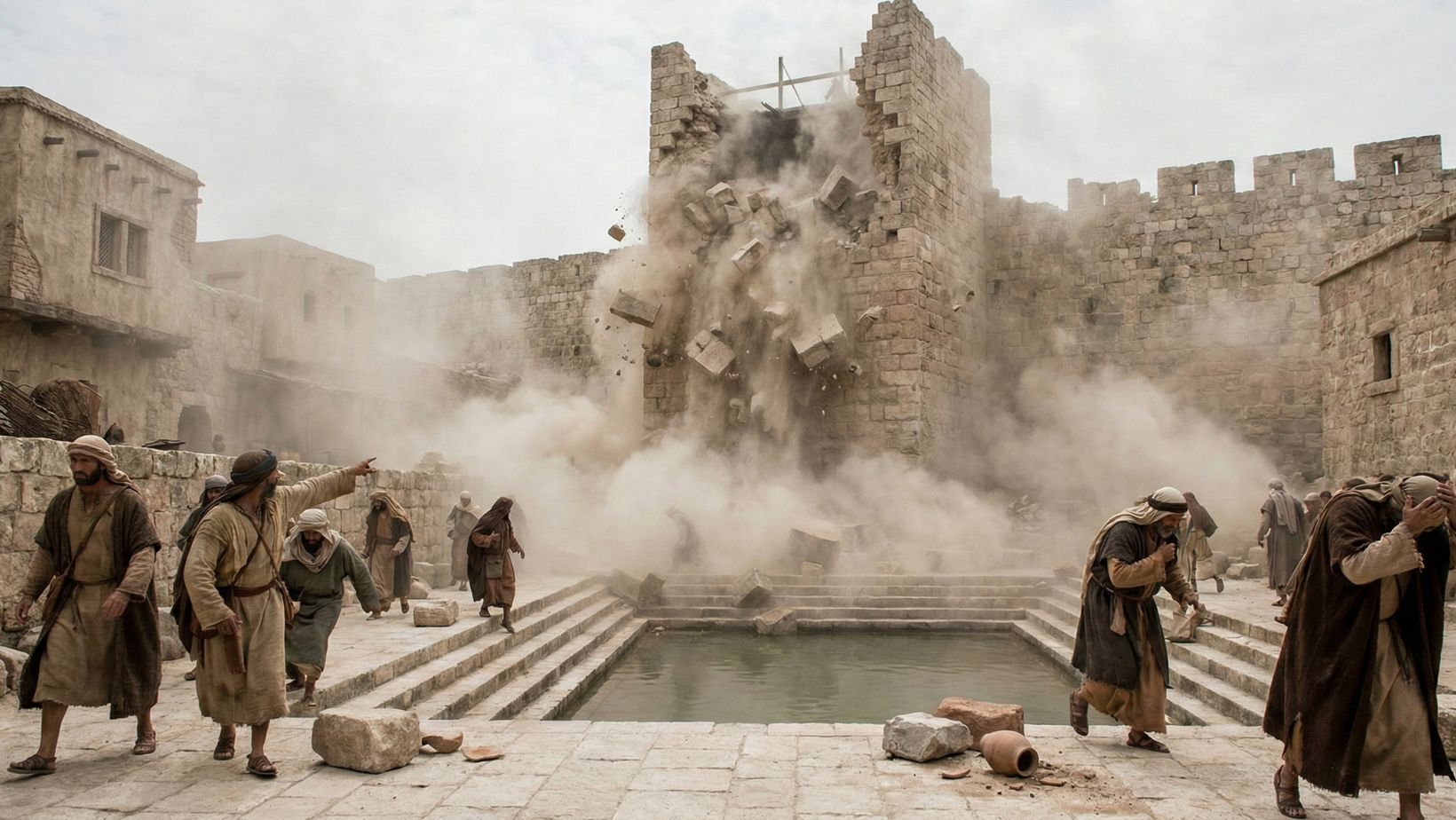
The Tower of Siloam is a specific structure mentioned only once in the Bible, by Jesus in the Gospel of Luke. Its collapse, which killed eighteen people, serves as the backdrop for one of Jesus’ most direct teachings on the nature of suffering and divine judgment. In a culture that often viewed tragedy as a direct punishment for personal sin (karma-like theology), Jesus used this news headline to deconstruct that assumption and pivot to a universal call for repentance.
- Event: The Collapse of the Tower
- Scripture: Luke 13:4–5
- Location: The Pool of Siloam, Jerusalem (south of the Temple Mount)
- Casualties: 18 people
- Context: Jesus responding to news about Galileans killed by Pilate
- Key Teaching: Suffering is not a proof of greater sinfulness; death is inevitable, so repentance is urgent.
- Legacy: A primary theological defense against “victim-blaming” in disasters.
Location / Historical Context
The Pool of Siloam: The tower was likely part of the fortifications or the aqueduct system surrounding the Pool of Siloam. This pool was vital to Jerusalem, fed by the Gihon Spring via Hezekiah’s Tunnel. It was a bustling area used for ritual purification and water supply.
The Tower: Archaeologists believe this tower may have been built into the city wall (the “First Wall”) near the pool. Some suggest it was a construction project initiated by Pontius Pilate using sacred Temple funds (Korban), which had already caused riots. If the workers were paid with “stolen” sacred money, the public might have viewed their deaths as divine retribution—a view Jesus explicitly corrects.
Detailed Event Description
1. The Setup (Luke 13:1)
People approached Jesus with breaking news: Pontius Pilate had slaughtered some Galileans while they were offering sacrifices. The implication was, “These men must have been terrible sinners for God to allow such a horrific death.”
2. Jesus’ Counter-Example (Luke 13:4)
Jesus brings up a second, accidental tragedy—the Tower of Siloam collapse.
- The Incident: A tower fell and crushed 18 people.
- The Question: “Do you think they were more guilty than all the others living in Jerusalem?”
3. The Verdict (Luke 13:5)
Jesus answers His own question with a definitive “I tell you, no!”
- Deconstructing Karma: He disconnects the tragedy from the moral status of the victims. The 18 victims were not the “worst sinners” in the city; they were simply people in the wrong place at the wrong time in a fallen world.
4. The Warning
He pivots the focus from the dead to the living: “But unless you repent, you too will all perish.”
- Meaning: Instead of analyzing why others died, the living should analyze why they are still alive and use that time to get right with God. The tragedy serves as a memento mori—a reminder of mortality.
Theological Analysis
Refutation of Retributive Justice: The prevailing view (seen also in Job’s friends and the disciples in John 9) was that bad things happen to bad people. Jesus clarifies that while sin entered the world and brought death generally, individual accidents are not necessarily specific judgments for specific sins.
The Equality of Sinners: By saying the victims were not “more guilty,” Jesus implies that everyone is guilty enough to deserve death. It levels the moral playing field—the disaster victim and the survivor are both in need of grace.
Urgency of Repentance: The tower fell without warning. Jesus teaches that death is often sudden and arbitrary. Therefore, one cannot wait for old age to repent; one must be ready at all times.







Leave a Reply