
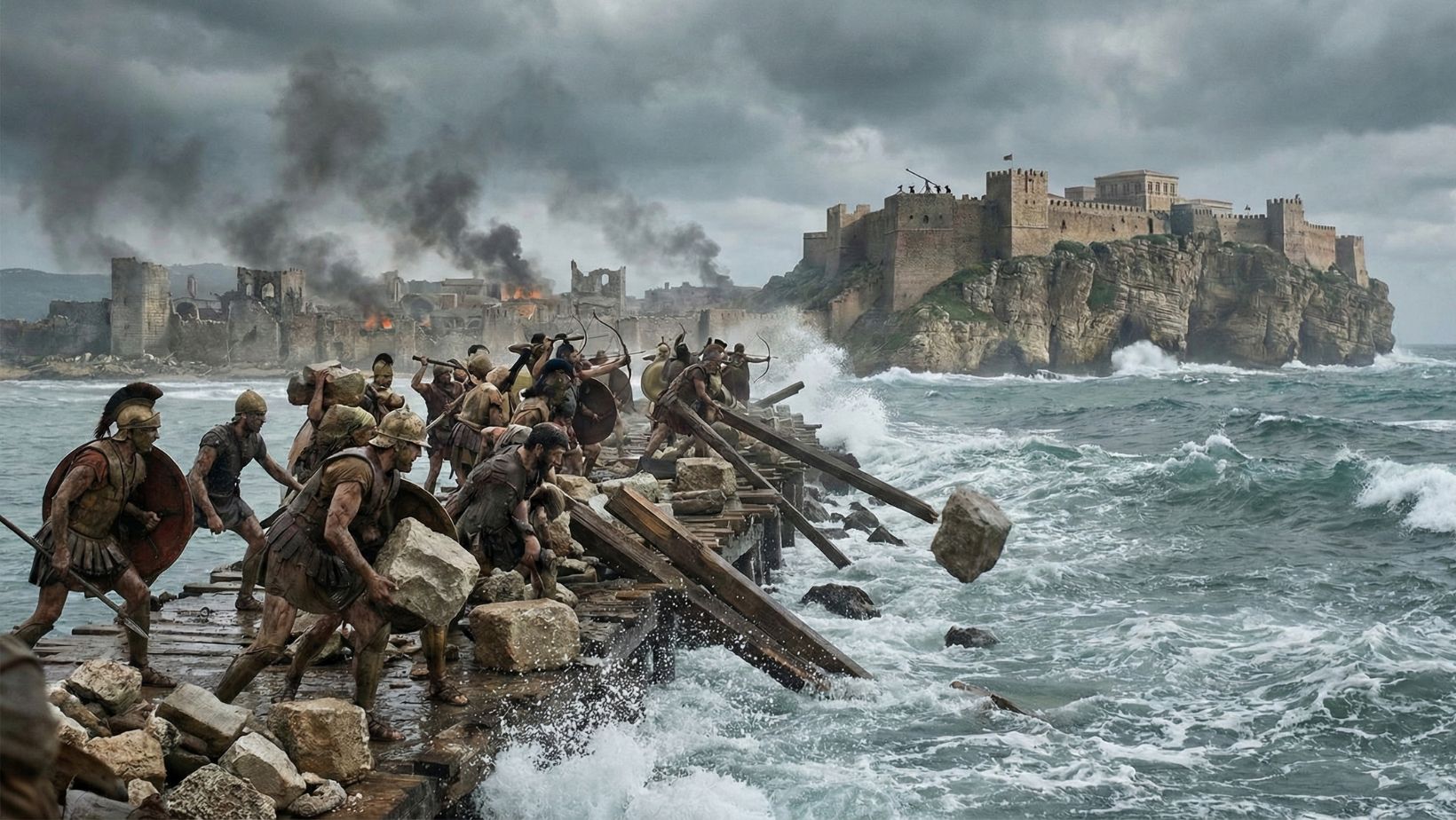
Tyre is the quintessential maritime superpower of the ancient biblical world. Located on the Mediterranean coast of modern-day Lebanon, it was the jewel of Phoenicia—renowned for its immense wealth, its impregnable island fortress, and its production of the rare “Tyrian purple” dye reserved for royalty. In Scripture, Tyre undergoes a dramatic transformation: it begins as a vital ally to Israel, supplying the cedars and craftsmen to build Solomon’s Temple, but evolves into a symbol of arrogant commercialism and spiritual pride. Its eventual destruction, described in vivid detail by the prophets, stands as one of the most remarkably fulfilled prophecies in history.
Quick Facts
- Name: Tyre (Hebrew: Tzor; Greek: Tyros)
- Location: Southern coast of Lebanon (Phoenicia), north of Israel
- Biblical Origin: Inherited by the tribe of Asher (Joshua 19:29) but never conquered by them
- Key Rulers: Hiram I (ally of David/Solomon), Ethbaal (father of Jezebel)
- Major Deity: Melqart (often identified with Baal)
- Key Industry: Maritime trade, Cedar timber, “Tyrian Purple” dye (from Murex snails), Glass
- Geography: Originally a mainland city, later expanded to a rocky island fortress 800 meters offshore
- Prophetic Role: The subject of extensive judgment prophecies (Ezekiel 26–28, Isaiah 23)
- Fate: Mainland destroyed by Nebuchadnezzar; Island destroyed by Alexander the Great
Name Meaning
Tyre: Derived from the Hebrew word Tzor, meaning “Rock.” This refers to the rocky island formation upon which the most secure part of the city was built.
Lineage / Origins
Ancestry: The inhabitants were Phoenicians (Canaanites), descendants of Ham/Canaan. They were culturally distinct from the Israelites, known as master shipbuilders and explorers who colonized the Mediterranean (founding Carthage).
Geopolitical Context: Tyre was the leading city of Phoenicia. Because their land was narrow and mountainous, they turned to the sea, becoming the merchant princes of the ancient world.
Biblical Era / Context
Time: Prominent from the time of the Judges through the New Testament (Acts).
The Golden Age: During the 10th century BCE (David/Solomon), Tyre was at its peak. King Hiram I formed a “brotherly covenant” with Israel, trading timber and gold for Israel’s wheat and oil.
The Era of Pride: By the time of the major prophets (Ezekiel/Isaiah), Tyre had become synonymous with hubris. They celebrated Jerusalem’s fall because it meant less trade competition, sparking God’s wrath.
Major Roles / Identity
The Builder: Tyrian craftsmen were the best in the world. They built David’s palace and were the primary architects and stonemasons for Solomon’s Temple (1 Kings 5).
The Merchant: Tyre controlled the trade routes of the Mediterranean. Scripture describes their markets filled with silver, iron, tin, lead, ivory, and ebony (Ezekiel 27).
The Oppressor: Later, Tyre became a center of slave trading, even selling the people of Judah and Jerusalem to the Greeks (Joel 3:4–6).
Key Characteristics
Impregnability: The city had two parts: Old Tyre (mainland) and New Tyre (island). The island city was surrounded by walls 150 feet high and was considered unconquerable until Alexander the Great.
Wealth: Zechariah 9:3 says Tyre “heaped up silver like dust, and gold like the dirt of the streets.”
Idolatry: It was a center of Baal worship. Jezebel, the daughter of the Tyrian king Ethbaal, exported this worship to Israel, corrupting the Northern Kingdom.
Main Historical Events in Scripture
Alliance with David & Solomon: King Hiram sends cedar logs and craftsmen to build the House of the Lord. The two nations enjoy a lucrative trade partnership (1 Kings 5; 2 Chronicles 2).
The Influence of Jezebel: The marriage of Ahab (Israel) to Jezebel (princess of Tyre/Sidon) introduces militant Baal worship to Israel, leading to the confrontation with Elijah (1 Kings 16).
Prophecy of Destruction: Ezekiel predicts that Tyre will be scraped bare “like the top of a rock” and that fishermen will spread their nets there. He predicts Nebuchadnezzar will attack the mainland, and many nations will come against her “like waves of the sea” (Ezekiel 26).
Jesus in Tyre: Jesus withdraws to the region of Tyre and Sidon. Here, He heals the daughter of a Syrophoenician woman, praising her great faith—one of the few times He ministered outside Jewish territory (Matthew 15:21–28).
Herod’s Death: In Acts 12, the people of Tyre and Sidon come to appease Herod Agrippa because they depend on his country for food. During this event, Herod is struck down by God.
Major Relationships
Hiram & Solomon: A relationship of mutual respect and commerce. Hiram supplied the materials for the Temple; Solomon supplied food for Hiram’s household.
Israel: A complex relationship shifting from “brotherly covenant” (Amos 1:9) to bitter enemies who rejoiced in Israel’s destruction.
Alexander the Great: Though not named in the Bible, he is the “great horn” of Daniel 8 who fulfilled Ezekiel’s prophecy. Because the island city refused to surrender, Alexander took the rubble of the mainland city (Old Tyre) and built a causeway (land bridge) out to the island to destroy it—literally scraping the mainland clean as prophesied.
Notable Passages
Ezekiel 26:4–5: “They will destroy the walls of Tyre and pull down her towers; I will scrape away her rubble and make her a bare rock. Out in the sea she will become a place to spread fishnets…”
Ezekiel 28:12–15: The lament over the “King of Tyre”—often interpreted as a dual prophecy describing both the human ruler and the fall of Satan (“You were the seal of perfection… You were in Eden, the garden of God…”).
Matthew 11:21: Jesus mentions Tyre: “If the mighty works done in you [Chorazin] had been done in Tyre and Sidon, they would have repented long ago.”
Legacy & Impact
The Fulfilled Prophecy: The siege of Tyre by Alexander the Great is considered one of the most stunning apologetic proofs in the Bible. The specificity of the prophecy (rubble thrown into the sea, scraped like a rock) matches the unique historical method Alexander used to conquer the island.
Christianity: By the time of Acts 21, a Christian church was established in Tyre. Paul stayed there for seven days with the disciples on his way to Jerusalem.
Symbolism / Typology
The King of Tyre (Satan): In Ezekiel 28, the pride of the human king of Tyre merges with a description of a fallen angelic being, making Tyre a symbol of Satanic pride and the original fall from glory.
Commercialism: Tyre represents the spirit of worldly wealth, trade, and luxury that functions without God—a precursor to “Babylon the Great” in Revelation.







Leave a Reply