
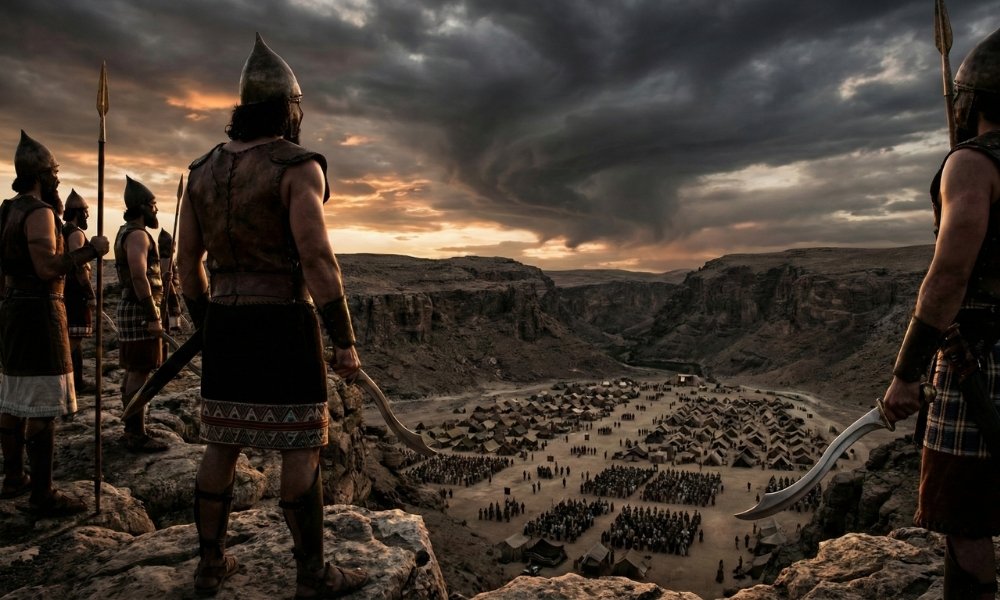
The Amorites were a powerful and dominant group of people inhabiting the Ancient Near East, frequently mentioned in the Old Testament as formidable adversaries of Israel. While often listed among the generic Canaanite tribes, the Amorites were distinct for their control of the mountainous hill country and the Transjordan region. They were known for their physical stature and military strength; the prophet Amos described them as “tall as cedars and strong as oaks.” Historically, they were not just local tribesmen but part of a massive migration of Semitic people who established major dynasties in Mesopotamia (including Babylon), though the biblical narrative focuses on their presence in the Promised Land where their “iniquity” eventually led to divine judgment and displacement by the Israelites.
- Ancestry: Descendants of Canaan (son of Ham)
- Region: The Hill Country (Judea/Samaria) and Transjordan (East of the Jordan)
- Meaning: “Westerners” or “Highlanders”
- Key Kings: Sihon of Heshbon, Og of Bashan
- Key Deities: Amurru, Baal, Sin (Moon god)
- Biblical Role: Primary obstacle to the Conquest; symbol of idolatry
- Fate: Defeated by Moses (East) and Joshua (West); assimilated or destroyed
Name Meaning
The name “Amorite” comes from the Akkadian word Amurru, meaning “Westerners” (people from the west of the Euphrates). In the Hebrew context, it is often associated with “mountain dwellers” or “highlanders,” contrasting with the Canaanites who typically dwelt in the lowlands and coastal plains.
Origin / Family Background
Genealogy: Genesis 10:16 lists the Amorites as descendants of Canaan, the son of Ham. This places them under the curse of Noah, destined for judgment.
Geographic Spread: unlike the coastal Canaanites, the Amorites were originally nomadic clans who settled in the mountains. By the time of the Exodus, they controlled two major kingdoms east of the Jordan River and dominated the hill country west of the Jordan (Jerusalem, Hebron, Lachish).
Biblical Era / Context
Era: They appear from the time of Abraham (approx. 2000 BCE) through the Conquest (approx. 1400 BCE) and the Judges.
The “Iniquity” Clock: In Genesis 15:16, God tells Abraham that his descendants cannot possess the land yet because “the iniquity of the Amorites is not yet complete.” This establishes a theological timeline: God gave the Amorites hundreds of years to turn from their wickedness before using Israel as an instrument of judgment.
Major Roles / Identity
The Hill Country Warriors: In Numbers 13, the spies report that the “Amorites live in the hill country.” They were the strategic defenders of the high ground, making them difficult to dislodge.
The Gatekeepers of the Jordan: Before Israel could even cross the Jordan River, they had to face the Amorite kingdoms of Sihon and Og on the eastern side.
The Archetype of Enemies: Because they were the strongest of the Canaanite nations, the term “Amorite” is sometimes used in the Bible as a blanket term for all the inhabitants of Canaan (e.g., Joshua 24:15).
Key Interactions / Events
Abraham’s Alliance: Not all interactions were hostile. Abraham had a treaty with the Amorite brothers Mamre, Eshcol, and Aner, who helped him rescue Lot (Genesis 14).
Conquest of the East (Sihon and Og): Moses asked King Sihon for peaceful passage through his land. Sihon refused and attacked. Israel destroyed his army and then defeated Og, King of Bashan (a man of giant stature). This victory was so significant it is celebrated repeatedly in the Psalms (Psalm 135, 136).
Battle of Gibeon (The Long Day): Five Amorite kings (led by the King of Jerusalem) attacked Gibeon. Joshua marched to defend Gibeon. During this battle, God threw the Amorites into confusion with hailstones, and the “sun stood still” to allow Israel to complete the victory (Joshua 10).
Key Character Traits
Physical Might: They are remembered as giants or men of great stature (Amos 2:9, Deuteronomy 3:11).
Stubbornness: Sihon’s refusal to let Israel pass is attributed to God “hardening his spirit” to bring about his defeat, similar to Pharaoh.
Wickedness: Their culture became the biblical standard for idolatry. To act wickedly was to act “according to all that the Amorites did” (1 Kings 21:26).
Notable Passages
Genesis 15:16: The prophecy of judgment — “…for the sin of the Amorites has not yet reached its full measure.”
Numbers 21:21-31: The defeat of Sihon — “Israel captured all the cities of the Amorites and occupied them.”
Joshua 10:12: The defeat of the Amorite coalition — “Sun, stand still over Gibeon, and you, moon, over the Valley of Aijalon.”
Amos 2:9: God’s reminiscence of the victory — “I destroyed the Amorite before them, though he was tall as the cedars and strong as the oaks.”
Legacy & Impact
The Transjordan Tribes: The land conquered from the Amorite kings Sihon and Og became the territory for the tribes of Reuben, Gad, and the half-tribe of Manasseh.
The Gibeonites: The Gibeonites, who tricked Joshua into a treaty, were actually Hivites/Amorites who managed to survive and live among Israel as servants.
The Warning: They serve as a warning that God’s patience with sin, though long (400+ years), eventually ends in judgment.
Symbolism / Typology
Sihon and Og: In Christian allegory and Jewish tradition, these two kings often represent the initial, giant obstacles that must be overcome before one can enter the spiritual “Promised Land.”
The Heights: Their dwelling in the mountains symbolizes spiritual pride and strongholds that exalt themselves against the knowledge of God (2 Corinthians 10:5).
Extra-Biblical References
Hammurabi: The most famous Amorite in secular history is Hammurabi, the King of Babylon (approx. 1750 BCE), known for his law code. The Amorites were originally nomadic invaders who took over Mesopotamia, ending the Sumerian civilization.
Mari Tablets: Ancient texts found in the city of Mari describe the “Amurru” as nomadic, tent-dwelling people who “know not grain” (uncivilized), contrasting with their later urbanized status in the Bible.







Leave a Reply