
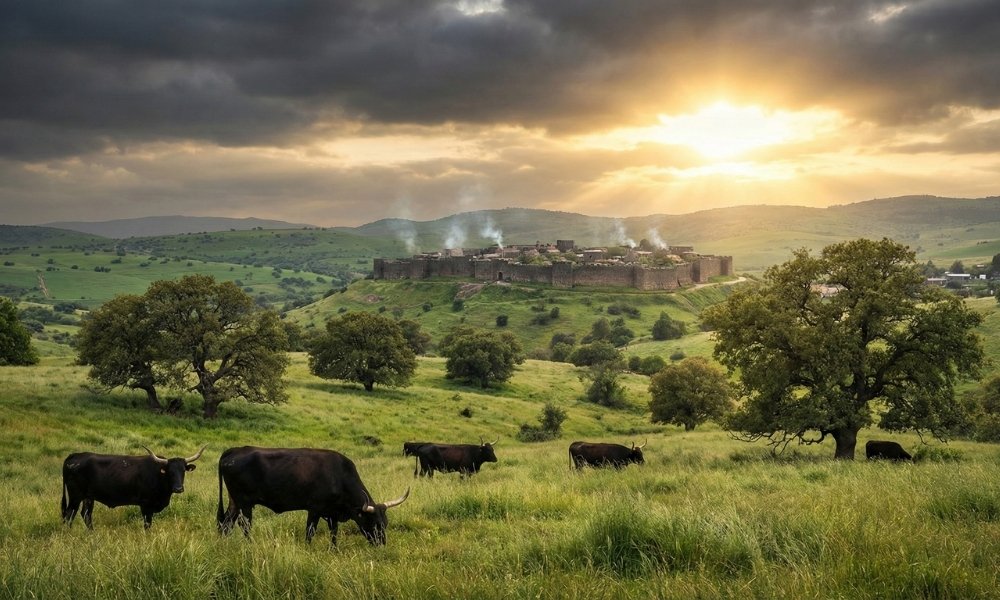
The “Bashanites” (or the People of Bashan) refer to the inhabitants of the fertile, northern plateau east of the Sea of Galilee, a region renowned in Scripture for its lush pastures, massive oak trees, and formidable livestock. Historically, the people of Bashan during the Exodus era were Amorites ruled by the last of the Rephaite giants, King Og. They represented a kingdom of immense physical strength and agricultural wealth. Their defeat at the Battle of Edrei was a pivotal moment in Israelite history, celebrated for centuries as a testament to God’s power over “mighty kings.” Later, the term is used poetically and prophetically (e.g., “Cows of Bashan”) to describe the wealthy, self-indulgent elite of Israel.
Quick Facts
- Name: People of Bashan / Subjects of Og
- Region: Bashan (Modern Golan Heights and parts of Southern Syria)
- Meaning: Bashan means “Fruitful,” “Smooth Soil,” or “Stoneless Ground”
- Era: Exodus and Conquest (~1400 BCE); Monarchy period
- Ruler: King Og (a Rephaite giant)
- Ethnic Origin: Amorites (Canaanite stock) mixed with Rephaim
- Key Symbols: Strong Bulls, Fat Cows, Mighty Oaks
- Fate: Conquered by Moses; land given to the Half-Tribe of Manasseh
Name Meaning
“Bashan” is derived from a root meaning “smooth” or “soft soil,” referring to the region’s incredibly fertile volcanic soil which made it the breadbasket of the area. Consequently, a “Bashanite” implies one who dwells in luxury, fertility, and strength.
Lineage / Family Background
The Common People: The general population of Bashan at the time of the conquest were Amorites, a powerful Canaanite group who had established kingdoms on both sides of the Jordan.
The Ruling Class: The Bible specifically notes that their king, Og, was one of the last remaining Rephaites (giants). This suggests a stratified society where a powerful, ancient warrior caste ruled over the Amorite populace.
Successors: After the Israelite conquest, the “people of Bashan” became the Half-Tribe of Manasseh (the clans of Jair and Machir), who settled the land and became famous warriors themselves.
Biblical Era / Context
Time: They appear most prominently at the end of the wilderness wandering (Numbers 21) just before Israel crossed the Jordan.
Setting: A high plateau (approx. 2,000 ft above sea level) known for its rich grazing land. It was a land of “sixty fortified cities” with high walls and bronze gates (Deuteronomy 3:4-5).
Cultural Context: Bashan was the center of the cult of the dead (Rapi’uma) in ancient Ugaritic tradition. The region was associated with the underworld and dark spiritual powers, making Og’s defeat a theological victory over darkness as well as a military one.
Major Roles / Identity
The Stronghold of the North: The Kingdom of Bashan was the northern gatekeeper of the Transjordan. Defeating them secured Israel’s flank before entering Canaan proper.
The Symbol of Pride: In biblical poetry, Bashan represents pride and lofty strength. The “Oaks of Bashan” are often paired with the “Cedars of Lebanon” as symbols of arrogance that God will humble (Isaiah 2:13).
The Symbol of Indulgence: The “Cows of Bashan” became a idiom for wealthy women who oppressed the poor to feed their own luxury (Amos 4:1).
Key Character Traits
Fortified: They were not nomadic tent-dwellers but urbanized builders of “great and fenced cities” (Argob region).
Physically Imposing: Ruled by a giant and famous for their “strong bulls,” the identity of Bashan was one of brute force.
Wealthy/Prosperous: Their land produced the best livestock in the region. To eat “rams of Bashan” was to eat the finest delicacy (Deuteronomy 32:14).
Main Life Events (Group History)
The Battle of Edrei: When Moses requested safe passage or approached their border, King Og mustered his entire army at Edrei. Unlike the cautious strategies used elsewhere, Og met them in open battle, relying on his strength.
Total Destruction: The Israelites, reassured by God not to fear Og’s size, defeated the army and killed Og, his sons, and his people, leaving no survivors (Numbers 21:33-35).
The Spoil: Israel took the sixty cities of the Argob region (later Trachonitis) and all the livestock—a massive influx of wealth for the tribes before crossing the Jordan.
Major Relationships
King Og: Their legendary monarch. His bedstead (sarcophagus) of iron was kept as a trophy in Rabbah of the Ammonites for centuries.
Sihon the Amorite: The neighboring king to the south (Heshbon). The defeats of Sihon and Og are almost always mentioned together in Psalms as the twin victories of the Exodus.
Manasseh: The Israelite tribe that inherited their cities.
Notable Passages
Numbers 21:33: “Then they turned and went up along the road toward Bashan, and Og king of Bashan and his whole army marched out to meet them in battle at Edrei.”
Psalm 22:12: “Many bulls surround me; strong bulls of Bashan encircle me.” (Prophetic imagery of the Messiah’s enemies).
Amos 4:1: “Hear this word, you cows of Bashan on Mount Samaria, you women who oppress the poor and crush the needy…”
Zechariah 11:2: “Wail, O oaks of Bashan, for the dense forest has been cut down!”
Legacy & Impact
The Liturgy of Victory: The defeat of Bashan became a standard refrain in Israel’s worship. Psalm 135 and 136 (“His love endures forever”) recite the killing of Og as a primary evidence of God’s love for Israel.
Geography of Evil: In Second Temple Jewish literature (like 1 Enoch), the region of Bashan (specifically Mount Hermon) is identified as the place where the fallen angels descended. This amplifies the significance of Moses and Joshua cleansing the land.
Agricultural Benchmark: For centuries, “Bashan” remained the standard for agricultural excellence in Israelite literature.
Symbolism / Typology
The Bulls of Bashan: They represent powerful, relentless, and encircing enemies. In Psalm 22, they symbolize the demonic and human forces gathering around Christ at the crucifixion.
The High Ground of Pride: Bashan represents the “high thing that exalts itself against the knowledge of God” (2 Corinthians 10:5). Its conquest typifies bringing every thought and power into captivity to Christ.







Leave a Reply