
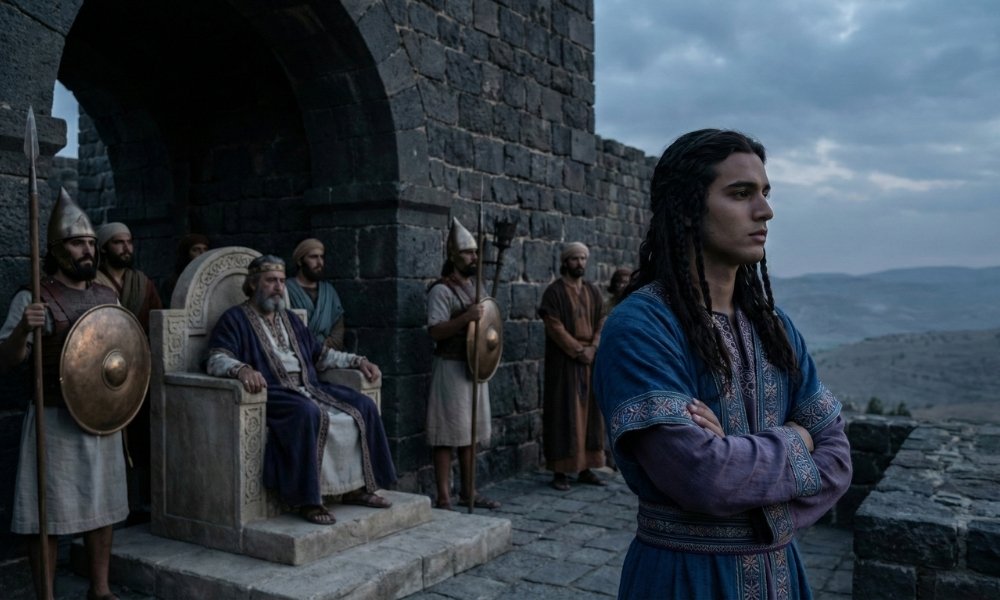
The Geshurites refer to two distinct people groups in the Old Testament, though the most prominent narrative role belongs to the Aramean Kingdom of Geshur located in the north, east of the Sea of Galilee. While the southern Geshurites were nomadic enemies raided by David in the Negev, the northern Geshurites were a sovereign political state that maintained a complex relationship with Israel. They are best known for their diplomatic alliance with King David, sealed by his marriage to Maakah, the daughter of the Geshurite King Talmai. This union produced Absalom and Tamar, making Geshur the maternal homeland and eventual place of exile for David’s rebellious son.
Quick Facts
- Name: Geshurites (Hebrew: Geshuri)
- Meaning: “Bridge” or “Proud Beholder”
- Region (North): The Golan Heights (Bashan), east of the Sea of Galilee
- Region (South): The Negev desert, bordering Philistia and Sinai
- Era: Conquest (Joshua) through the Divided Monarchy (~1400–900 BCE)
- Ethnicity: Aramean (Syrian) in the north; unknown nomadic stock in the south
- Famous Ruler: King Talmai (North)
- Key Biblical Figures: Maakah (David’s wife), Absalom (David’s son)
- Fate: Northern kingdom eventually absorbed by Aram-Damascus; Southern tribe destroyed by David
Name Meaning
“Geshur” is often linked to the Hebrew root meaning “Bridge” or “Connection.” Geographically, the northern Kingdom of Geshur served as a bridge between the land of Israel and the powerful Aramean states to the north (like Aram-Damascus). It occupied a strategic buffer zone in the rocky terrain of the Golan.
Lineage / Family Background
Northern Geshurites: They were Arameans (Syrians). Unlike the Canaanites whom Israel was commanded to destroy, the Arameans were related to Israel through the patriarchs (Abraham and Jacob had Aramean ties). This may explain why David sought an alliance with them rather than a conquest.
Southern Geshurites: These were ancient inhabitants of the land near Philistia (Joshua 13:2), likely Bedouin-style nomads unrelated to the northern kingdom. They are listed alongside the Amalekites as enemies of Israel.
Biblical Era / Context
Time: They appear from the time of Joshua (who failed to drive them out) to the time of David (who married into them).
Setting:
- North: A rugged, basalt landscape with fortified towns, serving as a gateway between the fertile Bashan plateau and the desert.
- South: The arid wilderness south of Judah.
Political Context: During the time of the Judges and early Monarchy, Geshur (North) was an independent principality. It maintained its sovereignty despite being allocated to the tribe of Manasseh, proving to be a stubborn and entrenched neighbor.
Major Roles / Identity
The Diplomatic Ally: For King David, the northern Kingdom of Geshur was a strategic ally against the House of Saul (who held Gilead nearby) and potentially against the Philistines. The marriage to Maakah was a political move to secure his northern border.
The Place of Exile: When Absalom murdered his half-brother Amnon, he fled to Geshur—his grandfather’s kingdom—and stayed there for three years (2 Samuel 13:38). Geshur served as his sanctuary and incubator for rebellion.
The Persistent Remnant: In Joshua 13:13, the text notes, “But the Israelites did not drive out the people of Geshur and Maakah, so they continue to live among the Israelites to this day.” They represent the incomplete obedience of the conquest.
Key Character Traits
Independent: The northern Geshurites successfully maintained their independence for centuries, sandwiched between powerful Israel and Aram.
Protective: King Talmai provided long-term sanctuary for his grandson Absalom, shielding him from David’s justice.
Hostile (Southern Group): The southern clan was aggressive enough that David felt it necessary to conduct “scorched earth” raids against them to protect Judah (1 Samuel 27:8).
Main Life Events (Group History)
Survival under Joshua: The tribe of Manasseh was allotted the land of Bashan, including Geshur, but failed to conquer it. The Geshurites “dwelt among” Israel, likely maintaining a tribute or treaty relationship.
David’s Raids (Southern Group): While living in Ziklag (fleeing from Saul), David attacked the Geshurites, Girzites, and Amalekites in the Negev, leaving no survivors to report his movements to the Philistine king Achish.
The Royal Marriage: David married Maakah, daughter of Talmai, King of Geshur. This union produced Absalom, who would later try to usurp David’s throne.
Absalom’s Flight: After killing Amnon, Absalom fled to Geshur. He lived in the royal court of his grandfather Talmai for three years until Joab negotiated his return to Jerusalem.
Major Relationships
King Talmai: The King of Geshur and father-in-law to David. His name (meaning “Furrowed”) suggests a connection to the Anakim (Num 13:22 lists a giant named Talmai), leading some to speculate he may have had Rephaite ancestry, though he is called an Aramean.
David: He warred with the southern Geshurites but married into the northern ones.
Absalom: The “Prince of Geshur” by blood. His handsome appearance and ambitious nature may have been influenced by his royal maternal lineage.
Jair: A Manassite warrior who conquered the tent villages around Geshur (Argob), though the Geshurites later reconquered some of these areas (1 Chronicles 2:23).
Notable Passages
Joshua 13:13: “But the Israelites did not drive out the people of Geshur and Maakah, so they continue to live among the Israelites to this day.”
2 Samuel 3:3: “…the third, Absalom the son of Maakah daughter of Talmai king of Geshur.”
1 Samuel 27:8: “Now David and his men went up and raided the Geshurites, the Girzites and the Amalekites…” (referring to the southern group).
2 Samuel 15:8: (Absalom speaking) “While your servant was living at Geshur in Aram, I made a vow to the Lord…”
Legacy & Impact
The Roots of Rebellion: The alliance with Geshur brought distinct trouble to David’s house. Maakah is rarely mentioned, but her son Absalom nearly destroyed the Davidic dynasty. Some commentators suggest that Absalom’s time in Geshur (a pagan court) hardened his heart against his father and Israel’s God.
The Buffer State: Geshur eventually ceased to be an independent biblical player, likely absorbed by the expanding power of Aram-Damascus, which became a major thorn in Israel’s side during the later monarchy.
Archaeology: Excavations at Et-Tell (believed to be Bethsaida, the capital of Geshur) have revealed a fortified city with a palace, city gate, and stele depicting a moon god, confirming the pagan, Aramean culture of the region during the 10th century BCE.
Symbolism / Typology
Foreign Entanglement: Geshur represents the complexity and often the danger of worldly alliances. David’s political marriage secured a border but invited internal family strife that mirrored the chaos of the pagan nations.
The “Bridge” to Exile: Just as its name implies, Geshur served as a bridge—taking Absalom away from the covenant land into a foreign mindset, from which he returned not as a penitent son, but as a conspirator.






Leave a Reply