
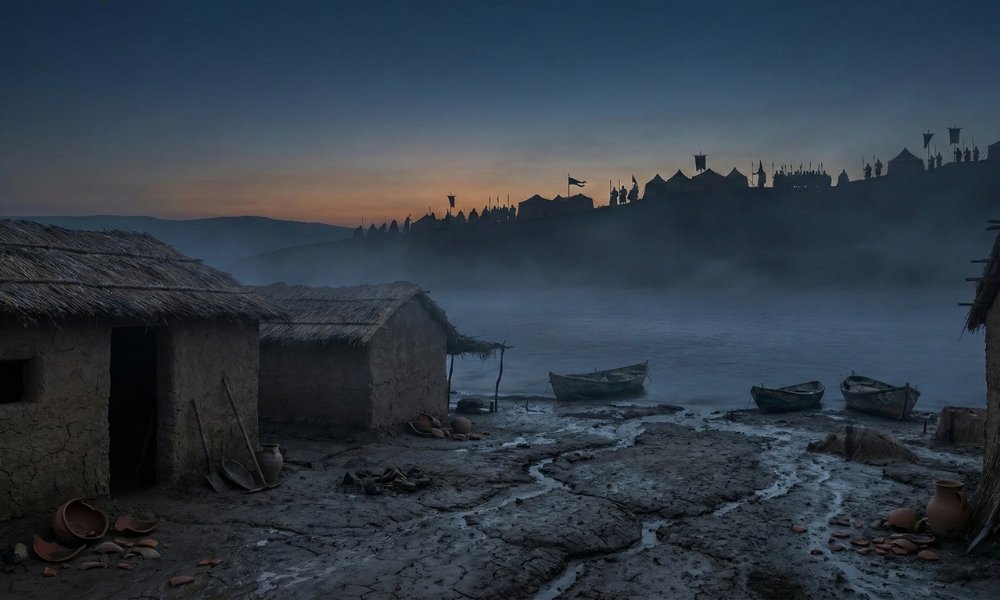
The Girgashites are the most enigmatic and obscure of the seven Canaanite nations that God commanded Israel to displace. Unlike the Amorites, who were known for their mountains, or the Philistines, who were known for their iron, the Girgashites appear almost exclusively in lists of enemy nations without specific kings, battles, or cities attributed to them in the Old Testament narrative. However, their inclusion in the “seven nations greater and mightier” than Israel (Deuteronomy 7:1) implies they were a significant ethnic group with established territory, likely situated in the Galilee region or west of the Jordan River. Some traditions and linguistic connections suggest their descendants may have inhabited the region where Jesus later performed the miracle of casting out the Legion of demons.
- Ancestry: Descendants of Canaan (Son of Ham)
- Region: Likely west of the Jordan, possibly near the Sea of Galilee
- Meaning: “Dweller in clay/mud” or “Stranger drawing near”
- Biblical Role: One of the seven forbidden nations
- Key Mention: Deuteronomy 7:1, Joshua 24:11
- Fate: Displaced by Israel; likely assimilated or fled north
- Symbol: The Forgotten Enemy
Name Meaning
The name “Girgashite” (Hebrew: Girgashi) is of uncertain etymology. It is often linked to the Hebrew root for “clay” or “muddy ground,” suggesting they may have lived in marshy or soft-soil agricultural areas. Another interpretation connects it to “wandering” or “stranger.”
Origin / Family Background
Genealogy: Genesis 10:16 lists the Girgashite as the fifth son of Canaan. This places them firmly within the Hamitic line, subject to the curse of Noah and distinct from the Semitic Israelites.
Geography: Their exact location is never explicitly defined in the Old Testament, unlike the Amorites (mountains) or Canaanites (coast). However, because they are listed between the Canaanites and the Jebusites, most scholars place them in the central western region. Later rabbinic and historical sources (including Josephus) suggest they may have migrated northward or were located near the Sea of Galilee.
Biblical Era / Context
The Promise: In Genesis 15:21, God lists the Girgashites among the peoples whose land would be given to Abraham’s descendants.
The Conquest: In Joshua 24:11, as Joshua recounts the history of Israel, he mentions: “Then you crossed the Jordan and came to Jericho… The Amorites, Perizzites, Canaanites, Hittites, Girgashites, Hivites and Jebusites fought against you, but I gave them into your hands.”
The Exile/Return: Nehemiah 9:8 recalls God’s faithfulness in fulfilling the promise to drive out the Girgashites, showing that even after the Babylonian exile, this victory was remembered as a foundational part of Israel’s history.
Major Roles / Identity
The “List” Nation: The Girgashites function primarily as a collective entity in Scripture. They serve as a reminder that the land was fully occupied by distinct, sovereign groups before Israel arrived.
The “Missing” Enemy: Unlike the other six nations, there is no single narrative account of a specific battle against a “Girgashite King.” This silence has led to Jewish traditions suggesting that perhaps the Girgashites fled to Africa or Armenia rather than fight, though Joshua 24 implies they did fight and were defeated.
Key Interactions / Events
The Crossing of the Jordan: When Israel crossed the Jordan, the Girgashites were among the coalition that opposed them. Their defeat was total enough that they vanished from the biblical record as a distinct political power immediately after the era of Joshua.
The New Testament Connection (The Gergesenes): In Matthew 8:28 (KJV/NKJV), Jesus comes to the “country of the Gergesenes” (distinct from Gadarenes in other manuscripts) to cast out demons. Many scholars, including early church father Origen, identified “Gergesa” with the ancient territory of the Girgashites on the eastern shore of the Sea of Galilee. If accurate, this creates a profound theological link: where Joshua failed to fully spiritually cleanse the land of Girgashite idolatry, Jesus returned to drive out the spiritual forces (Legion) occupying that same region.
Notable Passages
Deuteronomy 7:1: “When the Lord your God brings you into the land… to drive out before you many nations—the Hittites, Girgashites, Amorites, Canaanites, Perizzites, Hivites and Jebusites, seven nations larger and stronger than you.”
Joshua 3:10: “This is how you will know that the living God is among you and that he will certainly drive out before you… the Girgashites.”
1 Chronicles 1:14: A genealogical record reaffirming their descent from Canaan.
Legacy & Impact
Historical Mystery: The Girgashites serve as a testament to the totality of the conquest. Nations that were once “greater and mightier” than Israel have been completely wiped from history, leaving only their names in the Bible as proof of God’s sovereign power over the rise and fall of civilizations.
Ugaritic Evidence: Outside the Bible, the name “grgs” appears in Ugaritic texts (ancient Canaanite writings), confirming that they were a real, recognized ethnic group in the 2nd millennium BCE, not a fictional invention.
Symbolism / Typology
The Hidden Sin: Because they are so often listed but rarely described, the Girgashites can symbolize the “hidden” or “forgotten” sins—the aspects of the flesh that are not as loud as the “giants” (Amorites) or as visible as the “fortresses” (Jebusites), but still occupy space in the heart that belongs to God.
Completeness of Victory: God often mentions driving out all seven nations. The inclusion of the obscure Girgashites emphasizes that God’s salvation is comprehensive; He does not leave even the quietest enemies remaining in the land.







Leave a Reply