
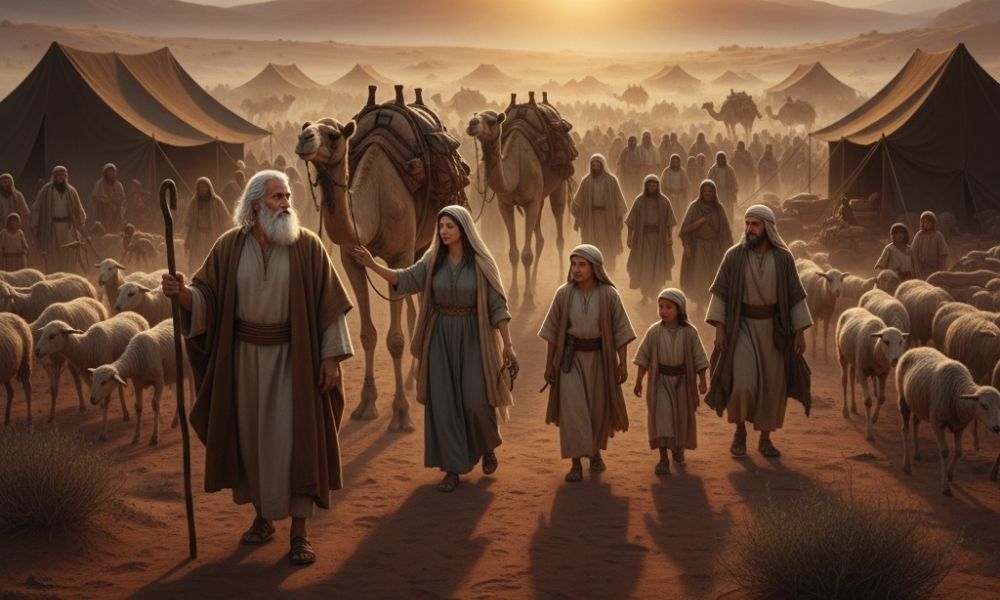
Hebrews

The Hebrews were the ancient people descended from Abraham, chosen by God to live by faith and become the foundation of Israel and the Jewish nation.


The Hebrews were the ancient people who became the ancestors of the Israelites and the Jewish nation. The term “Hebrew” (Hebrew: ʿIvri, meaning “one from beyond” or “from across”) likely refers to Abraham and his descendants, who came “from beyond the river” (the Euphrates). The Hebrews are among the most influential peoples in world history — their faith, traditions, and writings form the foundation of Judaism and have deeply shaped Christianity and Western civilization.


Name: Hebrews (ʿIvrim)
Founder/Ancestor: Abraham (originally Abram, from Ur of the Chaldees)
Language: Hebrew (a Northwest Semitic language)
Region: Ancient Near East — Mesopotamia, Canaan, Egypt, Sinai, and later Israel
Time Period: From c. 2000 BCE (patriarchal era) onward
Religion: Worship of Yahweh (monotheism, later formalized as Judaism)
Key Patriarchs: Abraham, Isaac, Jacob (Israel), and Joseph
Symbol: Star of David (later Jewish symbol), tablets of the Law, menorah


Name Meaning

The name Hebrew (ʿIvri) means “one who crossed over” — possibly referring to Abraham’s journey across the Euphrates from Mesopotamia into Canaan (Genesis 14:13). It signifies a people who were set apart by faith and covenant with God.


Origin and Ancestry

The Hebrews trace their lineage to Abraham, called by God to leave his homeland and follow Him to the land of Canaan (Genesis 12). From Abraham came:

Before they were known as Israelites, they were called Hebrews — nomadic shepherds who worshiped the one true God in a world of many idols.


Historical Context

  • Patriarchal Period: Abraham, Isaac, Jacob, and Joseph (Genesis 12–50)
  • Egyptian Sojourn: The Hebrews lived in Egypt for several centuries and became enslaved (Exodus 1).
  • Exodus & Covenant: Under Moses, God delivered them from slavery, giving them the Law at Mount Sinai (Exodus 19–20).
  • Conquest and Settlement: Led by Joshua, they entered and settled in Canaan.
  • Kingdom Era: Later united under Saul, David, and Solomon — becoming the Israelites or Children of Israel.

Culture and Religion

The Hebrews were monotheists, worshiping Yahweh, the Creator and covenant God. Their faith emphasized:

  • Covenant relationship with God
  • Moral law and holiness
  • Family and tribal unity
  • Worship through sacrifice and prayer

Their sacred writings (the Torah and later the Hebrew Scriptures) became the foundation of the Old Testament.


Key Characteristics

  • Faith and Obedience: Exemplified in Abraham’s trust in God (Genesis 15:6)
  • Covenantal Identity: Bound by God’s promises and the Law of Moses
  • Pilgrim Spirit: Often nomadic or exiled, yet devoted to their faith
  • Chosen People: Set apart to reveal God’s holiness and justice to the nations

Legacy and Influence

The Hebrews gave the world the Bible, monotheism, and the moral law that undergirds much of Western civilization. Their story — from Abraham to the prophets — reveals God’s unfolding plan of redemption, fulfilled ultimately in Jesus Christ, who was born from the lineage of the Hebrews.



Symbolism / Typology

  • Abraham: The man of faith — “father of many nations”
  • Moses: The lawgiver and deliverer — a type of Christ
  • Passover: Symbol of salvation and divine deliverance
  • Promised Land: Symbol of God’s fulfilled promises and eternal rest

Leave a Reply

Your email address will not be published. Required fields are marked *

Bible Characters

  • Mark (John Mark)
  • Mark (John Mark)

    John Mark was a young disciple who overcame early failure to become a trusted companion of Paul and Peter, ultimately authoring the dynamic Gospel that bears his name.


  • Matthew

    Matthew was a despised tax collector transformed by grace into a devoted apostle, whose Gospel bridges the Old and New Testaments by proclaiming Jesus as the promised Messiah and King.


  • Nabal

    Nabal was a wealthy but foolish landowner whose arrogance and refusal to show hospitality to David led to divine judgment and his sudden death.


Biblical Events

  • David lies to Ahimelech
  • Mark (John Mark)

    John Mark was a young disciple who overcame early failure to become a trusted companion of Paul and Peter, ultimately authoring the dynamic Gospel that bears his name.


  • Matthew

    Matthew was a despised tax collector transformed by grace into a devoted apostle, whose Gospel bridges the Old and New Testaments by proclaiming Jesus as the promised Messiah and King.


  • Nabal

    Nabal was a wealthy but foolish landowner whose arrogance and refusal to show hospitality to David led to divine judgment and his sudden death.


Bible Locations

  • Jezreel
  • Jezreel

    Jezreel was the fertile royal seat of King Ahab and Queen Jezebel, famous for the murder of Naboth and the site where divine judgment eventually wiped out their entire dynasty.


  • Aphek

    Aphek was a strategic military stronghold and staging ground on the Sharon Plain where the Philistines gathered to capture the Ark and where David was providentially released from the Philistine army.


  • Lachish

    Lachish was the second most powerful city in ancient Judah, a mighty fortress whose dramatic fall to Assyria and Babylon serves as a pivotal moment in biblical history and archaeology.


You May Also Like:

  • The Twelve Tribes of Israel were the tribal divisions descended from the sons of Jacob that formed the foundation of the Israelite nation and the prophetic lineage of the Messiah.

  • After burying Jacob in Canaan with great honor, Joseph reassures his fearful brothers that their past evil was overruled by God for good, and he dies in Egypt with a prophetic command that his bones be carried to the Promised Land.

  • On his deathbed, Jacob gathers his twelve sons to prophesy their destinies, disqualifying the firstborns for their sins and appointing Judah as the royal line and Joseph as the fruitful recipient of the double portion.

  • On his deathbed, Jacob adopts Joseph’s two sons as his own, deliberately crossing his hands to give the greater blessing to the younger Ephraim, declaring God as his Shepherd and Redeemer.

Bibliva

FREE
VIEW



