
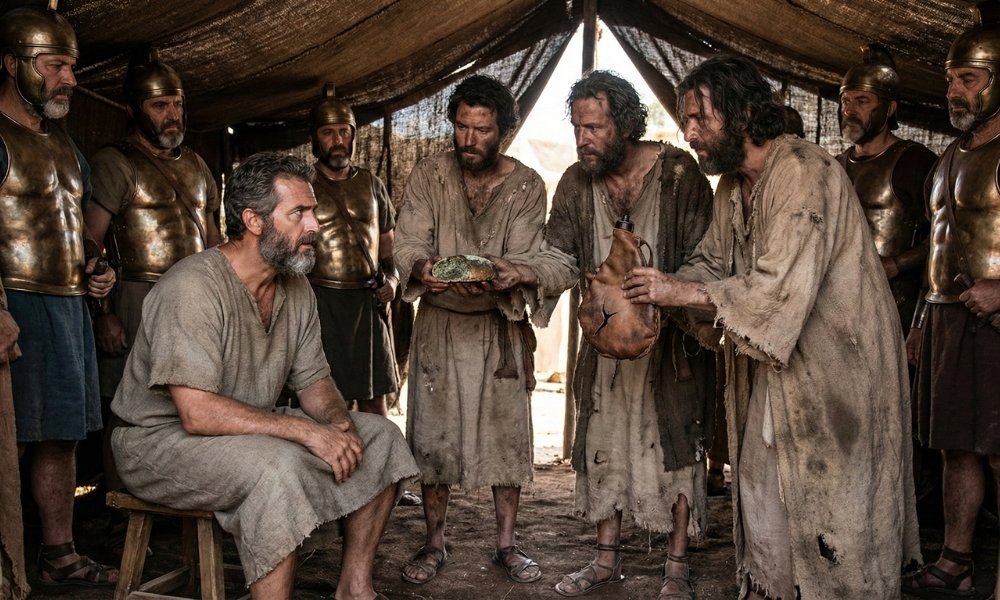
The Hivites are one of the seven nations inhabiting the land of Canaan whom God commanded the Israelites to drive out. Often mentioned in lists of Canaanite tribes, they are distinct for their lack of a centralized king or aggressive military profile compared to the Amorites or Hittites. Instead, the Hivites are portrayed as pragmatic “villagers” (the likely meaning of their name) who preferred trade, negotiation, and even deception to open warfare. Their most famous appearance in the Bible involves the people of Gibeon, who tricked Joshua into a peace treaty to avoid destruction, ultimately surviving as woodcutters and water carriers for the house of God.
- Ancestry: Descendants of Canaan (son of Ham)
- Region: Hill country (Lebanon to Gibeon/Shechem)
- Meaning: “Villagers” or “Tent-dwellers”
- Key Cities: Gibeon, Shechem, Hermon region
- Key Figures: Hamor (Prince of Shechem), the Gibeonite elders
- Biblical Role: The deceivers who became servants; symbols of pragmatic survival
- Fate: Enslaved as temple servants (Nethinim); eventually assimilated
Name Meaning
The name “Hivite” (Hebrew: Chivvi) is believed to mean “villagers” or “dwellers in encampments/towns.” This fits their biblical description, as they are rarely seen leading massive armies but are found in organized civic communities like Shechem and Gibeon that relied on councils of elders rather than a single dominant king.
Origin / Family Background
Genealogy: Genesis 10:17 lists the Hivite as the sixth son of Canaan. Like the other Canaanite nations, they were under the curse of Noah.
Geographic Distribution: They seem to have had two main population centers:
- The North: In the Lebanon mountains, “from Mount Baal Hermon to Lebo Hamath” (Judges 3:3).
- The Central Hills: Around Gibeon (just north of Jerusalem) and Shechem.
Biblical Era / Context
Patriarchal Age: Jacob bought land from the Hivites in Shechem. This peaceful interaction turned violent when his sons, Simeon and Levi, slaughtered the Hivite men in revenge for the rape of their sister Dinah.
The Conquest: They were part of the coalition of nations that gathered to fight Joshua (Joshua 9:1), but the Hivites of Gibeon chose a different tactic: deception.
The Monarchy: By the time of Solomon, the Hivites were subject to forced labor (1 Kings 9:20-21).
Key Interactions / Events
The Rape of Dinah & Slaughter of Shechem: Shechem, a Hivite prince, defiled Jacob’s daughter Dinah but then fell in love with her and asked to marry her. Jacob’s sons agreed on the condition that all Hivite men be circumcised. While the men were recovering from the procedure, Simeon and Levi attacked the city and killed every male (Genesis 34).
The Gibeonite Deception: Fearing the Israelites after the fall of Jericho and Ai, the Hivites of Gibeon put on worn-out clothes and carried moldy bread. They pretended to be travelers from a “far country” and asked Joshua for a treaty. Joshua made a covenant of peace without consulting the Lord. When the ruse was discovered, the oath could not be broken, so they were made “woodcutters and water carriers” for the altar of the Lord (Joshua 9).
The Battle for Gibeon: Because the Hivites made peace with Israel, five Amorite kings attacked them. Joshua defended his new Hivite vassals, leading to the famous battle where the sun stood still (Joshua 10).
Major Roles / Identity
The Pragmatists: Unlike the Amorites who fought and died, the Hivites negotiated. In Shechem, they agreed to circumcision to gain economic integration with Jacob’s family. In Gibeon, they accepted slavery to avoid death.
The Survivors: They are the only Canaanite group explicitly recorded as making a successful treaty with Israel, allowing them to survive within the nation for centuries.
The “Nethinim”: Later in biblical history, the temple servants were known as Nethinim (“given ones”). It is widely believed that the Gibeonite Hivites formed the core of this group, serving in the Second Temple after the Babylonian exile.
Notable Passages
Genesis 34:2: “When Shechem son of Hamor the Hivite, the ruler of that area, saw her, he took her and raped her.”
Joshua 9:3-6: “However, when the people of Gibeon [Hivites] heard what Joshua had done… they resorted to a ruse: They went as a delegation whose donkeys were loaded with worn-out sacks and old wineskins.”
Joshua 9:27: “That day Joshua made the Gibeonites woodcutters and water carriers for the assembly… and that is what they are to this day.”
Legacy & Impact
Saul’s Guilt: Centuries later, King Saul tried to annihilate the Gibeonites in his zeal, violating Joshua’s oath. This brought a famine upon Israel during David’s reign, showing that God holds His people to their promises, even those made to “lower” people like the Hivites (2 Samuel 21).
Integration: The Hivites show that while God commanded the destruction of the Canaanite religious system, there was mercy for those who sought refuge in the God of Israel (even if through deceit). They eventually became servants of the Temple, physically close to the presence of God.
Symbolism / Typology
The Gibeonites: They represent the sinner who, realizing judgment is coming, throws themselves on the mercy of the Savior. Though they enter the Kingdom as servants, “I would rather be a doorkeeper in the house of my God than dwell in the tents of the wicked” (Psalm 84:10).
Shechem: Represents the danger of unequal yoking—trying to merge the holy (Jacob’s family) with the world (the Hivites) through compromise, which ends in disaster.







Leave a Reply