
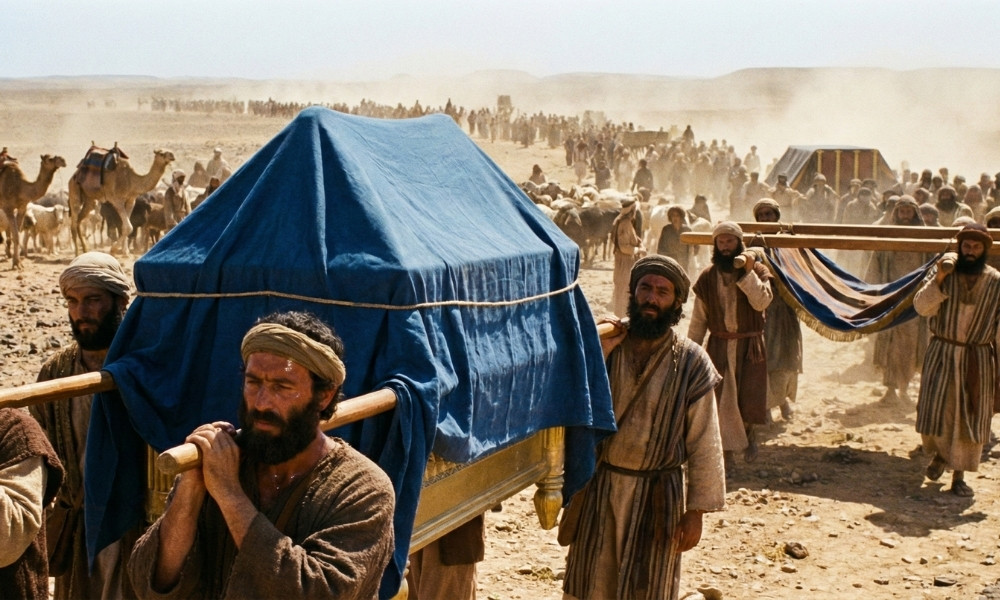
The Levites were the members of the tribe of Levi who were chosen by God to serve as the ministers of the sanctuary. While the priesthood was restricted to the family of Aaron (a sub-group of Levi), the rest of the tribe was dedicated to supporting the religious life of Israel. They replaced the firstborn sons of all Israel as the Lord’s special possession. Their duties ranged from the physical transport of the Tabernacle in the wilderness to serving as temple musicians, gatekeepers, treasurers, and teachers of the Law. They were the backbone of Israel’s worship system, ensuring that the sanctuary operated in holiness and order.
Quick Facts
- Name: Levites (Hebrew: Leviim)
- Tribe: Levi
- Ancestor: Levi (3rd son of Jacob and Leah)
- Clans: Gershonites, Kohathites, Merarites
- Key Duties: Transporting the Tabernacle, guarding the Temple, liturgical music, teaching the Law
- Inheritance: No tribal land allotment; received 48 cities (including Cities of Refuge)
- Support System: Supported by the tithes of the other tribes
- Notable Levites: Moses, Aaron, Miriam, Korah, Samuel, Asaph
- Symbol: The Pitcher (Levites washed the hands of the priests) or Musical Instruments
Name Meaning
Meaning: The name “Levi” comes from the Hebrew root lavah, meaning “joined” or “attached.”
Origin: At his birth, his mother Leah said, “Now at last my husband will become attached to me, because I have borne him three sons” (Genesis 29:34). The name later took on a spiritual significance, symbolizing the tribe that was “joined” to the priests to assist them in the service of God.
Lineage / Family Background
Patriarch: Levi, the third son of Jacob.
The Three Clans: The tribe was divided into three main families based on Levi’s sons, each with specific duties (Numbers 3):
- Kohathites: Responsible for the holiest furniture (Ark, Table, Lampstand) — they carried these on their shoulders.
- Gershonites: Responsible for the curtains, coverings, and hangings of the Tabernacle.
- Merarites: Responsible for the heavy frames, crossbars, posts, and bases.
Distinction: The family of Aaron (Kohathites) were separated as Priests. The rest of the tribe were generally called Levites.
Biblical Era / Context
The Wilderness: They were the only tribe allowed to camp immediately around the Tabernacle, forming a buffer between the holy sanctuary and the people.
The Conquest: Unlike other tribes, they did not receive a province. They were scattered throughout Israel in 48 specific cities to serve as teachers and judges among the people.
The Monarchy: King David revolutionized the Levitical order, establishing vast choirs, orchestras, and gatekeeping divisions to prepare for the permanent Temple worship (1 Chronicles 23–26).
Major Roles / Identity
Sanctuary Guardians: They guarded the Tabernacle (and later Temple) day and night to prevent unauthorized entry and ritual defilement.
Ministers of Music: Under David’s organization, families like Asaph, Heman, and Jeduthun were set apart to prophesy with lyres, harps, and cymbals, leading public worship.
Teachers and Judges: Because they knew the Law, they acted as scribes, officers, and judges, instructing the people in the statutes of Yahweh (2 Chronicles 17:7–9).
Assistants to Priests: They prepared sacrifices, cleaned the courts, and ensured the priests had everything needed for the altar service.
Key Character Traits
Zeal for Holiness: The tribe first distinguished itself during the incident of the Golden Calf. When Moses called out, “Who is on the LORD’s side?” the Levites rallied to him and executed judgment on the idolaters (Exodus 32:26).
Dedication: They were “given” to the Lord in place of the firstborn sons of Israel (Numbers 3:12). Their lives were entirely dedicated to religious service.
Loyalty: In later years, when the Kingdom divided, many Levites in the Northern Kingdom (Israel) abandoned their homes and moved to Judah because King Jeroboam set up golden calves and expelled them, showing their loyalty to the true Temple (2 Chronicles 11:13–14).
Main Historical Developments
The Selection: Originally, the firstborn of every family belonged to God (from the Passover). God accepted the Levites as a substitute for the firstborns, creating a specialized religious class.
Korah’s Rebellion: Korah, a leading Levite, rebelled against Moses and Aaron, demanding the priesthood. The earth opened and swallowed the rebels, establishing that while Levites were holy, they could not usurp the role of the Priests (Numbers 16).
The Incident at Peor: Phinehas (a priest/Levite) showed great zeal in stopping a plague by executing an Israelite man and a Midianite woman, securing a “covenant of peace” for his line.
Revival under Hezekiah: During King Hezekiah’s reforms, the Levites were more upright in heart to sanctify themselves than the priests, helping to cleanse the Temple after years of neglect (2 Chronicles 29:34).
Major Relationships
The Priests (Aaron’s Line): The Levites served under the direction of the priests. They were “attached” to them as helpers but could not look at the holy vessels until they were covered, nor perform sacrifices.
The People of Israel: The nation supported the Levites through the tithe (10% of produce). The Levites, in turn, gave a tithe of that tithe to the priests.
God: The Lord declared, “I am your portion and your inheritance” (Numbers 18:20). Their reliance was directly on God’s provision.
Notable Passages
Exodus 32:26: The defining moment of loyalty — “Then Moses stood in the gate of the camp and said, ‘Who is on the LORD’s side? Come to me.’ And all the sons of Levi gathered around him.”
Numbers 8:19: Their ordination — “And I have given the Levites as a gift to Aaron and his sons from among the people of Israel…”
1 Chronicles 15:16: The musical mandate — “David also commanded the chiefs of the Levites to appoint their brothers as the singers who should play loudly on musical instruments… to raise sounds of joy.”
Deuteronomy 10:8: Summary of duties — “At that time the LORD set apart the tribe of Levi to carry the ark of the covenant of the LORD, to stand before the LORD to minister to him and to bless in his name.”
Legacy & Impact
Biblical Worship: The Psalms (many written by Levites like the Sons of Korah and Asaph) and the structure of Temple worship laid the foundation for Judeo-Christian liturgy and praise.
Scriptural Preservation: As teachers and scribes, Levites were crucial in copying and preserving the Hebrew Bible throughout the centuries.
The Concept of Ministry: The Levites serve as a model for “vocational ministry” — those supported by the community to dedicate their full time to the work of the church and the service of God.
Symbolism / Typology
Substitution: The Levites taking the place of the firstborn symbolizes the principle of substitution — one standing in the place of another — which culminates in Christ.
The Cities of Refuge: The Levites managed these cities, which symbolized Christ as our refuge from judgment.
Portable Holiness: Their role in carrying the Tabernacle showed that God is not fixed to one location but moves with His people.
Extra-Biblical References
Rabbinic Tradition: The Talmud details the specific training Levites underwent, starting at age 25 and entering full service at 30. It also describes the elaborate daily musical rituals in the Second Temple.
Historical Context: In the post-exilic period, fewer Levites returned from Babylon compared to priests, requiring Ezra to make special appeals for them to return and serve (Ezra 8:15).







Leave a Reply