
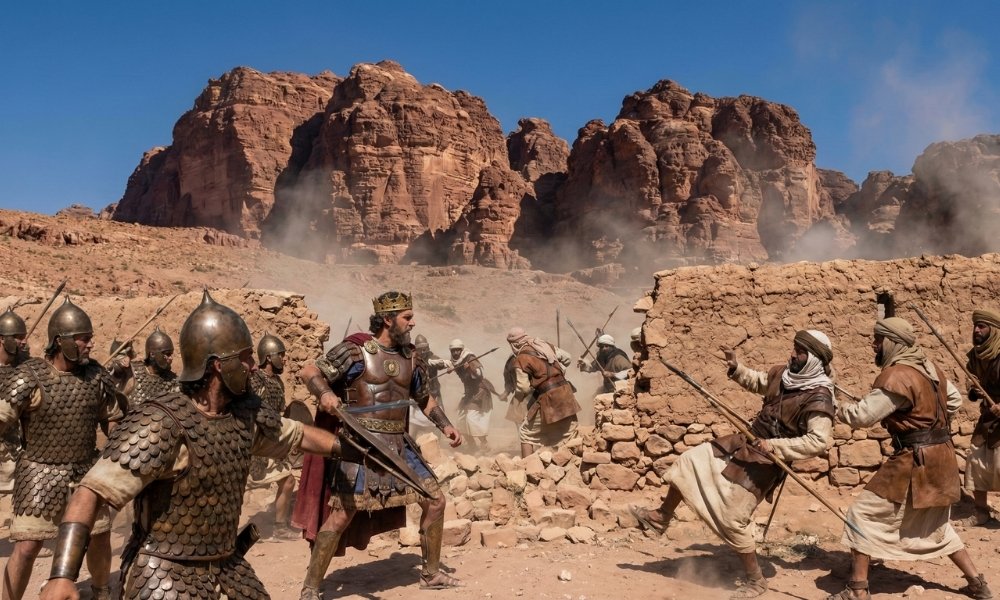
The Maonites (often referred to as the Meunites or Meunim) were a desert-dwelling people located in the region of Edom, likely centered around the city of Ma’an (in modern-day Jordan). In biblical history, they appear primarily as persistent enemies of Israel who allied with other Transjordanian nations like the Ammonites and Arabians to oppress God’s people. Their story is one of dramatic reversal: they began as oppressors during the time of the Judges, were crushed by the military might of King Uzziah, and eventually, a remnant of them appears in the post-exilic records (Ezra/Nehemiah) as Nethinim (Temple Servants)—suggesting that former enemies were captured, assimilated, and ultimately assigned to serve in the House of God.
Quick Facts
- Name: Maonites / Meunites (Hebrew: Maon / Meunim)
- Meaning: “Habitations,” “Dwellings,” or “People of Ma’an”
- Region: Mount Seir / Edom (Specifically the city of Ma’an, southeast of Petra)
- Era: Judges through Post-Exile (~1100 BCE – 450 BCE)
- Key Conflict: Defeated by King Uzziah and King Jehoshaphat
- Key Allies: Ammonites, Moabites, Arabians
- Fate: Defeated by Judah; descendants became Temple Servants (Nethinim)
- Distinction: Distinct from the citizens of the town of Maon in Judah (home of Nabal)
Name Meaning
“Maonite” derives from the Hebrew root maon, meaning “dwelling” or “habitation.” Historically, it refers to the inhabitants of a specific region or city, widely believed by scholars to be the oasis city of Ma’an, which sat on the King’s Highway trade route in Edom.
Lineage / Family Background
Ethnic Origin: They were likely an Arabian or Edomite tribe. Because they dwelt in Mount Seir, they are often grouped politically with the descendants of Esau, though they may have had distinct Ishmaelite roots (similar to the Hagarites).
The Minaean Connection: Some historians link them to the Minaeans (Main), a powerful South Arabian trading kingdom, suggesting the Maonites were a northern colony or outpost of this wealthy incense-trading civilization.
Biblical Era / Context
Time: Their hostility spans centuries—from the chaotic period of the Judges, through the height of the Monarchy (Uzziah/Hezekiah), to the return from Babylon.
Setting: They inhabited the arid, rocky pasturelands south of the Dead Sea. This location made them natural competitors with the tribes of Judah and Simeon for grazing land and water rights.
Cultural Context: As desert semi-nomads controlling trade routes, they were wealthy enough to be worth raiding and powerful enough to oppress Israel when the central government was weak.
Major Roles / Identity
The Forgotten Oppressor: In Judges 10:12, God lists the Maonites alongside the Egyptians and Philistines as people who had “oppressed” Israel. This implies a period of domination that is not detailed in the main narratives of Judges, indicating they were a major regional threat.
The Target of Uzziah: King Uzziah of Judah was famous for his military engineering and expansion. The Maonites were one of the specific groups he targeted to secure the southern trade routes to the Red Sea.
The Transformed Servant: In a striking historical twist, the “sons of the Meunites” are listed in Ezra 2:50 and Nehemiah 7:52 among the Nethinim—a class of temple servants who returned from Babylon to Jerusalem. This suggests that prisoners of war taken by kings like Uzziah were dedicated to the temple service and their descendants maintained this identity for centuries.
Key Character Traits
Persistent Hostility: They joined multiple coalitions against Israel over several centuries.
Opportunistic: They often attacked when Israel was weak (during the Judges) or allied with larger powers (like the Ammonites).
Assimilated: Unlike the Amalekites who were wiped out, the Maonites were absorbed. Their identity shifted from “Enemies of State” to “Servants of the Temple.”
Main Life Events (Group History)
Oppression Era: During the time of the Judges, the Maonites (possibly allied with Midian) oppressed Israel, leading to a divine rebuke in Judges 10:11-12.
The Coalition against Jehoshaphat: In 2 Chronicles 20:1, the text mentions the “Meunites” (Masoretic text correction) invading Judah alongside the Moabites and Ammonites. This is the famous battle where the choir led the army, and the enemies destroyed each other.
Conquest by Uzziah: 2 Chronicles 26:7 records that God helped King Uzziah against “the Philistines, the Arabs who lived in Gur Baal, and the Meunites.” This victory likely reduced them to vassal status.
The Simeon Raid: In the days of Hezekiah, the tribe of Simeon expanded southward into the area of Gedor, where they found “Hamites” and Meunites living. The Simeonites “completely destroyed them” and took their pastureland (1 Chronicles 4:41).
Return from Exile: The descendants of the Meunites returned to Jerusalem with Zerubbabel, not as warriors, but as temple servants (Ezra 2:50).
Major Relationships
The Ammonites: Frequent military allies in attacks against Judah.
King Uzziah: The Judean king who broke their power.
The Tribe of Simeon: The Israelite tribe that took over their grazing lands in the Negev.
Notable Passages
Judges 10:12: “…and when the Sidonians, the Amalekites and the Maonites oppressed you, did I not save you from their hands?”
2 Chronicles 26:7: “God helped him [Uzziah] against the Philistines, against the Arabs who lived in Gur Baal and against the Meunites.”
2 Chronicles 20:1 (NIV/ESV Footnotes): “After this, the Moabites and Ammonites with some of the Meunites came to wage war against Jehoshaphat.”
Ezra 2:43, 50: “The temple servants (Nethinim): …the sons of Meunim…”
Legacy & Impact
From War to Worship: The trajectory of the Maonites is a unique biblical case study. They represent enemies who were conquered so thoroughly that they became part of the religious infrastructure of Israel.
Historical Verification: The mention of the Meunites aligns with Assyrian inscriptions (like those of Tiglath-Pileser III) that mention the Mu’nea in the region of Edom, confirming their historical status as a significant Arab tribe.
Confusion with Midian: In some older translations (KJV) of Judges 10:12, the word is rendered “Midianites” due to the visual similarity of the Hebrew letters. However, modern scholarship and the Septuagint confirm “Maonites” is the correct reading, establishing them as a distinct group.
Symbolism / Typology
The “Wild” Tamed: The Maonites represent the wild, hostile nations of the desert that are eventually brought into submission to the King of Judah (Uzziah/Christ type) and made to serve in the House of God.
Total Reversal: Their story illustrates how God can turn a heritage of oppression into a heritage of service.







Leave a Reply