
The Syrians, primarily known in the Old Testament as Arameans, were a Semitic people inhabiting the region of Aram (modern-day Syria). They were not a single unified empire like Assyria or Babylon, but rather a loose confederation of independent city-states, the most powerful of which was Damascus (Aram-Damascus). Their history is deeply intertwined with Israel; the patriarchs (Abraham, Isaac, Jacob) had Aramean roots, yet the Aramean kingdoms later became one of Israel’s most persistent military rivals during the Monarchy period. The Aramean language, Aramaic, eventually became the lingua franca of the entire Near East, spoken by Jesus and the early church.
- Ancestry: Descendants of Aram (Son of Shem)
- Region: Aram (Modern Syria), centered in Damascus
- Key Cities: Damascus, Hamath, Zobah
- Key God: Hadad (Storm god, often called Rimmon)
- Key Figures: Ben-Hadad (I, II, III), Hazael, Naaman, Rezon
- Biblical Role: Ancestral kin; military rival; instrument of judgment
- Fate: Conquered by Assyria (732 BCE); language survived as Aramaic
- Symbol: The Chariot Army of Damascus
Name Meaning
The name “Aram” (Hebrew: Aram) likely means “High” or “Highland,” referring to the elevated plateau of Syria. The term “Syrian” is a later Greek designation, possibly a shortening of “Assyrian,” though the two peoples were distinct. In the Hebrew Bible, they are consistently called Arameans.
Origin / Family Background
The Patriarchal Connection: The Israelites viewed the Arameans as close kin. Abraham himself is described as a “wandering Aramean” (Deuteronomy 26:5). His family originated from Ur but settled in Haran (an Aramean city). Isaac’s wife Rebekah and Jacob’s wives Leah and Rachel were all Arameans from the house of Laban the Aramean. Thus, biologically, the tribes of Israel were half-Aramean.
Geographic Spread: They occupied the fertile lands north of Israel, stretching from the Lebanon mountains to the Euphrates River. Their decentralized nature meant Israel often fought specific Aramean states like Aram-Zobah (under Saul) or Aram-Damascus (under Ahab and Elisha).
Biblical Era / Context
The United Monarchy: King David fought extensive wars against Hadadezer, king of Zobah. David defeated him and garrisoned Damascus, bringing the Arameans under Israelite tribute. This dominance lasted until the end of Solomon’s reign, when an Aramean leader named Rezon seized Damascus and became a “hostile adversary” to Solomon.
The Divided Monarchy (The Wars): This was the peak of Aramean power. For over a century, the kings of Israel (Northern Kingdom) and the kings of Damascus were locked in a cycle of war and uneasy treaties.
- Ben-Hadad I: Accepted a bribe from King Asa of Judah to break his treaty with Israel and attack the north.
- Ben-Hadad II: Besieged Samaria but was defeated by Ahab. Later, Ahab controversially spared his life.
- Hazael: A usurper who murdered Ben-Hadad II. Elisha wept when he saw Hazael, foreseeing the terrible atrocities he would commit against Israel (2 Kings 8).
The Assyrian Conquest: The Aramean threat ended when the Assyrian Empire rose. In 732 BCE, Tiglath-Pileser III captured Damascus, killed King Rezin, and deported the Aramean population, effectively ending their political independence.
Key Interactions / Events
Naaman the Leper: One of the most famous Arameans was Naaman, the commander of the army of Syria. Despite being an enemy general, he sought healing from the prophet Elisha in Israel. After dipping seven times in the Jordan River, he was healed of leprosy and declared, “Now I know that there is no God in all the world except in Israel” (2 Kings 5).
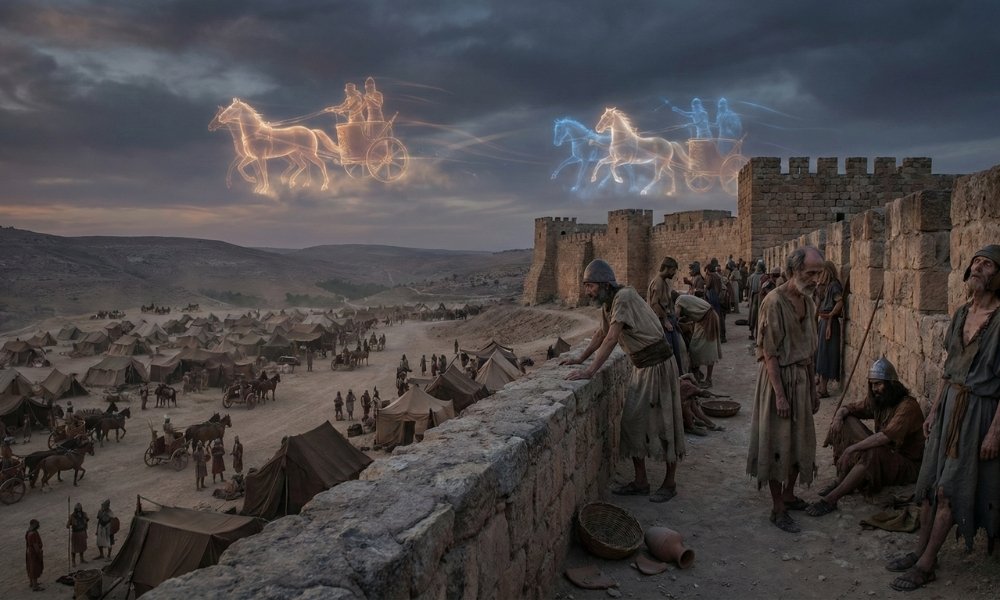
The Chariots of Fire: During a war with Aram, the King of Syria sent troops to capture Elisha at Dothan. Elisha’s servant was terrified by the surrounding army, but Elisha prayed, “Lord, open his eyes.” The servant then saw the hills full of horses and chariots of fire—God’s spiritual army protecting them.
The Syro-Ephraimite War: In a strange twist, Aram (under King Rezin) allied with Israel (under King Pekah) to attack Judah. This crisis prompted Isaiah’s famous “Immanuel” prophecy (Isaiah 7), assuring King Ahaz that before the child grew up, the kings of both Aram and Israel would be destroyed by Assyria.
Major Roles / Identity
The Rod of Correction: God frequently used the Arameans to punish Israel for idolatry. When Israel strayed, “the Lord’s anger burned against Israel, and he handed them over to Hazael king of Aram” (2 Kings 13:3).
The Cultural Bridge: While they were often military enemies, the Arameans were culturally dominant. They facilitated trade and diplomacy. Their greatest legacy was their language. By the time of the Babylonian exile, Aramaic had replaced Hebrew as the common spoken language of the Jews, which is why parts of Daniel and Ezra are written in Aramaic.
Notable Passages
Deuteronomy 26:5: “Then you shall declare before the Lord your God: ‘My father was a wandering Aramean…’”
2 Samuel 8:6: “David put garrisons in the Aramean kingdom of Damascus, and the Arameans became subject to him.”
2 Kings 5:1: “Now Naaman was commander of the army of the king of Aram. He was a great man in the sight of his master… but he had leprosy.”
Isaiah 7:8: “For the head of Aram is Damascus, and the head of Damascus is only Rezin.”
Legacy & Impact
The Aramaic Language: The Arameans achieved a linguistic conquest that outlasted their armies. Aramaic became the administrative language of the Assyrian, Babylonian, and Persian empires. It was the language Jesus spoke daily (e.g., Talitha koum, Eloi Eloi lama sabachthani).
The “Maranatha” Cry: Early Christian liturgy was deeply influenced by Aramaic, preserving phrases like Maranatha (“Come, O Lord”), showing the lasting imprint of Aramean culture on the faith.
Symbolism / Typology
Naaman: Naaman represents the Gentile seeker who must humble himself (washing in the muddy Jordan) to receive God’s grace, foreshadowing the inclusion of Gentiles in the Gospel.
Blindness and Sight: The conflicts with Elisha often involve spiritual sight vs. physical blindness. The Aramean army is struck blind, while Elisha’s servant is given spiritual sight, symbolizing that earthly military power is blind to spiritual reality.







Leave a Reply