
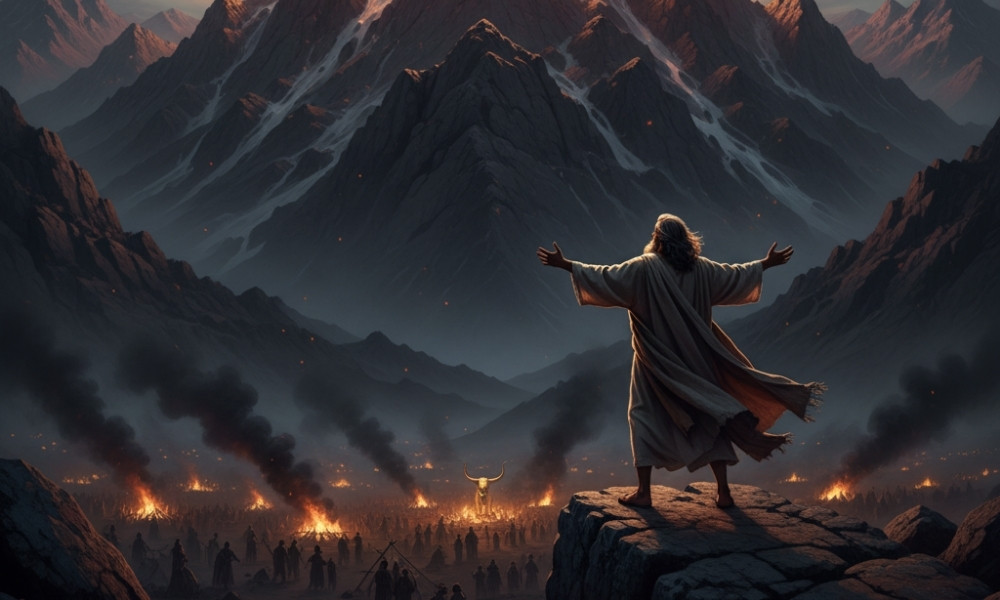
Moses’ intercession for Israel following the Golden Calf incident is one of the most dramatic displays of leadership and sacrificial love in the Bible. Standing between a holy God and a rebellious nation, Moses transitions from a lawgiver into a desperate mediator. This moment defines him not just as a ruler, but as a shepherd willing to lay down his eternal standing for his sheep. It is here that Moses challenges God’s stated intention to destroy Israel, appealing to God’s own reputation and covenant promises rather than the people’s merit. This event establishes the paradigm of biblical intercession: a righteous advocate standing in the breach to turn away wrath.
- Name: Moses (Hebrew: Moshe, meaning “drawn out” or “one who draws out”)
- Location: Mount Sinai (Horeb)
- Scripture: Exodus 32:7–14; 30–35
- Crisis: Israel worshiped a Golden Calf, breaking the Covenant immediately after making it
- Key Virtues: Self-sacrifice, identification with the sinful, theological boldness
- Outcome: God relented from total destruction; the nation was spared, though disciplined
- Symbol: The Broken Tablets (Divine Law) vs. The Outstretched Arms (Divine Mercy)
Name Meaning
Moses (Moshe) comes from the Hebrew verb mashah, meaning “to draw out.”
- Historically: He was drawn out of the Nile by Pharaoh’s daughter.
- Theologically: In this prayer, he lives up to his name by “drawing out” Israel from the fire of God’s judgment. He acts as the ultimate rescuer, refusing to let the people drown in the consequences of their own sin.
Lineage / Family Background
Tribe: Levi (The priestly tribe). Brother: Aaron, the High Priest, who ironically constructed the idol Moses was praying against. Divine Offer: God offered to wipe out Israel and make a “great nation” out of Moses’ own lineage (Exodus 32:10). Moses rejected this dynasty to save his people, choosing obscurity for his descendants over the destruction of his brothers.
Biblical Era / Context
Time: ~1446 BCE (The Exodus Era). Setting: The base of Mount Sinai, immediately following the 40 days of receiving the Law. The Provocation: While Moses was receiving the instructions for the Tabernacle (God’s dwelling place), the people were constructing an idol (a false dwelling place). The Stakes: God disowned the people, calling them “Your people, whom you brought out” (Exodus 32:7), distancing Himself from the covenant.
Major Roles / Identity
The Mediator: Moses stands in the gap (Psalm 106:23), physically and spiritually positioning himself between the danger and the people. The Covenant Lawyer: He argues with God using legal precedents—God’s oath to the Patriarchs and His reputation among the nations. The Suffering Servant: He offers to bear the penalty of the people’s sin himself, foreshadowing the role of the Messiah.
Key Character Traits
Theological Boldness: He dared to correct God’s description of the people (“They are Your people, not mine”) and challenged God to protect His own name. Selflessness: When offered the chance to become the new Abraham (the father of the new chosen nation), he flatly refused. Compassion: Despite his own anger (smashing the tablets), he returned to the mountain to plead for the very people who had betrayed his leadership. Identification: He refused to separate his fate from the fate of the people. If they were to be destroyed, he wanted to be destroyed with them.
Main Life Events (The Intercession Narrative)
The First Prayer (On the Mountain): Before even seeing the calf, God tells Moses of the sin and threatens destruction. Moses immediately parries with two arguments:
- The Egyptian Argument: “Why should the Egyptians say, ‘It was with evil intent that he brought them out’?” (Exodus 32:12). He appeals to God’s glory.
- The Patriarchal Argument: “Remember Abraham, Isaac, and Israel…” (Exodus 32:13). He appeals to God’s faithfulness. Result: “The Lord relented” (Exodus 32:14).
The Confrontation (In the Camp): Moses descends, sees the revelry, smashes the tablets (signifying the broken covenant), destroys the calf, and forces the people to drink the gold dust. He confronts Aaron, who offers a weak excuse (“I threw it in the fire, and out came this calf!”).
The Second Prayer (The Ultimatum): Moses returns to the Lord the next day to seek atonement. He makes the most staggering offer in the Old Testament: “But now, please forgive their sin—but if not, then blot me out of the book you have written” (Exodus 32:32). Result: God rejects Moses’ offer to die for others (stating that each soul sins for itself) but agrees to let Moses lead the people forward, though His immediate presence is withdrawn (later restored in Exodus 33).
Major Relationships
Yahweh: A relationship of startling intimacy. They speak face-to-face. Moses speaks to God not as a terrified subject, but as a trusted partner in the management of the nation. Aaron: The contrast is sharp. While Moses pleads for the people’s lives, Aaron yields to the people’s pressure. Moses saves the people from God’s wrath; Aaron leads the people into it. Joshua: Moses’ aide who waits halfway up the mountain, hearing the noise of the camp not as a party, but as “the sound of war”—foreshadowing his role as a general.
Notable Passages
Exodus 32:11: “O LORD, why does your wrath burn hot against your people, whom you have brought out of the land of Egypt?” (Moses correcting God’s pronoun usage).
Exodus 32:32: “But now, please forgive their sin—but if not, then blot me out of the book you have written.” (The Cry of the Mediator).
Psalm 106:23: “Therefore he said he would destroy them—had not Moses, his chosen one, stood in the breach before him, to turn away his wrath from destroying them.” (The divine commentary on the event).
Legacy & Impact
The Model of Intercession: Moses taught that true prayer appeals to God’s nature (His name, His promise, His mercy) rather than human need. The Survival of Israel: Without this specific prayer, the narrative of Israel would have ended in the wilderness. The Theology of Atonement: Moses’ failed attempt to die for the people (“blot me out”) highlights the theological necessity of a perfect substitute. A sinful man (Moses) could not die for sinful people; it required a sinless God-Man (Jesus) to eventually fulfill this offer.
Symbolism / Typology
- Both fasted 40 days.
- Both acted as mediators between a holy God and a sinful people.
- Both were willing to be “cut off” for the sake of their brethren (Romans 9:3).
- The Difference: God accepted Jesus’ offer to be “blotted out” (forsaken) on the cross, whereas He declined Moses’, as Moses was insufficient to pay the price for the world.
Extra-Biblical References
Jewish Midrash: The rabbis point out that Moses’ name is missing from one Torah portion (Tetzaveh) to honor his request (“blot me out”). Even though God didn’t erase him from the Book of Life, He erased him from one section of the Scripture as a memorial to his selflessness. Christian Tradition: This event is often cited by Paul in Romans 9, where he expresses a similar wish—that he could be “accursed and cut off from Christ” for the sake of his Jewish kinsmen, echoing Moses’ heart.







Leave a Reply