
Is Anything Too Hard for the Lord?
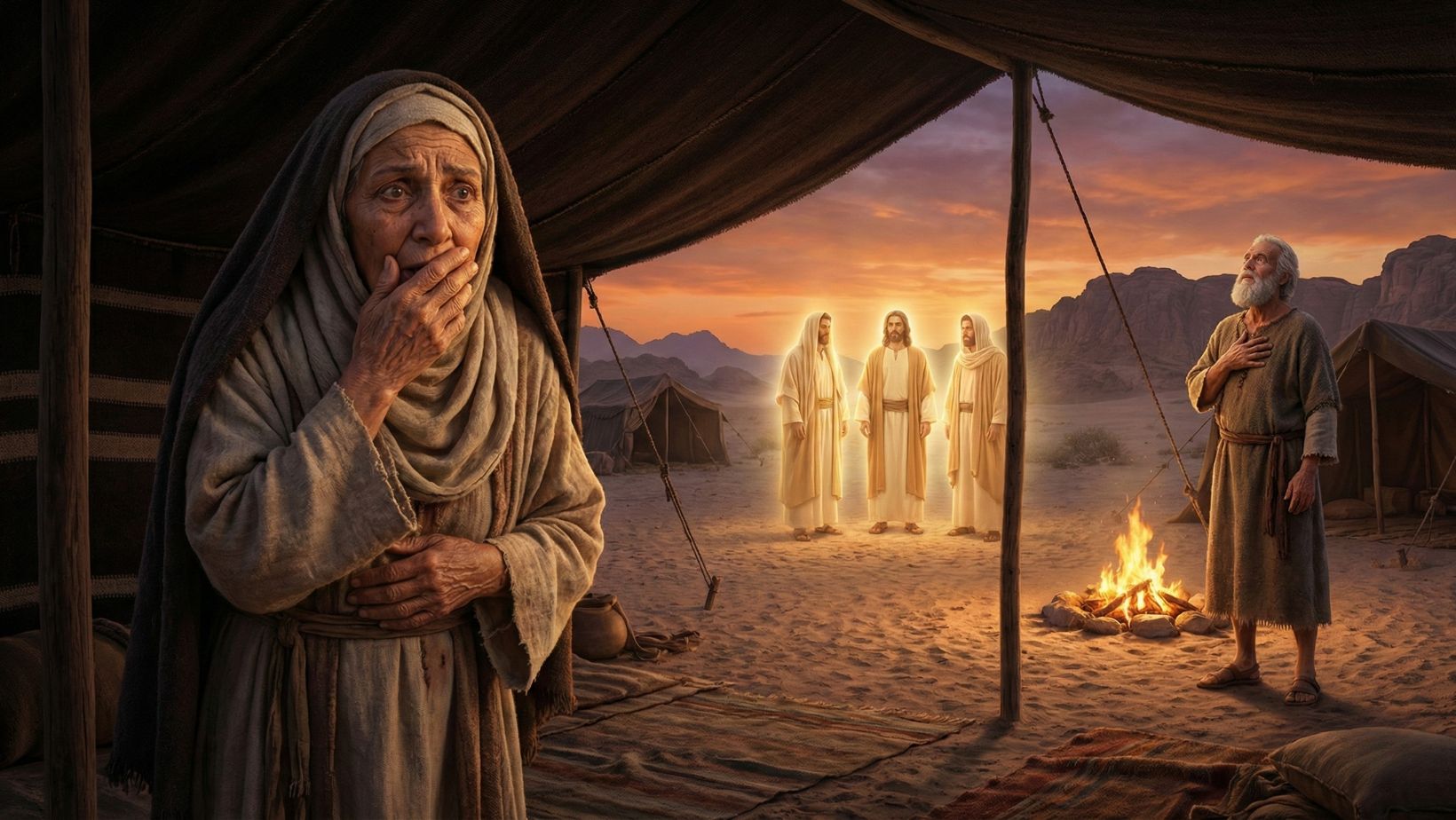
Genesis 18 takes us to the tent of Abraham, where a promise meets a physical impossibility. When God declares that the elderly Sarah will bear a son, her response is a cynical laugh. God’s retort is a question that challenges every person facing a closed door: “Is anything too hard for the Lord?” This sermon explores how God’s power overrides human limitations and why our disbelief cannot stop His divine decree.
Main Scripture: Genesis 18
“Is anything too hard for the Lord? I will return to you at the appointed time next year, and Sarah will have a son.” — Genesis 18:14 (NIV)
1. Human Logic Limits Divine Potential
“Abraham and Sarah were already very old, and Sarah was past the age of childbearing. So Sarah laughed to herself as she thought, ‘After I am worn out and my lord is old, will I now have this pleasure?’” — Genesis 18:11-12
- The Wall of Reality: Sarah looked at her body and her age and concluded that a miracle was a biological impossibility. We often do the same, looking at our bank accounts or our health and deciding what God can or cannot do.
- The Laughter of Disbelief: This wasn’t a laugh of joy, but a laugh of protection. We often use “common sense” as a shield to protect ourselves from the pain of a promise that hasn’t come true yet.
- The Danger of Calculations: When we calculate our future based only on what we have in our hands, we leave no room for the One who created the world out of nothing.
2. Private Doubts Are Public to God
“Then the Lord said to Abraham, ‘Why did Sarah laugh and say, “Will I really have a child, now that I am old?”‘” — Genesis 18:13
- The God Who Hears Silence: Sarah did not laugh out loud; she laughed “to herself.” God responds to the silent whispers of our hearts. He is intimately aware of the secret places where we have given up hope.
- Confronting the Heart: God brings Sarah’s doubt into the light not to mock her, but to heal her. He wants us to be honest about our lack of faith so that He can replace it with His truth.
- No Secrets in Faith: You cannot pray for a miracle while secretly deciding it won’t happen. God invites us to bring our honest questions to Him.
3. God Works on a Sovereign Timetable
“I will return to you at the appointed time next year, and Sarah will have a son.” — Genesis 18:14
- The Appointed Time: God does not work on our schedule. He has an “appointed time” for every promise. Delay is not denial; it is the period where God prepares the environment for His glory to be revealed.
- The Certainty of the Word: When God sets a date, the laws of nature must bow. He is the master of time and seasons, and He is never late.
- Trusting the Wait: Our job is not to figure out how God will do it, but to stay in position until the “next year” that God has promised arrives.
4. Fear Must Not Mask the Truth
“Sarah was afraid, so she lied and said, ‘I did not laugh.’ But he said, ‘Yes, you did laugh.’” — Genesis 18:15
- The Reflex of Fear: When Sarah was caught, she tried to hide behind a lie. Fear makes us defensive and dishonest. It prevents us from owning our weakness and receiving God’s strength.
- Grace in Correction: God’s response was firm but brief: “Yes, you did laugh.” He didn’t take away the promise because of her mistake. He simply insisted that she face the truth of her own heart.
- Integrity in the Presence of God: We grow when we stop making excuses for our unbelief and start admitting that we need God to help our unbelief.
5. Faith Overcomes Natural Barrenness
“The Lord was gracious to Sarah as he had said, and the Lord did for Sarah what he had promised. Sarah became pregnant and bore a son to Abraham in his old age.” — Genesis 21:1-2
- Power Over the Womb: God proved that He is the author of life. Whether it is a barren womb, a barren career, or a barren spirit, God’s word has the power to create fruitfulness where there was only emptiness.
- The Outcome of Mercy: The miracle happened not because Sarah’s faith was perfect, but because God’s faithfulness is absolute.
- A Testimony for Others: Isaac’s name means “laughter.” God turned Sarah’s laugh of doubt into a laugh of pure joy. What people mocked in your life, God will use to create your greatest testimony.
Quick Insights
- Difficulty is a human concept; for God, creating a universe and healing a body require the same amount of effort.
- The things that make you laugh in disbelief today are the very things God wants to use to make you laugh in celebration tomorrow.
- God’s “Is anything too hard?” is a rhetorical question designed to remind you of His resume as the Creator.
- Don’t let your “past the age” or “past the point of no return” logic stop you from expecting a move of God.







Leave a Reply