
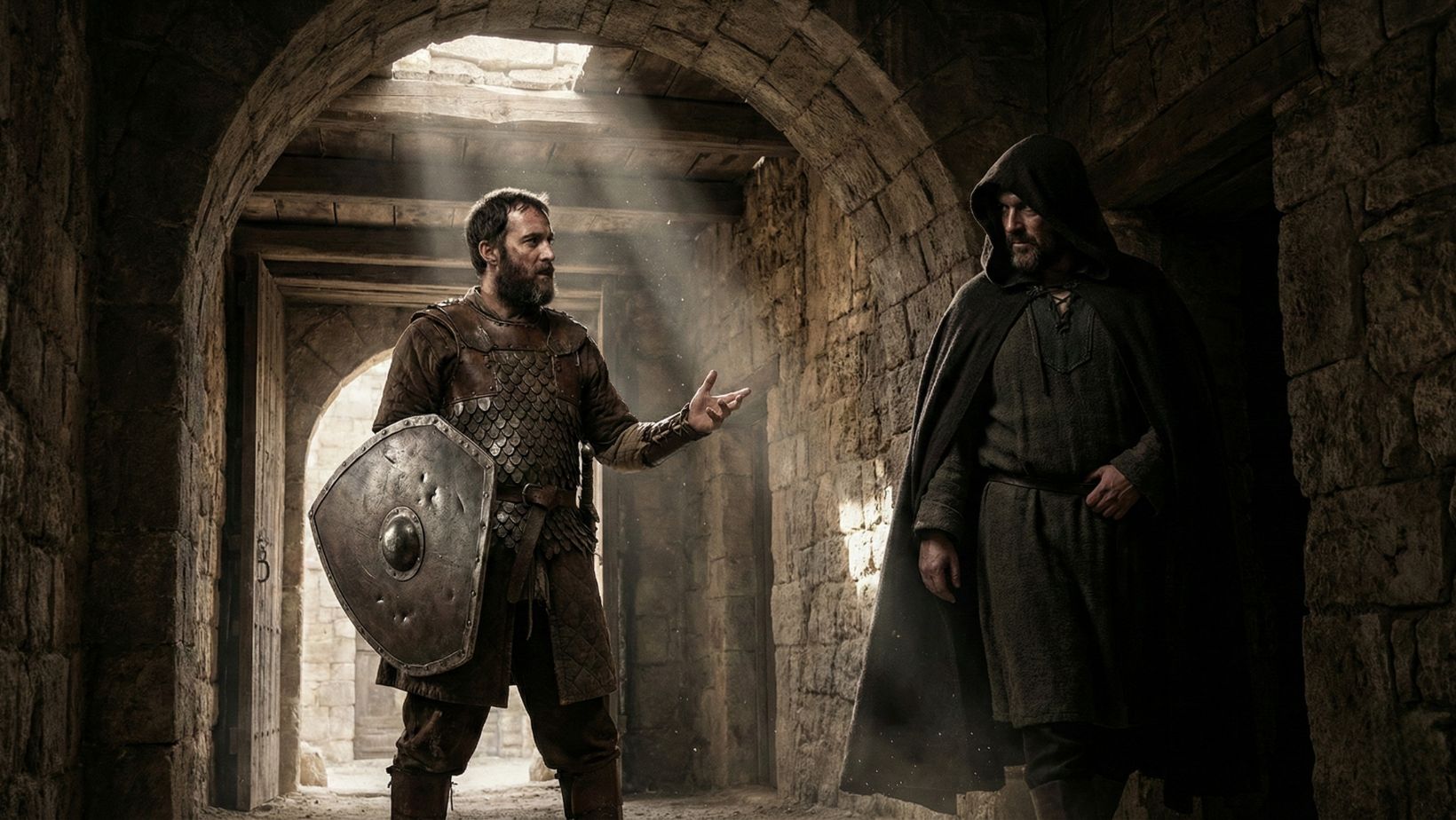
Abner was a man of immense power. As the commander of Saul’s army, he was the glue holding the kingdom of Israel together after Saul’s death. He was strong, strategic, and influential. But Abner made a fatal mistake: he spent his life fighting against what he knew was the will of God. His life serves as a tragic warning that talent, leadership, and strength are useless if they are positioned against God’s plan.
Main Scripture: 2 Samuel 3
“Then Abner said… ‘May God deal with Abner, be it ever so severely, if I do not do for David what the Lord promised him on oath and transfer the kingdom from the house of Saul…’” — 2 Samuel 3:9-10 (NIV)
Introduction
It is a dangerous thing to be busy fighting a battle that God has already decided. Abner was not ignorant; he admitted that he knew the Lord had promised the throne to David. Yet, for years, he used his military might to prop up a puppet king, Ish-Bosheth, simply to maintain his own status. Abner’s story teaches us the futility of resisting God’s purpose and the tragedy of a life driven by political calculation rather than spiritual conviction.
1. Fighting Against What You Know is True
“May God deal with Abner… if I do not do for David what the Lord promised him on oath.” — 2 Samuel 3:9
- Suppressing the Truth: Abner openly confessed that he knew God had chosen David. Yet, he spent years leading armies to kill David.
- The Rebel Heart: It is possible to have head knowledge of God’s will but still have a heart that resists it. Abner proves that you can be “religious” enough to know God’s promises, but rebellious enough to fight them.
- Wasted Effort: All of Abner’s military campaigns were ultimately in vain because he was trying to build a kingdom that God had already rejected.
2. Using People as Pawns
“Abner son of Ner… took Ish-Bosheth son of Saul… and made him king.” — 2 Samuel 2:8-9
- The Puppet Master: Abner didn’t make Ish-Bosheth king because he believed in him; he did it to keep himself in power. When we use people to secure our own position, we manipulate rather than lead.
- Self-Preservation: Abner was protecting his job as Commander, not the legacy of Saul. True leadership serves the people; selfish leadership uses the people.
- Fragile Alliances: Relationships built on utility rather than loyalty eventually crumble. The moment Ish-Bosheth questioned Abner, the alliance fell apart.
3. Pride is a Dangerous Compass
“Ish-Bosheth said to Abner, ‘Why did you sleep with my father’s concubine?’ Abner was very angry.” — 2 Samuel 3:7-8
- The Tipping Point: Abner didn’t switch to David’s side because of a spiritual awakening. He switched because his pride was wounded.
- Emotional Decisions: He changed the destiny of a nation simply because he was offended. When pride dictates our decisions, we become unstable and unreliable.
- Right Action, Wrong Motive: Even though joining David was the right thing to do, Abner did it for the wrong reason—revenge against Ish-Bosheth, not submission to God.
4. The Past Has a Long Memory
“(Joab) stabbed him in the stomach… and he died on account of the blood of Asahel his brother.” — 2 Samuel 3:27
- Unresolved Conflict: Years earlier, Abner had killed Joab’s brother in self-defense. Abner thought the issue was over, but Joab had nursed a grudge for years.
- The Cycle of Violence: Abner lived by the sword, and his past caught up with him. We cannot ignore the hurts we have caused others and expect them to just disappear.
- False Security: Abner walked into Hebron thinking he was safe because of his new deal with David, forgetting that he had old enemies who did not care about politics.
5. Don’t Die Like a Fool
“The king sang this lament for Abner: ‘Should Abner have died as the lawless die? Your hands were not bound… you fell as one falls before wicked men.’” — 2 Samuel 3:33-34
- A Waste of Potential: David wept because Abner was a great man who died a senseless death. He wasn’t defeated in a glorious battle; he was tricked in a gateway.
- Proximity is Not Safety: Abner was close to the King (David) but was still murdered. Being near the anointing doesn’t save you if you haven’t dealt with your enemies.
- The Tragedy of Delay: If Abner had submitted to David years earlier, instead of fighting him, the history of his life—and his death—might have been completely different.
Quick Insights
- You can be talented, famous, and powerful, yet still be completely out of alignment with God.
- It is exhausting to row your boat against the current of God’s will.
- When you change sides, make sure you are doing it for Jesus, not just because you are angry at the church or people.
- Peace treaties with man do not cancel out the consequences of past sins; only God can do that.
- Greatness without humility is just a heavy target on your back.
Sermon Summary: We must align ourselves with God’s will immediately, for delaying obedience to protect our own status only leads to unnecessary conflict and a tragic end.








Leave a Reply