
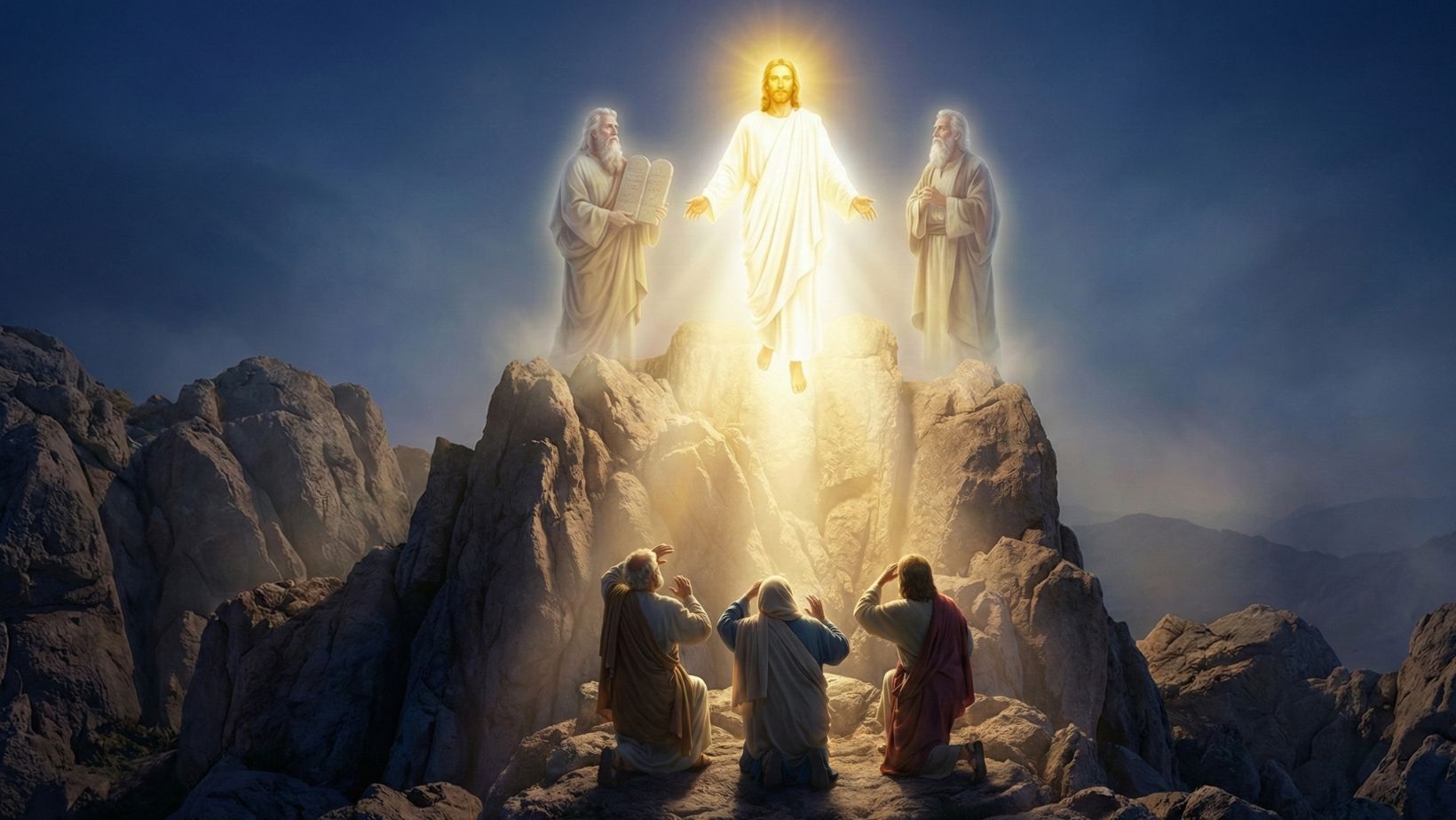
The Deity of Christ is the foundational doctrine of the Christian faith, asserting that Jesus Christ is not merely a good teacher, a prophet, or a created being, but is fully and eternally God. This doctrine holds that Jesus possesses the same essence, nature, and attributes as God the Father and the Holy Spirit, while remaining a distinct person. The belief in Christ’s divinity is what separates Christianity from all other religions; it posits that the Creator entered His own creation to redeem it. This union of the divine and human natures in one person is known theologically as the Hypostatic Union.
Quick Facts
- Subject: Jesus Christ (The Son, The Word)
- Key Doctrine: The Hypostatic Union (Fully God, Fully Man)
- Key Greek Term: Homoousios (of the “same substance” as the Father)
- Key Council: Council of Nicaea (325 AD) – affirmed Jesus is “begotten, not made”
- Biblical Status: The Creator (John 1:3), The Sustainer (Colossians 1:17), The Judge (John 5:22)
- Key Mystery: “The Word became flesh and dwelt among us” (Incarnation)
- Opposing Heresies: Arianism (Jesus is a created being); Ebionitism (Jesus was only a man)
Divine Names and Titles
Theos (God): The New Testament explicitly applies the word “God” to Jesus.
- John 1:1: “In the beginning was the Word, and the Word was with God, and the Word was God.”
- Thomas’s Confession: “My Lord and my God!” (John 20:28).
I AM (Ego Eimi): Jesus claimed the covenant name of Yahweh revealed in Exodus 3:14.
- John 8:58: “Truly, truly, I say to you, before Abraham was, I am.” (The Jews picked up stones to kill Him for blasphemy because they understood He was claiming to be Yahweh).
Kyrios (Lord): In the Septuagint (Greek OT), Kyrios was used to translate the Hebrew YHWH. The NT writers applied this title to Jesus over 600 times, effectively identifying Him as Yahweh.
Son of Man: Drawn from Daniel 7:13-14, this is not just a human title but a divine one. It refers to the messianic figure who is given dominion, glory, and a kingdom, and who approaches the Ancient of Days.
Divine Attributes (Communicable & Incommunicable)
Eternality: He has no beginning and no end.
- Revelation 22:13: “I am the Alpha and the Omega, the first and the last, the beginning and the end.”
Omnipresence (Everywhere):
- Matthew 28:20: “And surely I am with you always, to the very end of the age.”
- Matthew 18:20: “For where two or three gather in my name, there am I with them.”
Omniscience (All-Knowing):
- John 2:24-25: He “knew all people” and “knew what was in each person.”
- John 21:17: Peter says to Him, “Lord, you know all things.”
Omnipotence (All-Powerful):
- He demonstrated power over nature (calming the storm), disease (healing), demons (casting them out), and death (Lazarus).
- Hebrews 1:3: He “sustains all things by his powerful word.”
Immutability (Unchanging):
Divine Prerogatives (Works only God can do)
Forgiveness of Sins: In Mark 2, the scribes correctly ask, “Who can forgive sins but God alone?” Jesus then heals the paralytic to prove He has the authority on earth to forgive sins.
Creation: Jesus is not a creature; He is the agent of Creation.
- Colossians 1:16: “For by him all things were created… all things were created through him and for him.”
Judgment: The Father has entrusted all judgment to the Son (John 5:22). Jesus will judge the living and the dead.
Receiving Worship: In Scripture, good angels and pious men (like Peter and Paul) always refuse worship. Jesus accepts it.
- The disciples worshiped Him (Matthew 14:33).
- Angels are commanded to worship Him (Hebrews 1:6).
- Every knee will bow to Him (Philippians 2:10-11).
Key Biblical Evidence (The “Heavy Hitters”)
Colossians 1:15-19: Describes Jesus as the “image of the invisible God” and states that “God was pleased to have all his fullness dwell in him.”
Hebrews 1:1-3: Calls Jesus the “radiance of God’s glory and the exact representation of his being.”
Philippians 2:5-11 (The Kenosis): States that Jesus, being in “very nature God,” did not consider equality with God something to be used to his own advantage, but humbled himself.
Titus 2:13: Calls Him “our great God and Savior, Jesus Christ.”
Old Testament Foreshadowing
Isaiah 9:6: The prophecy of the Messiah calls Him “Mighty God” and “Everlasting Father.”
Emmanuel: Isaiah 7:14 names Him “God with us.”
Christophanies: Many theologians believe the “Angel of the LORD” who appears in the OT (speaking as God, accepting worship from Joshua/Gideon/Manoah) was the pre-incarnate Christ.
Legacy & Impact
Salvation: If Jesus were only a man, He could not pay the infinite penalty for sin against an infinite God. His deity is essential for the efficacy of the Atonement.
Revelation: Jesus is the definitive revelation of who God is. “Anyone who has seen me has seen the Father” (John 14:9).
Authority: Because He is God, His teachings are absolute, not merely advice from a sage.







Leave a Reply