
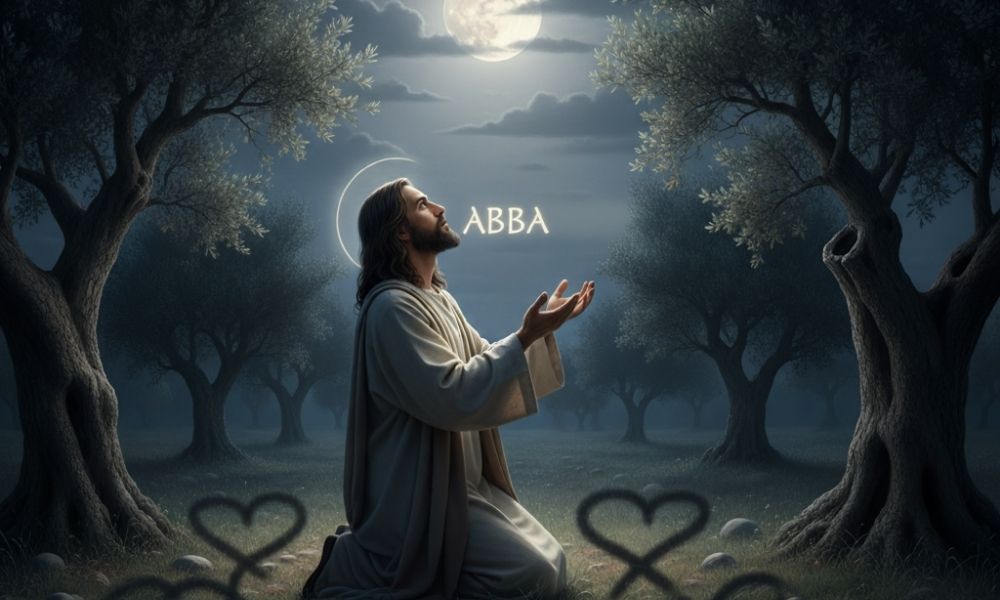
Abba

“Abba” is the intimate Aramaic word for “Father,” expressing the deep love and closeness believers share with God through Christ.


The term “Abba” is one of the most tender and profound names used for God in Scripture. It comes from the Aramaic language and means “Father” — but not in a distant or formal sense. Rather, it expresses deep intimacy, trust, and affection, much like a child saying “Daddy” or “Papa.” When Jesus used this word, He revealed a new level of relationship between humanity and God — not one based on fear or ritual, but on love and closeness.


Quick Facts

Meaning: “Father” (Aramaic) — expressing intimacy, love, and trust
Language Origin: Aramaic
Biblical Usage: Spoken by Jesus and adopted by early Christians
Key Verses: Mark 14:36; Romans 8:15; Galatians 4:6
Symbolism: Intimate relationship between believers and God
Key Themes: Adoption, intimacy, faith, and divine sonship


Biblical Context

In the Gospels:
Jesus used the term “Abba, Father” in the Garden of Gethsemane (Mark 14:36) as He prayed in deep anguish. His words — “Abba, Father, all things are possible for You” — revealed not only submission but also intimacy with God as His loving Father.

In the Epistles:
Paul later uses “Abba, Father” in Romans 8:15 and Galatians 4:6 to describe the believer’s new identity in Christ. Through the Holy Spirit, believers are adopted into God’s family and can approach Him with the same intimacy Jesus did.


Spiritual Meaning

“Abba” signifies a personal relationship with God. It’s not merely a title but an expression of childlike dependence and love. It reminds believers that they are no longer slaves, but children and heirs of God through Christ.

To call God Abba is to rest in His fatherly care, to trust His heart, and to live in the assurance of His unfailing love.


Legacy & Significance

  • Reveals God’s Heart: Shows that God desires closeness, not distance.
  • Transforms Prayer: Encourages believers to speak to God with honesty and affection.
  • Confirms Adoption: The Spirit bears witness that we are God’s children.
  • Symbol of Grace: Demonstrates that access to God is through relationship, not ritual.

Leave a Reply

Your email address will not be published. Required fields are marked *

Bible Characters

  • Mark (John Mark)
  • Mark (John Mark)

    John Mark was a young disciple who overcame early failure to become a trusted companion of Paul and Peter, ultimately authoring the dynamic Gospel that bears his name.


  • Matthew

    Matthew was a despised tax collector transformed by grace into a devoted apostle, whose Gospel bridges the Old and New Testaments by proclaiming Jesus as the promised Messiah and King.


  • Nabal

    Nabal was a wealthy but foolish landowner whose arrogance and refusal to show hospitality to David led to divine judgment and his sudden death.


Biblical Events

  • David lies to Ahimelech
  • Mark (John Mark)

    John Mark was a young disciple who overcame early failure to become a trusted companion of Paul and Peter, ultimately authoring the dynamic Gospel that bears his name.


  • Matthew

    Matthew was a despised tax collector transformed by grace into a devoted apostle, whose Gospel bridges the Old and New Testaments by proclaiming Jesus as the promised Messiah and King.


  • Nabal

    Nabal was a wealthy but foolish landowner whose arrogance and refusal to show hospitality to David led to divine judgment and his sudden death.


Bible Locations

  • Jezreel
  • Jezreel

    Jezreel was the fertile royal seat of King Ahab and Queen Jezebel, famous for the murder of Naboth and the site where divine judgment eventually wiped out their entire dynasty.


  • Aphek

    Aphek was a strategic military stronghold and staging ground on the Sharon Plain where the Philistines gathered to capture the Ark and where David was providentially released from the Philistine army.


  • Lachish

    Lachish was the second most powerful city in ancient Judah, a mighty fortress whose dramatic fall to Assyria and Babylon serves as a pivotal moment in biblical history and archaeology.


You May Also Like:

  • The Twelve Tribes of Israel were the tribal divisions descended from the sons of Jacob that formed the foundation of the Israelite nation and the prophetic lineage of the Messiah.

  • After burying Jacob in Canaan with great honor, Joseph reassures his fearful brothers that their past evil was overruled by God for good, and he dies in Egypt with a prophetic command that his bones be carried to the Promised Land.

  • On his deathbed, Jacob gathers his twelve sons to prophesy their destinies, disqualifying the firstborns for their sins and appointing Judah as the royal line and Joseph as the fruitful recipient of the double portion.

  • On his deathbed, Jacob adopts Joseph’s two sons as his own, deliberately crossing his hands to give the greater blessing to the younger Ephraim, declaring God as his Shepherd and Redeemer.

Bibliva

FREE
VIEW





