
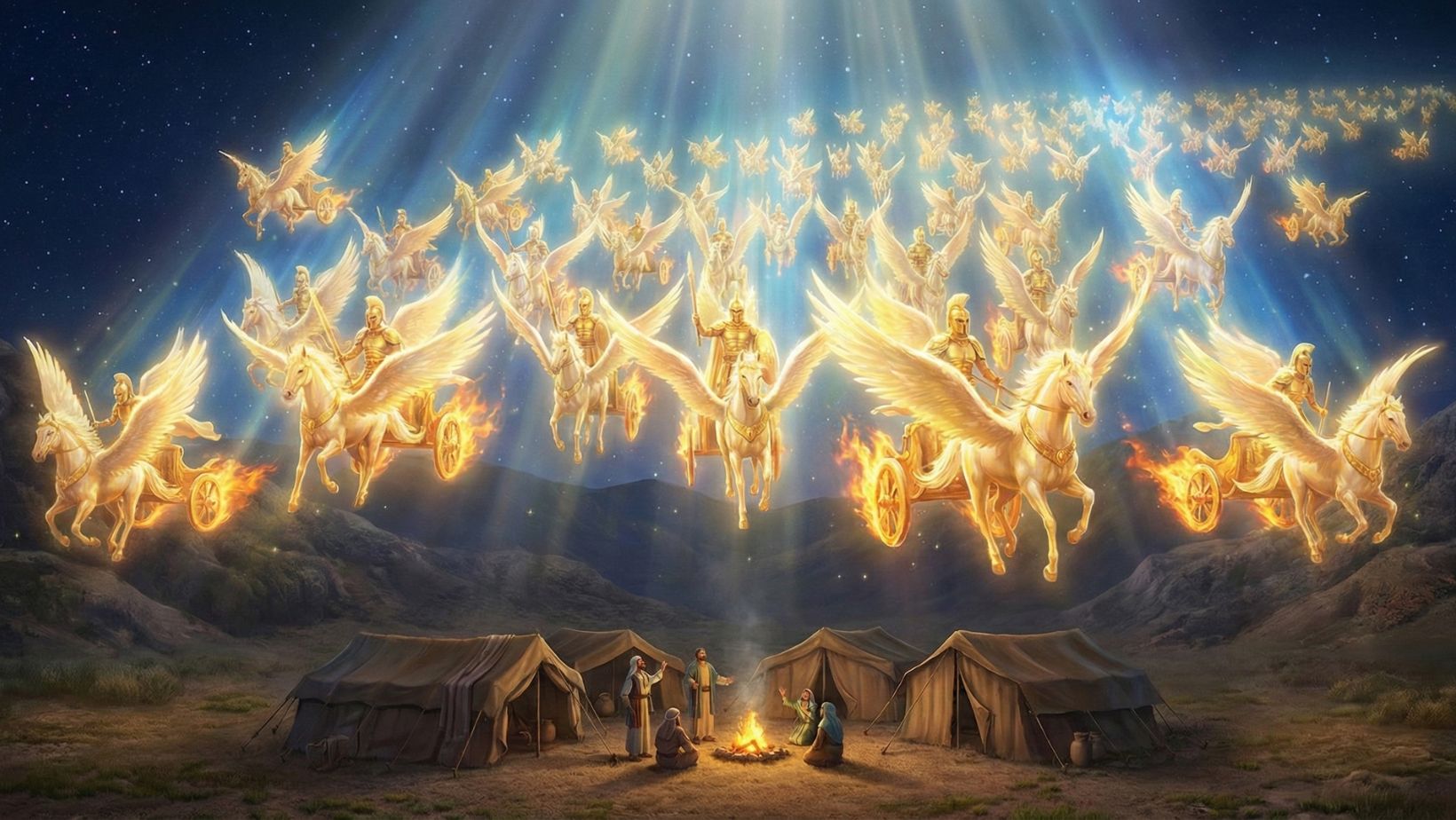
The Lord of Heaven’s Armies (often translated as “Lord of Hosts” or Yahweh Tzevaot) is one of the most majestic and powerful titles for God in the Bible. It portrays Him not merely as a creator, but as the active, sovereign Commander-in-Chief of all cosmic powers—including the angels, the stars, and the forces of nature. This title emphasizes His limitless authority to fight for His people, execute judgment on corruption, and establish His kingdom against all opposition. It serves as a reminder that no earthly power can stand against the ultimate Ruler of the universe.
Quick Facts
- Name: The Lord of Heaven’s Armies (Hebrew: Yahweh Tzevaot)
- Alternate Translations: The Lord of Hosts, The Lord Almighty
- Nature: Divine Title of the One True God
- First Mention: 1 Samuel 1:3 (In the context of Elkanah and Hannah)
- Key Role: Supreme Commander of angelic and earthly forces
- Most Frequent Usage: The Prophets (Isaiah, Jeremiah, Haggai, Zechariah, Malachi)
- Key Attribute: Omnipotence and Sovereignty
- Symbol: Chariots of Fire / The Ark of the Covenant
Name Meaning
Yahweh Tzevaot: This combines the covenant name of God, Yahweh (“I AM”), with Tzevaot, derived from the word tsaba, meaning “army,” “warfare,” or “host.” It signifies God as the Master of Legions.
Scope of “Armies”: The “hosts” refer to three things: the angelic armies of heaven, the celestial bodies (stars and planets), and the earthly armies of Israel. It implies that all forces, spiritual and physical, are under His direct command.
Biblical Era / Context
Historical Setting: While God is eternal, this specific title gains prominence during the transition from the Judges to the Monarchy (1 Samuel) and explodes in usage during the divided kingdom and the exile.
Theological Necessity: As Israel faced massive military threats from empires like Assyria and Babylon, the prophets used this title to remind the people that their God was the true King who controlled armies greater than any human superpower.
Major Roles / Identity
Divine Warrior: He fights on behalf of His covenant people.
Sovereign King: He sits enthroned above the cherubim, judging the nations.
Protector: He surrounds His people with invisible spiritual defenses.
Judge: He commands the forces of history to discipline Israel and punish wicked nations.
Key Character Traits
Sovereignty: He has absolute authority over every atom and angel in existence.
Holiness: In Isaiah’s vision, the seraphim cry “Holy, Holy, Holy is the Lord of Heaven’s Armies.”
Power: There is no limit to His strength; He speaks, and it is done.
Reliability: He is the ultimate refuge when earthly resources fail (Psalm 46).
Main Life Events / Theophanies
Hannah’s Prayer: The first time this title appears is when a barren woman, Hannah, prays to the Lord of Heaven’s Armies for a son, recognizing His power to give life (1 Samuel 1:11).
David and Goliath: David runs toward Goliath shouting that he comes in the name of “the Lord of Heaven’s Armies, the God of the armies of Israel” (1 Samuel 17:45).
Elisha’s Chariots: When surrounded by enemies, Elisha prays for his servant’s eyes to be opened, revealing the mountain full of horses and chariots of fire belonging to the Lord (2 Kings 6:17).
Isaiah’s Vision: Isaiah sees the Lord seated on a throne, with the train of His robe filling the temple, emphasizing His glory (Isaiah 6).
Major Relationships
Israel: His chosen people, whom He protects but also disciplines.
The Prophets: Men like Isaiah, Haggai, and Zechariah who acted as the “mouthpiece” for the Commander.
Angelic Beings: Seraphim, Cherubim, and archangels who serve as His messengers and soldiers.
The Messiah: Jesus is eventually revealed as the one who commands these armies (Revelation 19).
Notable Passages
1 Samuel 17:45: David’s declaration of war—”You come to me with sword, spear, and javelin, but I come to you in the name of the Lord of Heaven’s Armies.”
Psalm 46:7: A song of confidence—”The Lord of Heaven’s Armies is here among us; the God of Israel is our fortress.”
Zechariah 4:6: The method of God’s victory—”‘Not by might nor by power, but by my Spirit,’ says the Lord of Heaven’s Armies.”
Psalm 24:10: A question of identity—”Who is he, this King of glory? The Lord of Heaven’s Armies—he is the King of glory.”
Legacy & Impact
Comfort in Crisis: This title assures believers that when the world seems chaotic, God is still the Commander holding the reins of history.
Basis for Worship: It inspired the great hymns of the faith (e.g., the Sanctus), acknowledging God’s supreme majesty.
Assurance of Victory: It promises that the final victory over evil is guaranteed, as God possesses the ultimate power to defeat Satan and death.
Symbolism / Typology
The Ark of the Covenant: Was often viewed as the footstool of the Lord of Heaven’s Armies, leading Israel into battle.
Christ’s Return: In Revelation 19, Jesus rides a white horse, followed by the “armies of heaven,” fulfilling the ultimate role of the Divine Warrior.
The Stars: Often used in scripture to represent the vastness of the “hosts” He commands (Isaiah 40:26).
Extra-Biblical References
Liturgy: The phrase “Lord God of Sabaoth” (transliterated from Hebrew) appears in the Te Deum and the Sanctus in traditional Christian liturgies.
Martin Luther: The hymn “A Mighty Fortress Is Our God” references this title: “Lord Sabaoth, His Name, from age to age the same.”







Leave a Reply